Is Good Molecules Hyaluronic Acid Serum Safe During Pregnancy? (Updated 2026 Guide)
Updated September 9, 2026
Good Molecules Hyaluronic Acid Serum
Good Molecules
Good Molecules Hyaluronic Acid Serum is generally compatible with pregnancy when used as directed on intact facial skin, earning a B+ ingredient based grade. Propanediol is the scoring relevant ingredient rated likely safe at ordinary cosmetic exposure; the grade is not a guarantee that every ingredient has been studied in pregnancy.
Go ahead and use it. Nothing to worry about here.
Pregnancy Safe is 100% independent and research driven. No companies pay to promote or sponsor products.
Stress Less This Pregnancy
Check your face serum in the app

What Ingredients Are in Good Molecules Hyaluronic Acid Serum?
Good Molecules Hyaluronic Acid Serum has 8 ingredients. All 8 ingredients are considered safe or likely safe for pregnancy.
propanediol
LIKELY SAFE
Propanediol is a versatile, plant derived humectant and solvent commonly used in skincare and cosmetic formulations to retain moisture and improve product texture. Propanediol is rated likely safe for normal cosmetic use on intact skin during pregnancy; high dose medication exposure concerns do not establish a risk from ordinary facial serum use.
citric acid
SAFE
Citric acid is a natural organic acid commonly used as a preservative and flavor enhancer in food and beverages. Citric acid is generally compatible with pregnancy at ordinary topical cosmetic exposure, although direct pregnancy studies are lacking and stronger or lower pH formulas may irritate.
SAFE
Glycerin is a colorless, odorless, and sweet tasting humectant commonly used in skincare products to attract and retain moisture in the skin. Glycerin is compatible with pregnancy in normal topical skincare use, with low systemic exposure expected.
sodium citrate
SAFE
Sodium citrate is a salt commonly used as a food additive and buffering agent to regulate acidity and stabilize emulsions. Sodium citrate is generally compatible with pregnancy in ordinary topical cosmetics under the citrate assessment, though direct pregnancy specific evidence is limited.
sodium hyaluronate
SAFE
Sodium hyaluronate is a powerful hydrating agent that helps retain moisture in the skin, promoting plumpness and elasticity. Topical sodium hyaluronate is generally compatible with pregnancy at normal cosmetic amounts because systemic exposure is expected to be low, although direct pregnancy outcome studies are limited.
water
SAFE
Water is a clear, tasteless, and essential liquid that sustains all known forms of life. Water used as a topical serum base is not a pregnancy concern, though proper preservation and the other ingredients still matter.
ethylhexylglycerin
SAFE
Ethylhexylglycerin is a skin conditioning agent and preservative booster commonly used in cosmetics to enhance product stability and provide mild antimicrobial benefits. Ethylhexylglycerin is an unflagged cosmetic preservative booster, but the available information does not establish pregnancy specific safety for topical use.
hydroxyacetophenone
SAFE
Hydroxyacetophenone is a chemical compound commonly used in skincare formulations for its antioxidant and skin soothing properties. Hydroxyacetophenone is an unflagged cosmetic antioxidant, but the available information does not establish pregnancy specific safety for topical use.
Answering Your Questions
How much Good Molecules Hyaluronic Acid Serum is safe during pregnancy?
Apply a small amount sufficient to spread a thin layer over intact facial skin, following your bottle’s directions. No pregnancy specific maximum amount has been established, so avoid interpreting the grade as permission for unlimited application.
Can you use Good Molecules Hyaluronic Acid Serum daily while pregnant?
Follow the frequency on your bottle rather than adding extra applications during pregnancy. When introducing the serum, start less frequently to check your skin’s tolerance and stop if persistent stinging, redness, or irritation develops.
Why does Good Molecules Hyaluronic Acid Serum receive a B+?
The B+ comes from ingredient based scoring, with propanediol contributing a likely safe rating for ordinary topical cosmetic exposure. No ingredients are flagged for caution or avoidance, but ethylhexylglycerin and hydroxyacetophenone are unflagged rather than individually established as pregnancy safe.
Is topical hyaluronic acid OK to use while pregnant?
Yes, topical hyaluronic acid, including sodium hyaluronate in this serum, is generally considered compatible with pregnancy at normal cosmetic amounts. Systemic exposure is expected to be low, although direct pregnancy outcome studies are limited; this assessment does not cover injections or dermal fillers.
Can I use this serum while breastfeeding?
The pregnancy grade does not establish breastfeeding specific safety for the finished serum. If you use it while nursing, keep application to facial skin and avoid the nipple, breast, or areas your baby could lick; ask your clinician if you need an individual assessment.
What alternatives should I look for during pregnancy?
Look for a simple hydrating serum or moisturizer containing glycerin or topical hyaluronic acid, with a full ingredient list you can check. Choose by the complete formula rather than assuming every product from a particular brand has the same pregnancy assessment.
How much hyaluronic acid is in this serum?
Sodium hyaluronate is listed, but an exact concentration is not confirmed here. Check your bottle or the manufacturer’s information for your formulation rather than relying on a retailer’s percentage claim.
Does the citric acid make this an exfoliating serum?
Not necessarily: citric acid can adjust a cosmetic formula’s pH, and its presence alone does not establish an exfoliating strength. Ordinary topical use is generally compatible with pregnancy, but stronger or lower pH formulations can irritate your skin.
What Are Pregnancy Safe Alternatives to Good Molecules Hyaluronic Acid Serum?
Here are some solid alternatives. Everything below has an A or B grade, meaning no flagged ingredients in our database.
| Grade | Product | Brand | Type |
|---|---|---|---|
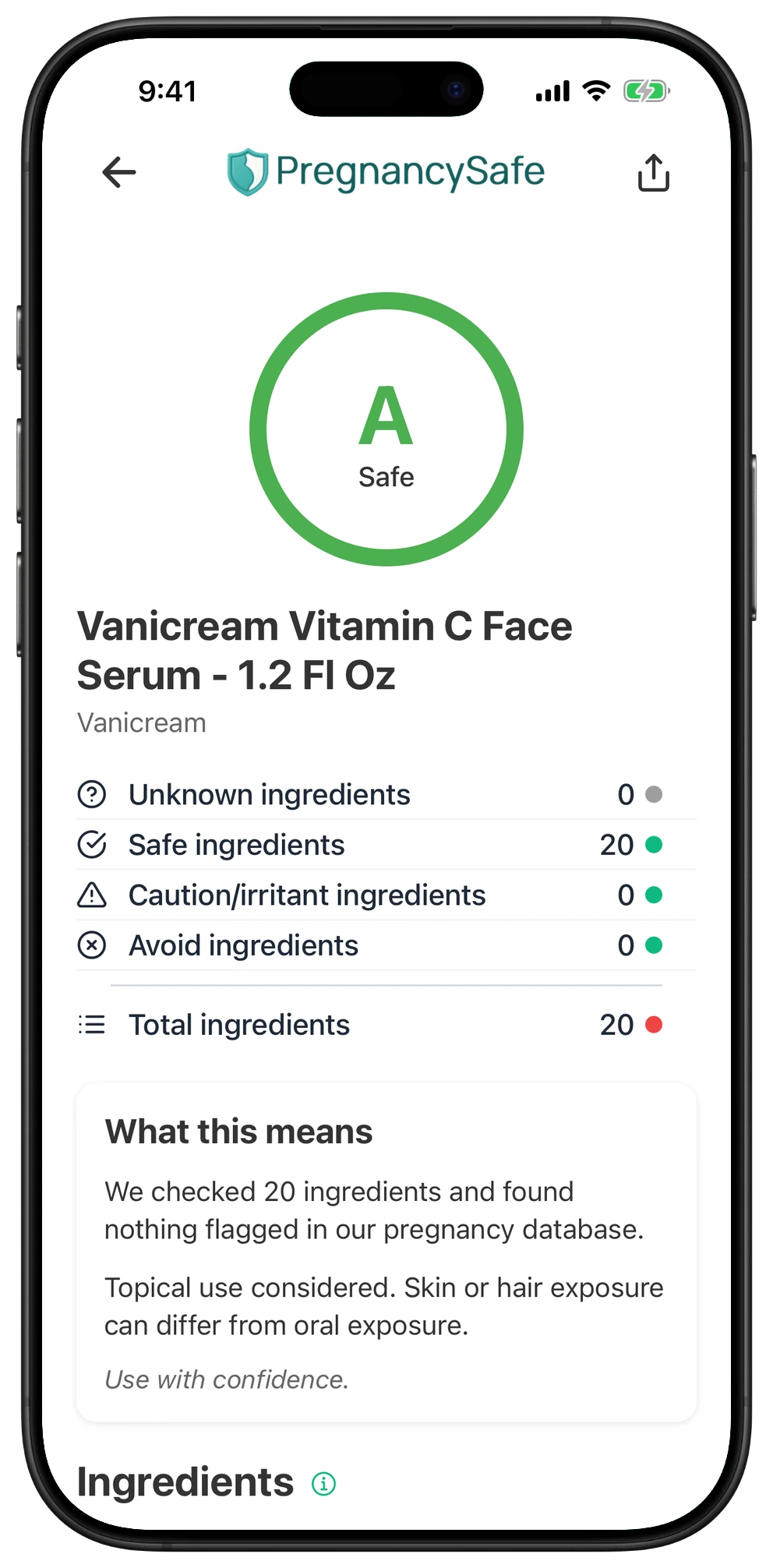
| A | Vanicream Vitamin C Face Serum - 1.2 Fl Oz | Vanicream | face serum |
| A | E.L.F. Triple Bounce Serum Face Moisturizers - 1.0 Fl Oz | E.L.F. | face serum |
| A | Pure Hyaluronic Acid Face Serum 1 Oz | Hyalogic | face serum |
| A | Regenerate Face Serum | The Kind Matter Company | face serum |
Are Other Good Molecules Products Safe During Pregnancy?
We looked at 10 other Good Molecules products. 4 are pregnancy safe (A or B grade), while 6 need a closer look.
| Grade | Product | Type |
|---|---|---|
| A | Bakuchiol Oil Blend For Oily Skin | facial oil |
| B+ | 5% Niacinamide Serum With Ectoin | serum |
| B+ | Discoloration Correcting Serum | serum |
| B+ | Good Molecules 10% Azelaic Acid Treatment | skin treatment |
How Does Good Molecules Hyaluronic Acid Serum Compare to Other Face Serums?
We graded 259 Face Serums for pregnancy safety. Here's how they stack up:
Good Molecules Hyaluronic Acid Serum earns a B+ grade, placing it among the top of Face Serums. Only 3% of products in this category get an A grade, so it pays to choose carefully.
How Do We Score Products for Pregnancy Safety?
We analyze each product's ingredients and category to flag known risks and provide cautionary notices for general category safety concerns.
A - Safe
Excellent choice! All ingredients are considered safe during pregnancy.
What to do: Use with confidence.
B - Likely Safe
Pretty much safe with very minimal risk. Some ingredients may have limited pregnancy studies, but no significant safety concerns have been identified.
What to do: Use with confidence.
C - Limit
Contains ingredients with some pregnancy considerations. Research shows these ingredients may have limited safety data, potential for minor hormonal effects, or require caution based on animal studies.
What to do: Use sparingly and consider safer alternatives when available.
D - Caution
Similar to C grade but contains multiple cautionary ingredients. The combination increases overall concern.
What to do: Try to avoid if that makes you feel better. If you've already used it, no need to panic.
F - Avoid
Contains an ingredient Pregnancy Safe recommends avoiding during pregnancy. This may reflect an established risk or a precaution based on limited evidence; check the ingredient guidance and exposure context.
What to do: Do not use during pregnancy. If you've already used it, don't worry - contact your OBGYN if concerned.
People Also Checked
References
- https://www.ecfr.gov/current/title-21/part-184/section-184.1666
- https://pmc.ncbi.nlm.nih.gov/articles/PMC7009459/
- https://pubmed.ncbi.nlm.nih.gov/15995735/
- https://pubmed.ncbi.nlm.nih.gov/23064775/
- https://www.ema.europa.eu/en/documents/scientific-guideline/questions-and-answers-propylene-glycol-used-excipient-medicinal-products-human-use_en.pdf
- https://pmc.ncbi.nlm.nih.gov/articles/PMC11867916/
- https://pubmed.ncbi.nlm.nih.gov/29281181/
- https://pubmed.ncbi.nlm.nih.gov/40234020/
- https://www.cir-safety.org/sites/default/files/citric032012FR.pdf
- https://www.canada.ca/en/health-canada/services/consumer-product-safety/cosmetics/cosmetic-ingredient-hotlist-prohibited-restricted-ingredients/hotlist.html
- https://www.fda.gov/cosmetics/cosmetic-ingredients/alpha-hydroxy-acids
- https://pubmed.ncbi.nlm.nih.gov/35309882/
- https://pubmed.ncbi.nlm.nih.gov/16040403/
- https://pubmed.ncbi.nlm.nih.gov/9256916/
- https://www.hfpappexternal.fda.gov/scripts/fdcc/index.cfm?id=GLYCERIN&set=FoodSubstances
- https://pubmed.ncbi.nlm.nih.gov/31840548/
- https://pmc.ncbi.nlm.nih.gov/articles/PMC7009851/
- https://www.medicinesinpregnancy.org/leaflets-a-z/glycerin-suppositories/
- https://mothertobaby.org/pregnancy-breastfeeding-exposures/cosmetics/
- https://www.cir-safety.org/sites/default/files/TR_Hyaluronates_032023_1.pdf
- https://pubmed.ncbi.nlm.nih.gov/19636067/
- https://www.aad.org/public/everyday-care/skin-care-secrets/routine/pregnancy-skin-care
- https://www.fda.gov/medical-devices/aesthetic-cosmetic-devices/dermal-fillers-soft-tissue-fillers
- https://pubmed.ncbi.nlm.nih.gov/28492048/
- https://www.personalcarecouncil.org/wp-content/uploads/2022/03/INCINomenclatureConventionsReferenceInformation2022_v1.pdf
- https://www.seslhd.health.nsw.gov.au/sites/default/files/groups/Royal_Hospital_for_Women/Mothersafe/documents/skinhaircareandcosmetictreatmentsapril2021.pdf
- https://www.nhs.uk/pregnancy/complications/itching-and-intrahepatic-cholestasis/
- https://www.fda.gov/cosmetics/resources-consumers-cosmetics/cosmetics-pregnancy
- https://www.fda.gov/cosmetics/cosmetics-guidance-documents/good-manufacturing-practice-gmp-guidelinesinspection-checklist-cosmetics
- https://www.fda.gov/cosmetics/potential-contaminants-cosmetics/microbiological-safety-and-cosmetics
- https://pubmed.ncbi.nlm.nih.gov/25153208/