Is Red Bull Sugar Free Energy Drink Safe During Pregnancy? (Updated 2026 Guide)
Updated September 9, 2026
Red Bull Sugar Free Energy Drink
Red Bull
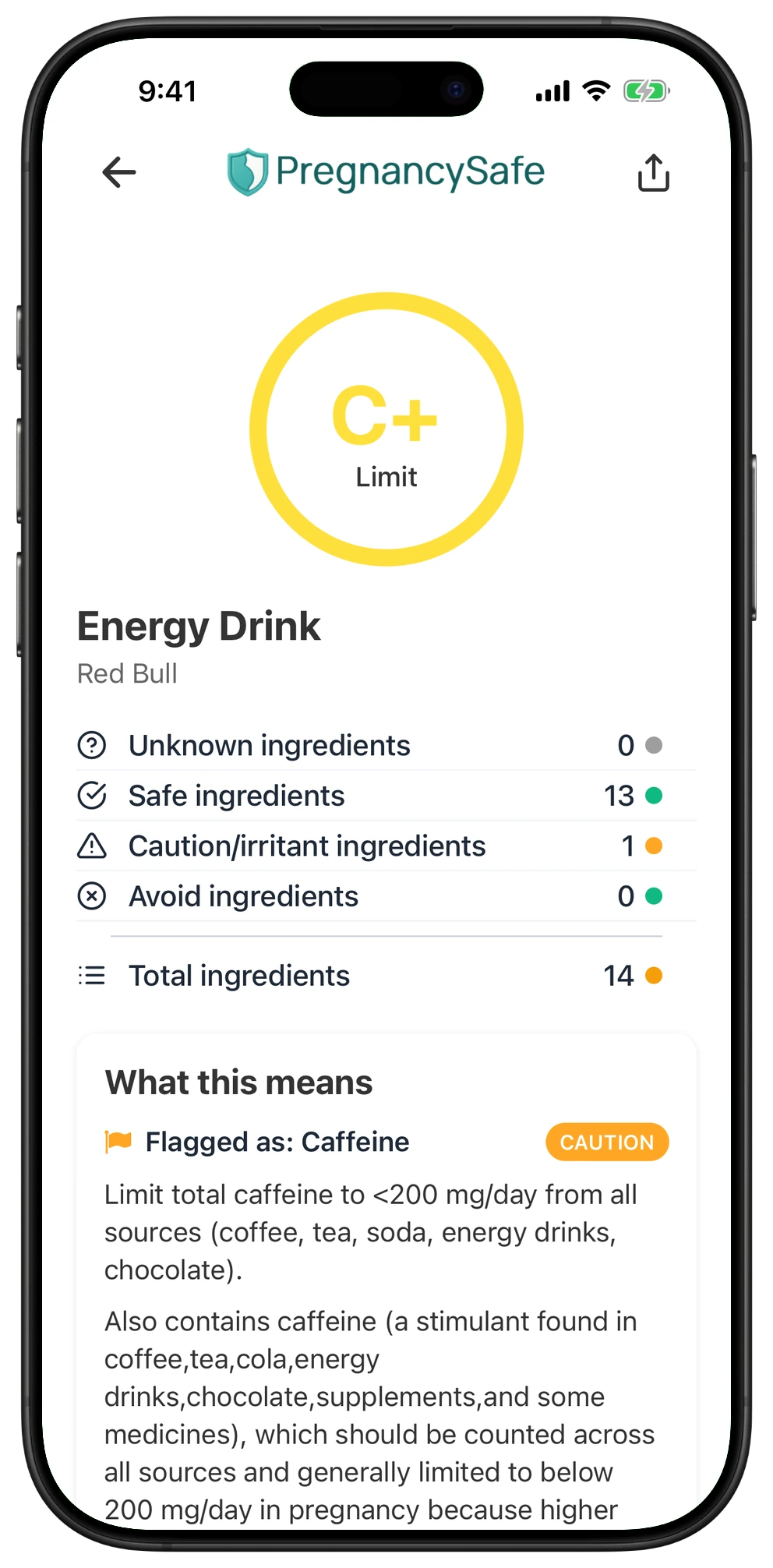
Red Bull Sugar Free Energy Drink gets a C+ grade and warrants caution during pregnancy, mainly because it contains caffeine. Sugar free does not mean caffeine free: keep total caffeine below 200 mg per day from all sources, and choose a caffeine free drink for routine hydration.
You can use this, but maybe don't make it your everyday go to. Not the end of the world if you've used it. Consult your OBGYN or midwife if you have concerns.
Pregnancy Safe is 100% independent and research driven. No companies pay to promote or sponsor products.
Stress Less This Pregnancy
Check your energy drink in the app
What Ingredients Are in Red Bull Sugar Free Energy Drink?
Red Bull Sugar Free Energy Drink has 15 ingredients. We flagged 1 ingredient to use with caution.
sodium bicarbonate
LIKELY SAFE
Sodium bicarbonate is a chemical compound commonly known as baking soda, used as a leavening agent in baking and for various cleaning and medicinal purposes. Sodium bicarbonate is generally compatible with pregnancy at normal food amounts; repeated antacid or high dose medicinal use carries separate sodium load and alkalosis concerns.
taurine
LIKELY SAFE
Taurine is a naturally occurring amino acid derivative known for supporting cardiovascular health, muscle function, and acting as an antioxidant. Taurine is low concern from ordinary dietary exposure, but pregnancy evidence for standalone high dose supplements is limited and does not establish this caffeinated drink’s safety.
calcium pantothenate
SAFE
Calcium pantothenate is a form of vitamin B5 that supports energy production and overall metabolic health. The supporting pregnancy evidence concerns calcium intake generally, so it does not establish a specific benefit or dose assessment for calcium pantothenate in this drink.
carbonated water
SAFE
Carbonated water is water infused with carbon dioxide gas, creating a fizzy, bubbly sensation. Water from a safe treated source is compatible with pregnancy hydration, but the carbonated water base does not cancel out this drink’s caffeine.
citric acid
SAFE
Citric acid is a natural organic acid commonly used as a preservative and flavor enhancer in food and beverages. Citric acid is low concern at ordinary food amounts during pregnancy, though acidic drinks may aggravate reflux or dental irritation.
magnesium carbonate
SAFE
Magnesium carbonate is a white, odorless powder commonly used as an antacid, a drying agent, and a sports supplement to enhance magnesium intake. Magnesium is compatible with pregnancy at normal dietary amounts, while high dose oral supplement and medication concerns should not be assumed to apply to this drink.
SAFE
Niacinamide is a versatile skincare ingredient known for its ability to improve skin elasticity, enhance the barrier function, and reduce the appearance of blemishes and uneven skin tone. Evidence supporting topical niacinamide in pregnancy does not establish safety for the oral dose in this drink, and high dose oral supplements are a separate exposure.
pyridoxine hcl
SAFE
Pyridoxine HCl is the hydrochloride form of vitamin B6, essential for amino acid metabolism, neurotransmitter synthesis, and red blood cell production. Vitamin B6 is compatible with pregnancy at usual dietary and prenatal doses, while chronic high dose supplementation can cause nerve damage.
SAFE
Vitamin B12 is a vital water soluble nutrient essential for red blood cell formation, nerve function, and DNA synthesis. Vitamin B12 is compatible with pregnancy at normal dietary or prenatal amounts, but its presence does not make an energy drink a prenatal supplement.
acesulfame k
SAFE
Acesulfame K is a calorie free artificial sweetener commonly used to enhance the sweetness of foods and beverages. Acesulfame K is an unflagged sweetener here, but its presence does not establish pregnancy safety for the drink.
colors
SAFE
Colors are visual perceptions created by the way objects reflect or emit light, adding vibrancy and distinction to our surroundings. The unspecified colors are unflagged, but their identities are too vague for a pregnancy specific assessment.
natural and artificial flavors
SAFE
A blend of natural and artificial flavors used to enhance the taste and aroma of food and beverages. These unspecified flavors are unflagged, but that does not establish pregnancy safety for each flavoring substance.
sucralose
SAFE
Sucralose is a calorie free artificial sweetener commonly used to sweeten foods and beverages without adding sugar. Sucralose is unflagged here, but that is not a pregnancy specific safety finding for this sweetener or the whole drink.
xanthan gum
SAFE
Xanthan gum is a natural thickening and stabilizing agent derived from fermented sugars, commonly used in gluten free baking and food processing. Xanthan gum is an unflagged thickener here, without a pregnancy specific safety assessment for this exposure.
Answering Your Questions
How much Red Bull Sugar Free Energy Drink is safe during pregnancy?
Check your can’s label for caffeine per serving and the number of servings before deciding how much to drink. Keep your total below 200 mg per day, including coffee, tea, chocolate and caffeine containing medicines; that limit is not a guarantee that this energy drink is pregnancy safe.
Can you use Red Bull Sugar Free Energy Drink daily while pregnant?
Choose a caffeine free drink rather than making this a daily energy or hydration habit. If you do drink it, count your caffeine on that day rather than averaging your intake across the week.
Why does Red Bull Sugar Free Energy Drink get a C+ grade?
Its C+ comes from ingredient based scoring, with caffeine the main caution rated ingredient. Taurine and sodium bicarbonate are rated likely safe, with concerns focused on high dose supplements or medicinal use rather than ordinary food exposure. The grade is not a measured probability of harm.
Is there still caffeine in sugar free Red Bull?
Yes, this sugar free formula contains caffeine. Check your can for the amount per serving and per container, and include it in your daily caffeine total.
What if I drank it before I knew I was pregnant?
Having consumed an energy drink does not by itself establish that your pregnancy was harmed. Note how much you drank and your other caffeine sources, and discuss repeated or high intake with your prenatal clinician. Associations between higher caffeine intake and pregnancy complications do not prove that an individual exposure caused harm.
Are sugar free drinks automatically safer during pregnancy?
No removing sugar does not remove caffeine or establish pregnancy safety. This formula contains acesulfame K and sucralose, which are unflagged in the ingredient screening, but that is not the same as a pregnancy specific safety review.
Are any energy drinks safe during pregnancy, and what can I choose instead?
You cannot judge every energy drink by this product’s grade, and staying below the caffeine limit does not establish the safety of every added ingredient. For a simpler alternative, choose plain water or plain caffeine free sparkling water without added stimulant or supplement blends.
Can I drink Red Bull Sugar Free while breastfeeding?
The pregnancy grade does not establish breastfeeding safety for the whole drink. Caffeine passes into breast milk in small amounts, and younger newborns and preterm babies break it down more slowly, so consider a caffeine free alternative and discuss intake with your clinician if your baby seems sensitive. CDC
What Are Pregnancy Safe Alternatives to Red Bull Sugar Free Energy Drink?
Here are some solid alternatives. Everything below has an A or B grade, meaning no flagged ingredients in our database.
| Grade | Product | Brand | Type |
|---|---|---|---|
| A | Leisure Hydration Wild Blueberry (Can) | Leisure Hydration | energy drink |
| A | Ascent, Clean Hydration+ Energy, Raspberry Lemonade | Ascent | energy drink |
| A | Energy Passionfruit | So Good So You | energy drink |
| A | Sparkling Energy Pineapple Passionfruit | So Good So You | energy drink |
Are Other Red Bull Products Safe During Pregnancy?
We looked at 10 other Red Bull products. 0 are pregnancy safe (A or B grade), while 10 need a closer look.
| Grade | Product | Type |
|---|---|---|
| C | Arctic Berry Energy Drink, Arctic Berry | energy drink |
| C | Dragon Fruit Flavored Green Edition Energy Drink, Dragon Fruit | energy drink |
| C | Juneberry Summer Edition Energy Drink, Juneberry | energy drink |
| C | Red Bull Blue Edition Blueberry Energy Drink - 12 Fl Oz Can | energy drink |
How Does Red Bull Sugar Free Energy Drink Compare to Other Energy Drinks?
We graded 2,932 Energy Drinks for pregnancy safety. Here's how they stack up:
Red Bull Sugar Free Energy Drink earns a C+ grade, placing it among the majority of Energy Drinks. Only 8% of products in this category get an A grade, so it pays to choose carefully.
How Do We Score Products for Pregnancy Safety?
We analyze each product's ingredients and category to flag known risks and provide cautionary notices for general category safety concerns.
A - Safe
Excellent choice! All ingredients are considered safe during pregnancy.
What to do: Use with confidence.
B - Likely Safe
Pretty much safe with very minimal risk. Some ingredients may have limited pregnancy studies, but no significant safety concerns have been identified.
What to do: Use with confidence.
C - Limit
Contains ingredients with some pregnancy considerations. Research shows these ingredients may have limited safety data, potential for minor hormonal effects, or require caution based on animal studies.
What to do: Use sparingly and consider safer alternatives when available.
D - Caution
Similar to C grade but contains multiple cautionary ingredients. The combination increases overall concern.
What to do: Try to avoid if that makes you feel better. If you've already used it, no need to panic.
F - Avoid
Contains an ingredient Pregnancy Safe recommends avoiding during pregnancy. This may reflect an established risk or a precaution based on limited evidence; check the ingredient guidance and exposure context.
What to do: Do not use during pregnancy. If you've already used it, don't worry - contact your OBGYN if concerned.
People Also Checked
References
- https://www.acog.org/clinical/clinical-guidance/committee-opinion/articles/2010/08/moderate-caffeine-consumption-during-pregnancy
- https://www.acog.org/womens-health/experts-and-stories/ask-acog/how-much-coffee-can-i-drink-while-pregnant
- https://www.ncbi.nlm.nih.gov/books/NBK582613/
- https://www.who.int/tools/elena/interventions/caffeine-pregnancy
- https://www.fda.gov/consumers/consumer-updates/spilling-beans-how-much-caffeine-too-much
- https://pubmed.ncbi.nlm.nih.gov/25179792/
- https://pubmed.ncbi.nlm.nih.gov/25238871/
- https://cks.nice.org.uk/topics/dyspepsia-pregnancy-associated/management/management/
- https://pmc.ncbi.nlm.nih.gov/articles/PMC9066781/
- https://www.ncbi.nlm.nih.gov/books/NBK559139/
- https://www.govinfo.gov/content/pkg/FR-1994-02-02/html/94-2264.htm
- https://pmc.ncbi.nlm.nih.gov/articles/PMC5032930/
- https://www.fda.gov/media/127971/download
- https://www.nhs.uk/medicines/antacids/
- https://www.fda.gov/food/gras-notice-inventory/agency-response-letter-gras-notice-no-grn-000586
- https://www.efsa.europa.eu/en/news/efsa-adopts-opinion-two-ingredients-commonly-used-some-energy-drinks
- https://www.canada.ca/en/health-canada/services/food-nutrition/supplemented-foods/list-permitted-food-ingredients.html
- https://pmc.ncbi.nlm.nih.gov/articles/PMC10910272/
- https://pubmed.ncbi.nlm.nih.gov/31468407/
- https://www.acog.org/womens-health/faqs/healthy-eating-during-pregnancy
- https://ods.od.nih.gov/factsheets/Pregnancy-HealthProfessional/
- https://ods.od.nih.gov/factsheets/Calcium-HealthProfessional/
- https://ods.od.nih.gov/factsheets/Iron-HealthProfessional/
- https://www.who.int/tools/elena/interventions/calcium-pregnancy
- https://www.ncbi.nlm.nih.gov/books/NBK56056/
- https://www.cochrane.org/evidence/CD001059_taking-calcium-supplements-during-pregnancy-effective-way-prevent-blood-pressure-disorders-and
- https://www.acog.org/womens-health/experts-and-stories/ask-acog/how-much-water-should-i-drink-during-pregnancy
- https://www.cdc.gov/healthy-weight-growth/water-healthy-drinks/index.html
- https://www.cdc.gov/heat-health/hcp/clinical-overview/heat-and-pregnant-women.html
- https://www.cdc.gov/drinking-water/about/index.html
- https://www.cdc.gov/yellow-book/hcp/family-travel/pregnant-travelers.html
- https://www.epa.gov/privatewells/protect-your-homes-water
- https://www.fda.gov/consumers/consumer-updates/bottled-water-everywhere-keeping-it-safe
- https://www.nationalacademies.org/read/10925/chapter/6
- https://hfpappexternal.fda.gov/scripts/fdcc/index.cfm?id=CITRICACID&set=FoodSubstances
- https://www.ecfr.gov/current/title-21/chapter-I/subchapter-B/part-184/subpart-B/section-184.1033
- https://apps.who.int/food-additives-contaminants-jecfa-database/chemical.aspx?chemID=3594
- https://www.inchem.org/documents/jecfa/jeceval/jec_436.htm
- https://pmc.ncbi.nlm.nih.gov/articles/PMC7448088/
- https://www.fao.org/fileadmin/user_upload/jecfa_additives/docs/monograph16/additive-135-m16.pdf
- https://ods.od.nih.gov/factsheets/Magnesium-HealthProfessional/
- https://ods.od.nih.gov/factsheets/MVMS-HealthProfessional/
- https://medlineplus.gov/lab-tests/magnesium-blood-test/
- https://medlineplus.gov/druginfo/meds/a601072.html
- https://www.acog.org/clinical/clinical-guidance/committee-opinion/articles/2010/03/magnesium-sulfate-before-anticipated-preterm-birth-for-neuroprotection
- https://pmc.ncbi.nlm.nih.gov/articles/PMC6507506/
- https://pubmed.ncbi.nlm.nih.gov/41944999/
- https://jintegrativederm.org/doi/10.64550/joid.97jp5737
- https://pubmed.ncbi.nlm.nih.gov/16596767/
- https://ods.od.nih.gov/factsheets/Niacin-HealthProfessional/
- https://www.fda.gov/cosmetics/resources-consumers-cosmetics/cosmetics-pregnancy
- https://www.aad.org/public/everyday-care/skin-care-secrets/routine/pregnancy-skin-care
- https://pubmed.ncbi.nlm.nih.gov/25399625/
- https://ods.od.nih.gov/factsheets/VitaminB6-HealthProfessional/
- https://journals.lww.com/greenjournal/fulltext/2018/01000/acog_practice_bulletin_no__189__nausea_and.39.aspx
- https://www.ncbi.nlm.nih.gov/books/NBK582681/
- https://www.accessdata.fda.gov/drugsatfda_docs/label/2022/021876s016lbl.pdf
- https://ods.od.nih.gov/factsheets/VitaminB12-HealthProfessional/
- https://www.who.int/publications/i/item/9789241549912
- https://cdn.who.int/media/docs/librariesprovider2/country-sites/maternal-nutrition-eng.pdf?download=true&sfvrsn=5c6e02ee_2
- https://www.cochrane.org/evidence/CD013823_vitamin-b12-supplementation-women-during-pregnancy