Is Coconut Safe During Pregnancy? (Updated 2026 Guide)
Updated September 9, 2026
The Answer
Yes coconut flesh in ordinary food amounts can be part of pregnancy eating unless you are allergic; handle fresh coconut hygienically and keep perishable young coconuts chilled. Our catalog contains 22 products, with 15 graded A and 7 graded B+, but these ingredient scores are not pregnancy safety guarantees.
The main considerations are coconut allergy, hygienic preparation, and proper storage not a need to avoid coconut flesh during pregnancy. Sweetened flakes contain added sugar, so check the label when choosing between forms. Guidance for eating coconut does not establish the safety of concentrated supplements or cosmetic oils, and fresh coconut water is not guaranteed sterile.
Pregnancy Safe is 100% independent and research driven. No companies pay to promote or sponsor products.
Stress Less This Pregnancy
Check your exact coconut in the app

✓ What's Safe
- • Choose coconut sold as food rather than cosmetic coconut products or concentrated supplements.
- • Look for fresh coconut in good condition and perishable young coconuts kept refrigerated.
- • Wash the exterior before opening, and use clean hands, utensils, and preparation surfaces.
- • Follow package storage instructions, including refrigeration requirements after opening.
- • Choose unsweetened dried or flaked coconut when you want to limit added sugar.
✗ What to Avoid
- • Avoid eating coconut if you have a known coconut allergy.
- • Avoid fresh coconut that is spoiled or has not been stored as directed.
- • Do not leave perishable young coconuts or opened fresh flesh unrefrigerated.
- • Do not assume water inside a freshly opened coconut is sterile.
- • Do not use coconut water as a medical rehydration solution or to cleanse the womb.
- • Do not treat ordinary food use as evidence that high dose coconut supplements or cosmetic oils are suitable to swallow.
Most Common Ingredients in Coconut Products
We analyzed 22 coconut products. Here are the most common ingredients, ranked by how often they appear:
Coconut Products We've Analyzed
Our catalog contains ratings for 22 coconut products. These are database grades, not independent safety certifications.
Grades are ingredient scores, not clinical verdicts or measurements of pathogens, dose, preparation or current package contents. Cohorts include unreviewed catalog records and counts are not independently verified safe-product totals.
Pregnancy Safe Coconut Products
Popular options from our catalog, prioritizing A and B ingredient grades, with C grade options used to fill remaining places. Within each group, products are ordered by searches in Pregnancy Safe, not retail sales. Read the cautions and guidance above; grades do not verify a complete current label or guarantee pregnancy safety.
| Grade | Product | Brand |
|---|---|---|
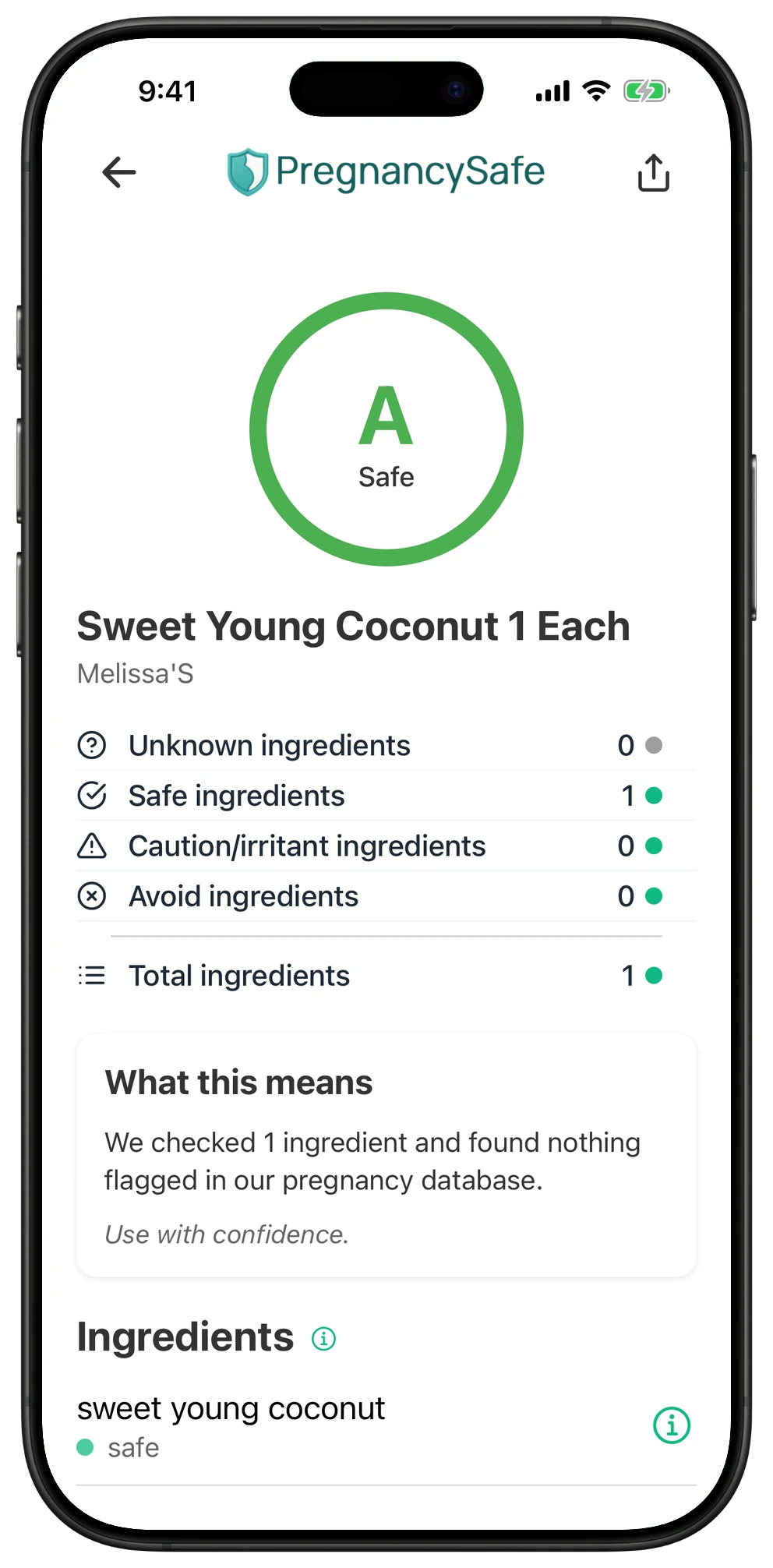
| A | Sweet Young Coconut 1 Each | Melissa'S |
| A | Organic Ez Open Sweet Young Coconut | Melissa'S |
| B+ | Flaked Coconut Sweetened | Kroger |
| A | Flaked Unsweetened Coconut | Kroger |
| B+ | Sweetened Flaked Coconut | Signature Kitchens, Safeway Inc. |
Your Questions Answered
Is coconut safe to eat during pregnancy?
Yes, coconut flesh in ordinary food amounts can be part of your pregnancy diet unless you are allergic. Fresh coconut needs hygienic handling, and perishable young coconuts should stay chilled. This guidance concerns coconut eaten as food, not concentrated supplements or cosmetic products.
When should you not eat coconut?
Do not eat coconut if you have a known coconut allergy. Avoid spoiled coconut and fresh products that have not been stored according to their instructions. Pregnancy alone is not a reason to exclude properly handled coconut flesh in ordinary food amounts.
How should I prepare and store fresh coconut?
Wash the exterior before opening so you do not transfer dirt onto the flesh with your utensils. Use clean hands, utensils, and surfaces when opening and serving it. Keep perishable young coconuts chilled and refrigerate opened fresh flesh according to the product's storage instructions.
Can I eat dried or sweetened coconut while pregnant?
Dried and sweetened coconut can fit into ordinary food portions if you are not allergic. Sweetened flakes contain added sugar; choose unsweetened coconut if you want to reduce it. Read the current package for ingredients and storage directions rather than treating an ingredient grade as a complete safety assessment.
Is fresh coconut water sterile or especially beneficial during pregnancy?
Water inside a fresh coconut is not guaranteed sterile, so freshness alone is not a safety guarantee. Coconut water is not a medical rehydration solution. It also does not change your baby's complexion or cleanse the womb, and guidance about eating coconut flesh should not be treated as blanket guidance for every coconut drink.
Does an A grade mean a coconut product is guaranteed safe?
No. Our catalog contains 15 A grade and 7 B+-grade coconut products, but these are ingredient scores rather than clinical verdicts. They do not measure pathogens, portion size, preparation, or the current package contents. The counts are not totals of independently verified safe products, so still check the label and handling instructions.
How Do We Score Products for Pregnancy Safety?
We analyze each product's ingredients and category to flag known risks and provide cautionary notices for general category safety concerns.
Grades reflect the ingredient and category information available to us. They don’t verify a complete, current label or account for dose, preparation, or contamination. Read them alongside the guidance above, not as a guarantee of pregnancy safety or proof that every use is harmful.
A - Safe
Excellent choice! All ingredients are considered safe during pregnancy.
What to do: Use with confidence.
B - Likely Safe
Pretty much safe with very minimal risk. Some ingredients may have limited pregnancy studies, but no significant safety concerns have been identified.
What to do: Use with confidence.
C - Limit
Contains ingredients with some pregnancy considerations. Research shows these ingredients may have limited safety data, potential for minor hormonal effects, or require caution based on animal studies.
What to do: Use sparingly and consider safer alternatives when available.
D - Caution
Similar to C grade but contains multiple cautionary ingredients. The combination increases overall concern.
What to do: Try to avoid if that makes you feel better. If you've already used it, no need to panic.
F - Avoid
Contains an ingredient Pregnancy Safe recommends avoiding during pregnancy. This may reflect an established risk or a precaution based on limited evidence; check the ingredient guidance and exposure context.
What to do: Do not use during pregnancy. If you've already used it, don't worry - contact your OBGYN if concerned.