Is A&W Root Beer Safe During Pregnancy? (Updated 2026 Guide)
Updated September 8, 2026
A&W Root Beer
A&W
A&W Root Beer earns a C+ during pregnancy: keep it an occasional treat rather than an everyday drink. The main concern is added sugar from high fructose corn syrup with frequent intake, not a known birth defect risk from occasional food amounts; sodium benzoate is considered low concern at regulated beverage levels.
You can use this, but maybe don't make it your everyday go to. Not the end of the world if you've used it. Consult your OBGYN or midwife if you have concerns.
Pregnancy Safe is 100% independent and research driven. No companies pay to promote or sponsor products.
Stress Less This Pregnancy
Check your soda in the app

What Ingredients Are in A&W Root Beer?
A&W Root Beer has 6 ingredients. We flagged 1 ingredient to use with caution.
high fructose corn syrup
CAUTION
High fructose corn syrup is a sweet, liquid sweetener made from corn starch, commonly used in processed foods and beverages. Occasional food amounts are not a known pregnancy teratogen, but frequent high added sugar intake raises nutritional and metabolic concerns.
LIKELY SAFE
Sodium benzoate is a preservative commonly used to inhibit microbial growth in food and beverage products. Sodium benzoate is generally low concern at regulated beverage levels during pregnancy, although direct human pregnancy data are limited.
carbonated water
SAFE
Carbonated water is water infused with carbon dioxide gas, creating a fizzy, bubbly sensation. Water from a safe treated source supports normal pregnancy hydration, but the water in this soda does not remove its added sugar concern.
caramel color
SAFE
Caramel color is a widely used food additive that imparts a rich, brown hue to beverages and processed foods. Caramel color is unflagged in this beverage assessment, but no pregnancy specific evidence is available here to confirm safety at ordinary beverage amounts.
natural and artificial flavors
SAFE
A blend of natural and artificial flavors used to enhance the taste and aroma of food and beverages. This flavor blend is unflagged, but its unspecified components prevent a pregnancy specific safety conclusion at ordinary beverage amounts.
quillaia extract
SAFE
Quillaia extract is a natural surfactant derived from the bark of the Quillaja saponaria tree, commonly used as a foaming agent and emulsifier in food and beverage products. Quillaia extract is an unflagged beverage foaming agent, not a pregnancy reviewed ingredient, and this assessment does not establish safety for concentrated oral extracts.
Answering Your Questions
How much A&W Root Beer is safe during pregnancy?
Choose a small portion and check your container’s serving size and added sugar information before pouring. There is no product specific pregnancy limit established here, so consider it alongside the rest of your day’s added sugars. If you have gestational diabetes, follow your care team’s carbohydrate guidance.
Can you use A&W Root Beer daily while pregnant?
Keep it occasional rather than making it your daily hydration drink. Choose plain water most of the time, and avoid letting sugary drinks replace nutrient rich foods and beverages.
Why does A&W Root Beer receive a C+ pregnancy grade?
The C+ comes from ingredient based scoring, with high fructose corn syrup carrying the main caution for frequent added sugar intake. Sodium benzoate also contributes to the assessment but is rated likely safe at ordinary food levels. The grade does not mean an occasional drink is known to harm your baby.
Can I drink A&W Root Beer while breastfeeding?
The pregnancy grade is not a separate breastfeeding safety assessment. Added sugar remains a reason to keep it occasional, but the ingredient review does not establish a breastfeeding specific serving limit or confirm every ingredient’s lactation safety.
What can I drink instead of A&W Root Beer during pregnancy?
Plain water or unsweetened sparkling water avoids the added sugar that drives this product’s main caution. If you choose another soda, compare its added sugar and full ingredient list rather than assuming that diet, zero sugar, or natural labeling makes it pregnancy safe.
Is the sugar in A&W Root Beer a pregnancy concern?
High fructose corn syrup is an added sugar, and occasional food amounts are not treated as a known cause of birth defects. Frequent high intake of sugary drinks can displace needed nutrients and is associated with gestational diabetes and metabolic concerns in the context of your overall diet. If you have gestational diabetes, ask your care team how it fits your carbohydrate plan.
Should I worry about quillaia extract in A&W Root Beer?
Quillaia extract is used as a foaming agent in this beverage. It is unflagged in the ingredient assessment, but that is not the same as having pregnancy specific safety evidence. Its presence alone does not establish that ordinary beverage exposure is harmful or that concentrated extracts are safe.
Is sodium benzoate in A&W Root Beer unsafe during pregnancy?
Sodium benzoate is considered low concern at regulated food and beverage levels, although direct human pregnancy data are limited. Benzene formation is a separate, product specific concern in some drinks containing benzoate plus vitamin C or erythorbic acid; neither acid appears in this ingredient list. High dose experimental findings should not be treated as evidence of harm from an occasional soda.
What Are Pregnancy Safe Alternatives to A&W Root Beer?
Here are some solid alternatives. Everything below has an A or B grade, meaning no flagged ingredients in our database.
| Grade | Product | Brand | Type |
|---|---|---|---|
| A | Poppi Cranberry Fizz Prebiotic Soda | Poppi | soda |
| A | Poppi Cherry Lime Prebiotic Soda - 4Pk/12 Fl Oz Cans | Poppi | soda |
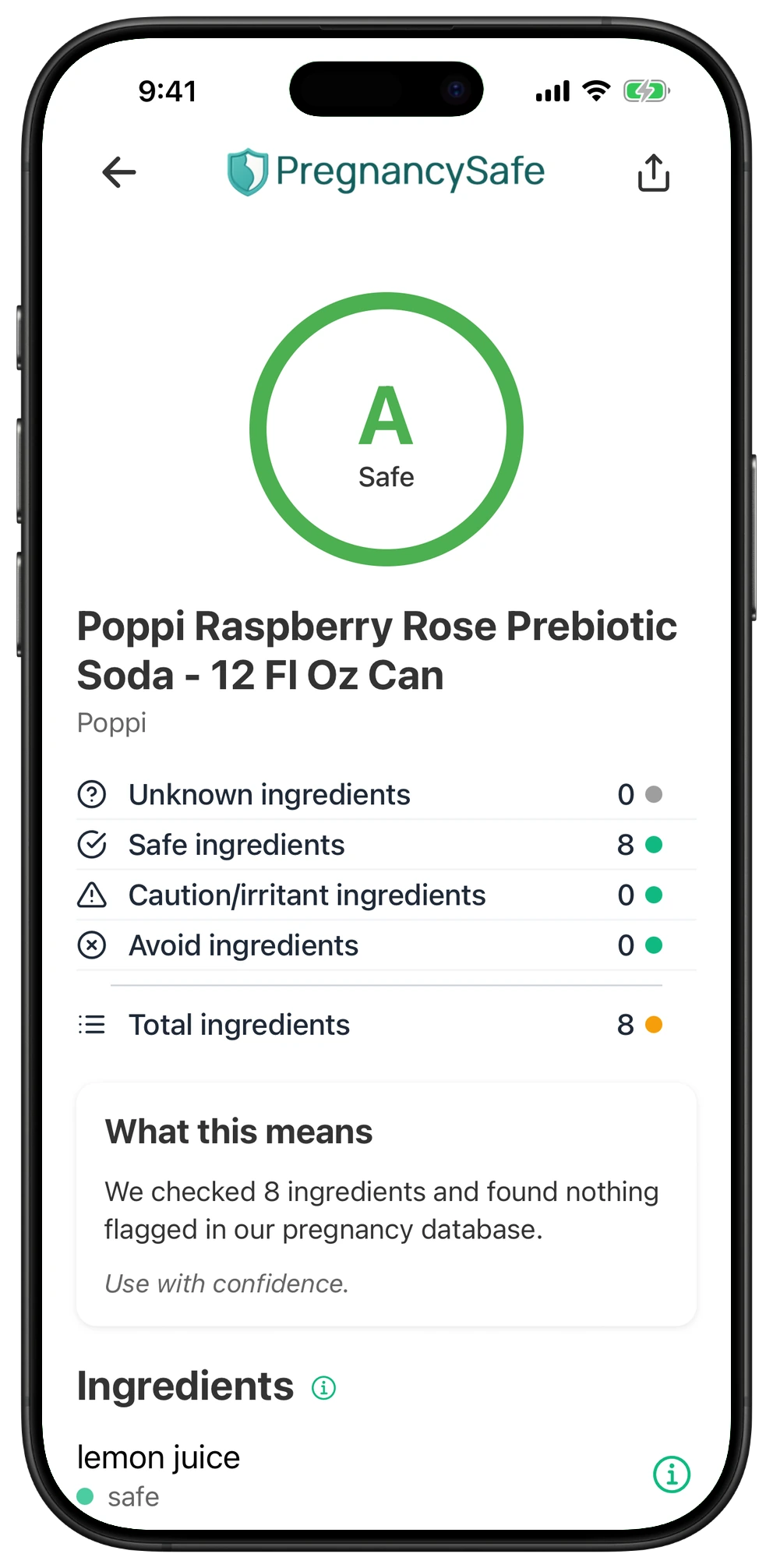
| A | Poppi Raspberry Rose Prebiotic Soda | Poppi | soda |
| B+ | Sprite Zero Lemon-Lime Soda 6Pk | Sprite Zero | soda |
Are Other A&W Products Safe During Pregnancy?
We looked at 10 other A&W products. 1 are pregnancy safe (A or B grade), while 9 need a closer look.
| Grade | Product | Type |
|---|---|---|
| B+ | A&W Ice Cream Sundae Zero Sugar Soda | soda |
| C | A&W Cream Soda 6Pack | cream soda |
| C+ | A&W Caffeine-Free Root Beer 341 Ml | soft drink |
| C+ | A&W Cream Soda | cream soda |
How Does A&W Root Beer Compare to Other Sodas?
We graded 3,107 Sodas for pregnancy safety. Here's how they stack up:
A&W Root Beer earns a C+ grade, placing it among the majority of Sodas. Only 13% of products in this category get an A grade, so it pays to choose carefully.
How Do We Score Products for Pregnancy Safety?
We analyze each product's ingredients and category to flag known risks and provide cautionary notices for general category safety concerns.
A - Safe
Excellent choice! All ingredients are considered safe during pregnancy.
What to do: Use with confidence.
B - Likely Safe
Pretty much safe with very minimal risk. Some ingredients may have limited pregnancy studies, but no significant safety concerns have been identified.
What to do: Use with confidence.
C - Limit
Contains ingredients with some pregnancy considerations. Research shows these ingredients may have limited safety data, potential for minor hormonal effects, or require caution based on animal studies.
What to do: Use sparingly and consider safer alternatives when available.
D - Caution
Similar to C grade but contains multiple cautionary ingredients. The combination increases overall concern.
What to do: Try to avoid if that makes you feel better. If you've already used it, no need to panic.
F - Avoid
Contains an ingredient Pregnancy Safe recommends avoiding during pregnancy. This may reflect an established risk or a precaution based on limited evidence; check the ingredient guidance and exposure context.
What to do: Do not use during pregnancy. If you've already used it, don't worry - contact your OBGYN if concerned.
People Also Checked
References
- https://cdn.realfood.gov/DGA.pdf
- https://www.dietaryguidelines.gov/sites/default/files/2021-12/DGA_Pregnancy_FactSheet-508c.pdf
- https://www.acog.org/womens-health/faqs/healthy-eating-during-pregnancy
- https://www.cdc.gov/nutrition/php/data-research/added-sugars.html
- https://www.cdc.gov/diabetes/about/gestational-diabetes.html
- https://www.who.int/publications/i/item/9789241549028
- https://nesr.usda.gov/2025-dietary-guidelines-advisory-committee-systematic-reviews/dietary-patterns_gestational-diabetes
- https://www.ecfr.gov/current/title-21/chapter-I/subchapter-B/part-184/subpart-B/section-184.1733
- https://apps.who.int/food-additives-contaminants-jecfa-database/Home/Chemical/1098
- https://www.inchem.org/documents/jecfa/jecmono/v83je01.pdf
- https://efsa.onlinelibrary.wiley.com/doi/10.2903/j.efsa.2016.4433
- https://www.fda.gov/food/environmental-contaminants-food/questions-and-answers-occurrence-benzene-soft-drinks-and-other-beverages
- https://pubmed.ncbi.nlm.nih.gov/29243541/
- https://ec.europa.eu/health/ph_risk/committees/04_sccp/docs/sccp_o_015.pdf
- https://www.acog.org/womens-health/experts-and-stories/ask-acog/how-much-water-should-i-drink-during-pregnancy
- https://www.cdc.gov/healthy-weight-growth/water-healthy-drinks/index.html
- https://www.cdc.gov/heat-health/hcp/clinical-overview/heat-and-pregnant-women.html
- https://www.cdc.gov/drinking-water/about/index.html
- https://www.cdc.gov/yellow-book/hcp/family-travel/pregnant-travelers.html
- https://www.epa.gov/privatewells/protect-your-homes-water
- https://www.fda.gov/consumers/consumer-updates/bottled-water-everywhere-keeping-it-safe
- https://www.nationalacademies.org/read/10925/chapter/6