Best Pregnancy Safe Electrolyte Powder (Updated 2026 Guide)
Updated September 9, 2026
The Answer
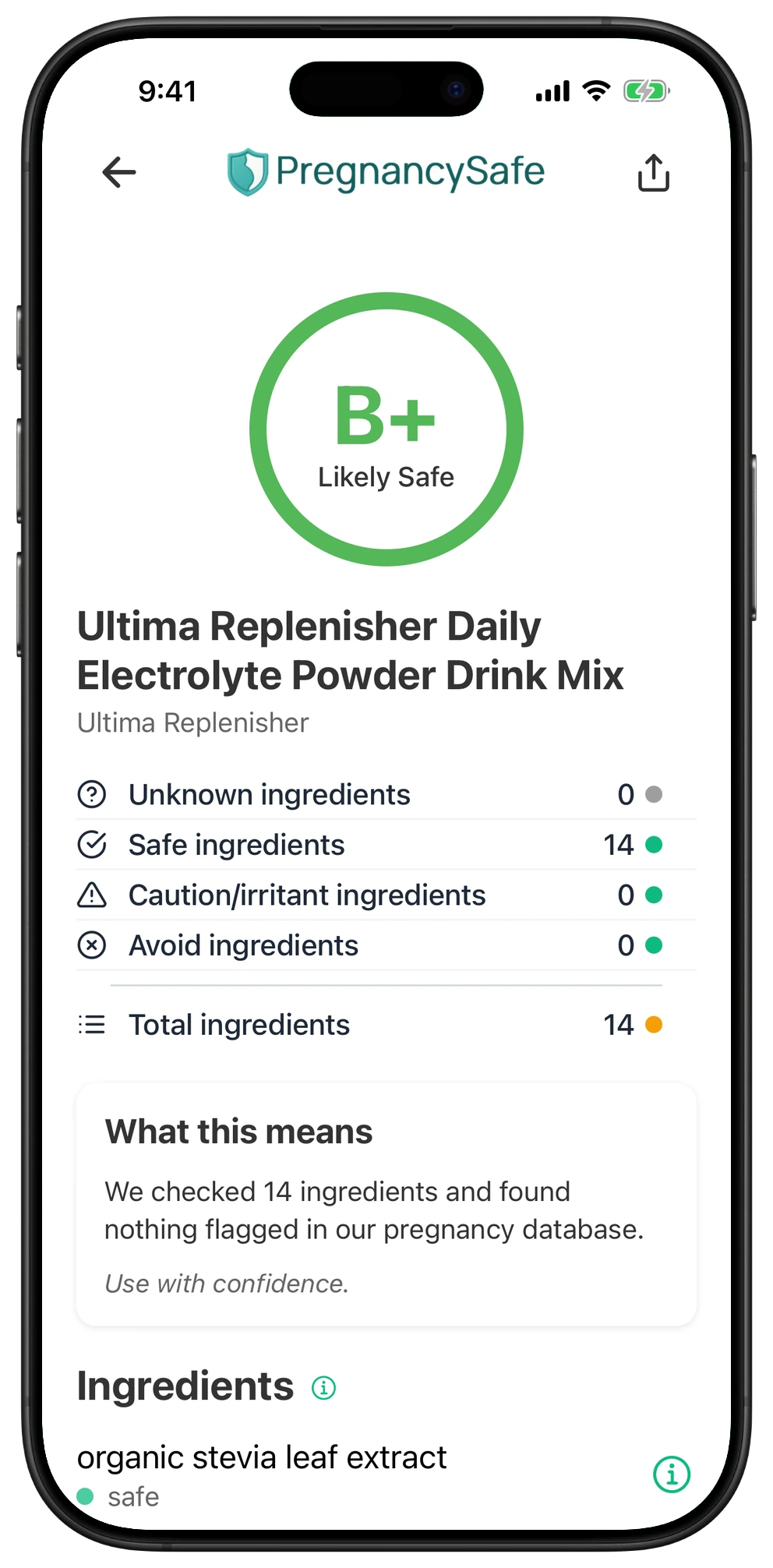
Electrolyte powder can be appropriate during pregnancy, but choose the formula for your needs and follow its exact dilution instructions; sports supplements and oral rehydration formulas are not interchangeable. Our catalog contains mostly A and B+ grades, but those scores do not establish pregnancy suitability or a safe dose.
Plain fluids and regular food may meet your everyday hydration needs; when choosing a powder, check its electrolyte amounts, added ingredients and preparation directions. Red 40 and blue 1 raise limited evidence concerns rather than demonstrating fetal harm at ordinary regulated food exposures, while spirulina concerns center on supplement quality and uncertain pregnancy evidence. Get prompt clinical advice for persistent vomiting, inability to retain fluids, fainting or dehydration, and discuss use first if you have kidney or heart disease or fluid or sodium restrictions.
Pregnancy Safe is 100% independent and research driven. No companies pay to promote or sponsor products.
Stress Less This Pregnancy
Check your exact electrolyte powder in the app

✓ What's Safe
- • Choose a formula that matches your purpose: an oral rehydration formula is not interchangeable with a sports or stimulant supplement.
- • Check the exact version’s label for sodium, potassium and magnesium amounts per serving, rather than comparing packet sizes alone.
- • Look for clear directions specifying both the powder amount and the volume of water, and follow them exactly.
- • Prefer a straightforward hydration formula without stimulant or unnecessary supplement add ons.
- • Consider dye free options if you want to reduce frequent red 40 or blue 1 exposure; this is a precaution, not proof that colored drinks harm pregnancy.
- • Assess sugar in context: added glucose or dextrose can serve a purpose in a rehydration formula, so sugar free is not automatically better.
✗ What to Avoid
- • Avoid adding extra scoops or using less water than directed to make a supposedly stronger hydration drink.
- • Avoid treating sports or stimulant powders as substitutes for a clinician recommended oral rehydration formula.
- • Limit frequent red 40 and blue 1 intake when an otherwise suitable dye free option is available; ordinary regulated food exposure is not established to cause fetal harm.
- • Avoid choosing spirulina or spirulina extract add ons solely because they sound natural; check their purpose, amount and quality controls, especially at supplement doses.
- • Avoid setting your own daily packet limit from an ingredient grade or assuming an A score means unlimited use.
- • Avoid relying on electrolyte powder alone for persistent vomiting, inability to keep fluids down, fainting or dehydration.
Most Common Ingredients in Electrolyte Powder Products
We analyzed 144 electrolyte powder products. Here are the most common ingredients, ranked by how often they appear:
Ingredients to Watch Out For in Electrolyte Powder
These are the most common flagged ingredients across 144 electrolyte powder products we analyzed.
Caution
Red 40 is a synthetic food dye commonly used to add vibrant red color to candies, beverages, and processed foods.
Has limited human pregnancy data and is allowed at regulated food additive levels, but child neurobehavior concerns and high dose animal findings make frequent high dye intake worth limiting.
Red 40 colors electrolyte drinks but does not provide electrolytes. Pregnancy specific human data are limited; child behavior findings and high dose animal studies do not establish fetal harm from ordinary regulated drink exposure. Choosing dye free powder can reduce frequent exposure without treating an occasional serving as a major pregnancy hazard.
Flagged in 14 of 144 products (10%)
and blue 1
Caution
Blue 1 is a synthetic blue dye commonly used to add vibrant color to foods, beverages, and cosmetics.
Has limited human pregnancy data; regulated food use is not shown to cause fetal harm, but high dose animal neurobehavior findings and child sensitivity concerns support minimizing frequent exposure.
This label wording refers to blue 1, not a separate ingredient. In electrolyte powder it is a color additive, and ordinary regulated food use has not been shown to cause fetal harm. Limited pregnancy data and indirect child and high dose animal findings support a precautionary preference for dye free options with frequent use.
Flagged in 9 of 144 products (6%)
blue 1
Caution
Blue 1 is a synthetic blue dye commonly used to add vibrant color to foods, beverages, and cosmetics.
Has limited human pregnancy data; regulated food use is not shown to cause fetal harm, but high dose animal neurobehavior findings and child sensitivity concerns support minimizing frequent exposure.
Blue 1 is a synthetic color used in some electrolyte powders. Human pregnancy evidence is very limited, and findings from children or high dose animal studies do not demonstrate harm to a fetus from normal drink exposure. You can choose a dye free formulation to minimize unnecessary repeated exposure.
Flagged in 9 of 144 products (6%)
fd c blue 1
Caution
FD&C Blue 1 is a synthetic blue dye commonly used to add color to food, beverages, and pharmaceuticals.
Has limited human pregnancy data; regulated food use is not shown to cause fetal harm, but high dose animal neurobehavior findings and child sensitivity concerns support minimizing frequent exposure.
This is label wording for FD&C Blue No. 1, the same dye as blue 1. Its role in electrolyte powder is coloring, not rehydration. Pregnancy specific evidence is limited, but ordinary regulated food exposure is not shown to cause fetal harm; a dye free option is a precaution rather than a clinical necessity established by this evidence.
Flagged in 3 of 144 products (2%)
spirulina extract
Caution
Spirulina extract is a nutrient rich, blue green algae derivative known for its high levels of protein, antioxidants, and vitamins, often used to boost energy and support overall health.
Has limited pregnancy safety data and product quality concerns because contaminated blue green algae supplements can contain microcystins, heavy metals, or pathogenic bacteria.
Spirulina extract is derived from blue green algae and may be included as a coloring ingredient rather than a full dose algae supplement. Concerns about contaminated algae supplements and limited pregnancy studies do not establish the same risk from a small coloring amount. Check its role, amount and quality controls, and discuss supplement dose use with your clinician.
Flagged in 3 of 144 products (2%)
and red 40
Caution
Red 40 is a synthetic food dye commonly used to add vibrant red color to candies, beverages, and processed foods.
Has limited human pregnancy data and is allowed at regulated food additive levels, but child neurobehavior concerns and high dose animal findings make frequent high dye intake worth limiting.
The wording refers to red 40 used as a color, not an additional substance. In an electrolyte drink, caution reflects limited pregnancy evidence and indirect findings from children and high dose animal research. Ordinary regulated exposure is not established to harm a fetus, though limiting frequent dye intake is reasonable.
Flagged in 2 of 144 products (1%)
fd c red 40
Caution
FD&C Red 40 is a synthetic red dye commonly used to add vibrant color to foods, beverages, and cosmetics.
Has limited human pregnancy data and is allowed at regulated food additive levels, but child neurobehavior concerns and high dose animal findings make frequent high dye intake worth limiting.
This label name identifies FD&C Red No. 40, also called Allura Red AC. It adds color to electrolyte powder; it is not a different ingredient from red 40. Limited human pregnancy evidence supports cautious wording, not a claim of proven fetal harm from an occasional regulated serving.
Flagged in 2 of 144 products (1%)
red 40 and blue 1
Caution
Red 40 and Blue 1 are synthetic food colorings commonly used to add vibrant, appealing hues to various processed foods and beverages.
Has limited human pregnancy data and is allowed at regulated food additive levels, but child neurobehavior concerns and high dose animal findings make frequent high dye intake worth limiting.
This label entry lists two synthetic colors, red 40 and blue 1, rather than a distinct compound. Both have limited pregnancy specific evidence, and child behavior concerns or high dose animal findings do not prove fetal harm from ordinary regulated drink exposure. A dye free electrolyte formula can reduce exposure to both when used frequently.
Flagged in 2 of 144 products (1%)
How Do Electrolyte Powder Products Stack Up?
Our catalog contains ratings for 144 electrolyte powder products. These are database grades, not independent safety certifications.
Ingredient grades cannot establish dose, preparation, label completeness, efficacy or pregnancy suitability. An A score is not an endorsement, and counts include unreviewed catalog records.
Your Questions Answered
Which electrolyte powders are safe for pregnancy?
Choose by the exact formulation, intended use and mixing instructions, not by brand or grade alone. Check electrolyte amounts and whether the powder includes stimulants or other supplement ingredients. Oral rehydration formulas and sports powders are not interchangeable. There is no universally endorsed powder here; if you need rehydration because of illness, ask your care team which formula fits your situation.
Is it safe to drink electrolytes while pregnant?
An electrolyte drink can be appropriate during pregnancy, but you may not need one for ordinary daily hydration. Plain fluids and regular food may meet your needs. If you use a powder, follow its exact dilution directions and review any added supplement ingredients. Discuss use with a clinician if you have kidney or heart disease or have been told to restrict fluids or sodium.
How many electrolyte packets can I use each day during pregnancy?
There is no single pregnancy specific packet limit that applies to every powder. Packets differ in electrolyte amounts, added ingredients and required water volume. Follow the exact product directions rather than assuming that one packet is a standard dose. If you need repeated servings or ongoing daily use to manage symptoms, ask your care team about the formula and amount.
Is sugar free electrolyte powder better during pregnancy?
Not automatically. Added sugar, including glucose or dextrose, can have a functional role in an oral rehydration formula. A sugar free sports powder should not be assumed to be an equivalent replacement. Compare the intended use and full formulation, rather than choosing solely by sugar content.
Can electrolyte powder treat severe morning sickness or hyperemesis?
Do not treat electrolyte powder as a stand alone treatment for hyperemesis. Persistent vomiting, inability to retain fluids, fainting or signs of dehydration need prompt clinical advice. Your care team can determine whether oral rehydration is appropriate or other treatment is needed. A powder’s ingredient grade does not show that it treats severe pregnancy sickness.
Do A grades mean electrolyte powders are verified safe for pregnancy?
No. Our catalog contains 144 products, including 37 with an A grade, but the counts include records that have not been independently label reviewed. Ingredient grades do not establish dose, correct preparation, label completeness, effectiveness or pregnancy suitability. A lower grade likewise does not, by itself, mean a powder is unsafe or unsuitable for clinician directed rehydration.
How Do We Score Products for Pregnancy Safety?
We analyze each product's ingredients and category to flag known risks and provide cautionary notices for general category safety concerns.
Grades reflect the ingredient and category information available to us. They don’t verify a complete, current label or account for dose, preparation, or contamination. Read them alongside the guidance above, not as a guarantee of pregnancy safety or proof that every use is harmful.
A - Safe
Excellent choice! All ingredients are considered safe during pregnancy.
What to do: Use with confidence.
B - Likely Safe
Pretty much safe with very minimal risk. Some ingredients may have limited pregnancy studies, but no significant safety concerns have been identified.
What to do: Use with confidence.
C - Limit
Contains ingredients with some pregnancy considerations. Research shows these ingredients may have limited safety data, potential for minor hormonal effects, or require caution based on animal studies.
What to do: Use sparingly and consider safer alternatives when available.
D - Caution
Similar to C grade but contains multiple cautionary ingredients. The combination increases overall concern.
What to do: Try to avoid if that makes you feel better. If you've already used it, no need to panic.
F - Avoid
Contains an ingredient Pregnancy Safe recommends avoiding during pregnancy. This may reflect an established risk or a precaution based on limited evidence; check the ingredient guidance and exposure context.
What to do: Do not use during pregnancy. If you've already used it, don't worry - contact your OBGYN if concerned.
People Also Checked
References
- https://ods.od.nih.gov/factsheets/Pregnancy-HealthProfessional/
- https://www.nhs.uk/pregnancy/complications/severe-vomiting/
- https://www.hfpappexternal.fda.gov/scripts/fdcc/index.cfm?id=FDCRed40&set=ColorAdditives
- https://www.ecfr.gov/current/title-21/chapter-I/subchapter-A/part-74/subpart-A/section-74.340
- https://www.fda.gov/food/color-additives-information-consumers/tracking-food-industry-pledges-remove-petroleum-based-food-dyes
- https://www.efsa.europa.eu/en/efsajournal/pub/1327
- https://www.efsa.europa.eu/en/efsajournal/pub/4007
- https://apps.who.int/food-additives-contaminants-jecfa-database/Home/Chemical/2361
- https://oehha.ca.gov/risk-assessment/report/health-effects-assessment-potential-neurobehavioral-effects-synthetic-food-dyes-children
- https://pubmed.ncbi.nlm.nih.gov/6636206/
- https://pubmed.ncbi.nlm.nih.gov/2613118/
- https://pubmed.ncbi.nlm.nih.gov/7940558/
- https://www.hfpappexternal.fda.gov/scripts/fdcc/index.cfm?id=FDCBlue1&set=ColorAdditives
- https://www.ecfr.gov/current/title-21/chapter-I/subchapter-A/part-74
- https://efsa.onlinelibrary.wiley.com/doi/10.2903/j.efsa.2010.1853
- https://apps.who.int/food-additives-contaminants-jecfa-database/Home/Chemical/3309
- https://pubmed.ncbi.nlm.nih.gov/23208798/
- https://pubmed.ncbi.nlm.nih.gov/24257113/
- https://www.fda.gov/food/natural-toxins-food/blue-green-algae-products-and-microcystins
- https://www.ncbi.nlm.nih.gov/books/NBK548312/
- https://www.ncbi.nlm.nih.gov/books/NBK501849/
- https://pubmed.ncbi.nlm.nih.gov/21793723/
- https://journal.ugm.ac.id/v3/InaJBCS/article/view/23573
- https://doi.org/10.4236/ojog.2017.71016
- https://pubmed.ncbi.nlm.nih.gov/37317149/
- https://pubmed.ncbi.nlm.nih.gov/37368655/
- https://pubmed.ncbi.nlm.nih.gov/23036452/
- https://pubmed.ncbi.nlm.nih.gov/21842336/