Is Red Dye 40 Safe During Pregnancy?
Updated September 11, 2026
The Answer
Red Dye 40 warrants caution in foods during pregnancy, not automatic avoidance. Occasional exposure at regulated food additive levels is unlikely to be a major pregnancy hazard, but limiting frequent high dye ultra processed foods is reasonable.
Eating Red Dye 40 is different from applying it: normal topical use in cosmetics made with certified color additive and used as directed is considered likely safe, with limited direct pregnancy evidence.
FDA permits certified Red 40 in foods under manufacturing rules; human pregnancy data are limited, and concerns come mainly from possible attention or activity effects in some children and reproductive or neurobehavioral findings in high dose animal studies, not proven fetal harm.
Already used it? If you already ate something containing Red Dye 40, occasional regulated food exposure is unlikely to be a major pregnancy hazard. A useful next step is to check how often highly dyed foods and drinks appear in your usual diet and limit frequent intake.
Pregnancy Safe is 100% independent and research driven. No companies pay to promote or sponsor products.
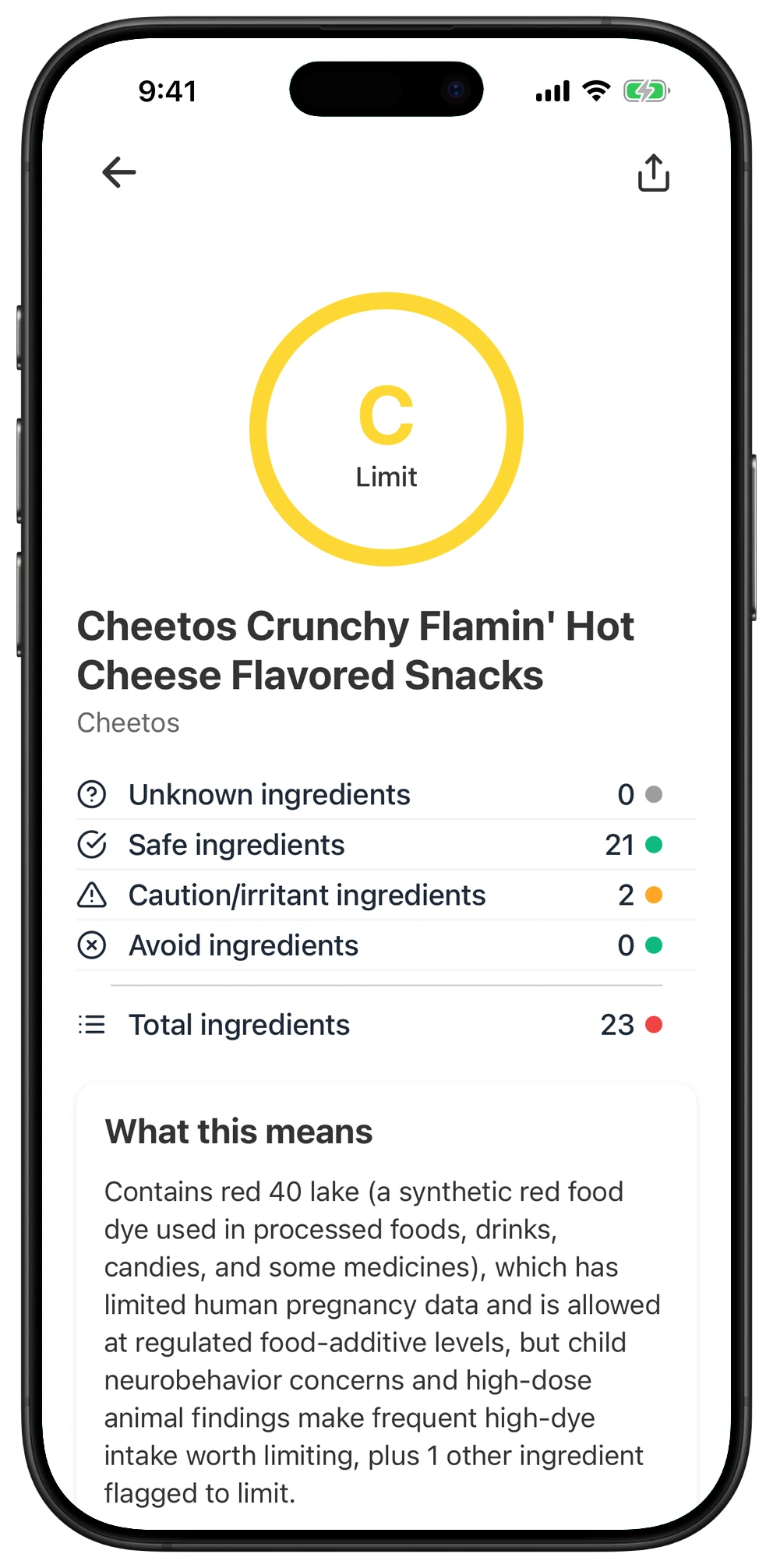
Stressless Pregnancy
Check your exact product with Red Dye 40 in the app

What Is Red Dye 40?
You may also see it listed as: Red 40, Allura Red AC, FD&C Red No 40, E129
Red Dye 40 is a synthetic azo color additive used to give foods, drinks, candies, and some medicines a red color. You may encounter it in cereals, cookies, fruit snacks, drink mixes, and sports drinks, as well as shampoos, conditioners, cleansers, and other cosmetics.
What Other Ingredients Should You Look Out for in Products With Red Dye 40?
A product's full ingredient list determines whether it's pregnancy-safe or not. These ingredients also appear in some of the red dye 40 products we analyzed and may deserve a closer look.
Licorice Root
AvoidLook for licorice root or licorice root extract in candies and juice drinks: regular or high glycyrrhizin intake raises pregnancy concerns, unlike small incidental flavoring amounts. Check whether the product contains real licorice and how frequently you consume it.
Flagged in 16 products (0.1%) in this analysis.
Butylphenyl Methylpropional
AvoidCheck scented skin and hair products for butylphenyl methylpropional, also called Lilial or BMHCA. Regulatory reproductive toxicity concerns, based largely on animal evidence, support choosing products without this listed fragrance during pregnancy.
Flagged in 9 products (0%) in this analysis.
Does the Form or Amount of Red Dye 40 Matter During Pregnancy?
For food exposure, the practical distinction is occasional regulated intake versus frequent consumption of highly dyed foods and drinks. The topical assessment covers normal cosmetic use as directed, not unusually concentrated or frequent use, large areas, covered applications, or broken skin. Limited pregnancy and skin absorption evidence means it should not be extended to inhaled, injected, tattoo, occupational, or uncertified exposures.
What Products Contain Red Dye 40?
Pregnancy Safe has looked at 21,072 products that have red dye 40 as an ingredient. The category and grade breakdowns below use 21,072 products with an exact ingredient match.
What Types of Products Contain Red Dye 40?
Products You May Have That Contain Red Dye 40
| Grade | Product | Brand | Type |
|---|---|---|---|
| Varies C (1), C- (2) | Doritos Nacho Cheese Flavored Tortilla Chips | Doritos | Tortilla Chip |
| C | Orange Soda | Fanta | Soda |
| C+ | Fruit Punch | Gatorade | Sports Drink |
| Varies D (1), D- (2) | Gummy Clusters | Nerds | Candy |
| C | Doritos Nacho Cheese Tortilla Chips | Doritos | Tortilla Chip |
| C+ | Gatorade Gatorlyte Strawberry Kiwi Sports Drink - 20 Fl Oz Bottle | Gatorade | Sports Drink |
| C+ | Gatorade Fruit Punch Sports Drink - 20 Fl Oz Bottle | Gatorade | Sports Drink |
| C+ | Gatorade Zero | Gatorade | Sports Drink |
How Do Products Containing Red Dye 40 Score?
It can be helpful to see how products containing red dye 40 generally score during pregnancy. This does not tell you whether your exact product is safe, but it gives you a general idea of what we found. In this breakdown of 21,072 products, 65% receive a C grade. A C grade means the complete formula has some pregnancy considerations, so use it sparingly and consider a higher scoring alternative when one is available.
Frequently Asked Questions About Red Dye 40 During Pregnancy
Which foods commonly contain Red Dye 40?
You may find it in candy, cereals, cookies, fruit snacks, soda, drink mixes, and sports drinks. Check the ingredient list for Red 40, Allura Red AC, FD&C Red No 40, or E129 rather than relying on the product's color.
Has Red Dye 40 been shown to harm an unborn baby?
Human pregnancy specific data are limited, and fetal harm from occasional regulated food exposure has not been proven. Possible attention or activity effects in some children and findings from high dose animal studies are not equivalent to demonstrated harm from exposure during pregnancy.
Is Red Dye 40 banned in the United States?
U.S. rules still allow certified FD&C Red No. 40 in foods at levels consistent with good manufacturing practice. FDA is tracking a voluntary industry phase out of petroleum based food dyes; that is different from a blanket ban on Red 40.
Does the advice change between the first, second, and third trimesters?
The available evidence does not establish trimester specific safety differences for Red Dye 40. It does not support naming a safest trimester for exposure.
What about Red 40 in shampoo or conditioner?
Red 40 itself appears low concern during normal topical use in cosmetics made with certified color additive and used as directed. Direct pregnancy and skin absorption data remain limited, and this does not establish the safety of the complete formula.
Is there an acceptable daily intake for Red Dye 40?
EFSA and JECFA maintain an acceptable daily intake of 0–7 mg/kg body weight per day. This food additive benchmark is not a pregnancy specific guarantee or a target to consume; limiting frequent high dye foods remains reasonable.
How Do We Score Products for Pregnancy Safety?
We analyze each product's ingredients and category to flag known risks and provide cautionary notices for general category safety concerns.
A - Safe
Excellent choice! All ingredients are considered safe during pregnancy.
What to do: Use with confidence.
B - Likely Safe
Pretty much safe with very minimal risk. Some ingredients may have limited pregnancy studies, but no significant safety concerns have been identified.
What to do: Use with confidence.
C - Limit
Contains ingredients with some pregnancy considerations. Research shows these ingredients may have limited safety data, potential for minor hormonal effects, or require caution based on animal studies.
What to do: Use sparingly and consider safer alternatives when available.
D - Caution
Similar to C grade but contains multiple cautionary ingredients. The combination increases overall concern.
What to do: Try to avoid if that makes you feel better. If you've already used it, no need to panic.
F - Avoid
Contains an ingredient Pregnancy Safe recommends avoiding during pregnancy. This may reflect an established risk or a precaution based on limited evidence; check the ingredient guidance and exposure context.
What to do: Do not use during pregnancy. If you've already used it, don't worry - contact your OBGYN if concerned.
Sources
- https://apps.who.int/food-additives-contaminants-jecfa-database/Home/Chemical/2361
- https://ec.europa.eu/health/archive/ph_risk/committees/sccp/documents/out264_en.pdf
- https://eur-lex.europa.eu/legal-content/EN/TXT/?uri=CELEX:02009R1223-20260518
- https://inchem.org/documents/jecfa/jecmono/v73je01.pdf
- https://oehha.ca.gov/risk-assessment/report/health-effects-assessment-potential-neurobehavioral-effects-synthetic-food-dyes-children
- https://pubmed.ncbi.nlm.nih.gov/2613118/
- https://pubmed.ncbi.nlm.nih.gov/6636206/
- https://pubmed.ncbi.nlm.nih.gov/7940558/
- https://www.ecfr.gov/current/title-21/chapter-I/subchapter-A/part-74/subpart-A/section-74.340
- https://www.ecfr.gov/current/title-21/chapter-I/subchapter-A/part-74/subpart-C/section-74.2340
- https://www.efsa.europa.eu/en/efsajournal/pub/1327
- https://www.efsa.europa.eu/en/efsajournal/pub/4007
- https://www.fda.gov/food/color-additives-information-consumers/tracking-food-industry-pledges-remove-petroleum-based-food-dyes
- https://www.hfpappexternal.fda.gov/scripts/fdcc/index.cfm?id=FDCRed40&set=ColorAdditives
- https://www.nccih.nih.gov/health/licorice-root
- https://webprod.hc-sc.gc.ca/nhpid-bdipsn/dbImages/mono_licorice_english.pdf
- https://www.ema.europa.eu/en/medicines/herbal/liquiritiae-radix
- https://www.medsafe.govt.nz/profs/PUArticles/December2019/Liquorice-side-effects-interactions.htm
- https://www.bfr.bund.de/cm/349/does-the-consumption-of-liquorice-by-pregnant-women-impair-the-mental-and-physical-development-of-children.pdf
- https://pubmed.ncbi.nlm.nih.gov/28158597/
- https://pubmed.ncbi.nlm.nih.gov/11390327/
- https://www.canada.ca/en/health-canada/services/chemicals-product-safety/lilial.html
- https://www.canada.ca/en/environment-climate-change/services/evaluating-existing-substances/draft-assessment-phenylpropanoids-aldehydes-group.html
- https://health.ec.europa.eu/publications/safety-butylphenyl-methylpropional-p-bmhca-cosmetic-products-submission-ii_en
- https://eur-lex.europa.eu/legal-content/EN/TXT/PDF/?uri=CELEX%3A32021R1902
- https://chem.echa.europa.eu/100.001.173/harmonised/113759
- https://chem.echa.europa.eu/obligation-lists/candidateList
- https://pubmed.ncbi.nlm.nih.gov/32461162/