Is Yogurt Safe During Pregnancy? (Updated 2026 Guide)
Updated September 9, 2026
The Answer
Yes you can eat yogurt during pregnancy when it is made from pasteurized milk and kept refrigerated according to its label. Avoid raw milk yogurt; pasteurization and proper handling matter more than an ingredient grade.
The main pregnancy concern is foodborne illness from raw milk yogurt or contaminated or improperly stored products, not fermentation itself. Live starter cultures do not make yogurt made from pasteurized milk equivalent to raw milk. Added sugars and food dyes are secondary considerations: frequent high intake is worth limiting, but an ordinary serving is not established to cause fetal harm.
Pregnancy Safe is 100% independent and research driven. No companies pay to promote or sponsor products.
Stress Less This Pregnancy
Check your exact yogurt in the app

✓ What's Safe
- • Check that dairy yogurt is made from pasteurized milk; ask the manufacturer if the label is unclear.
- • Choose refrigerated yogurt and follow the package's storage and after opening instructions.
- • Choose plain or lower added sugar yogurt for regular meals and snacks; compare added sugar at the same serving size.
- • Read the exact version's label rather than assuming all flavors or sizes have the same ingredients.
- • Distinguish ready to eat yogurt from plant based alternatives and probiotic supplement powders; check each product's ingredients and handling instructions separately.
✗ What to Avoid
- • Avoid yogurt made from raw or unpasteurized milk, even if it is described as natural, organic, or cultured.
- • Do not eat spoiled yogurt or refrigerated yogurt that has not been stored according to its label.
- • Avoid relying on live culture or probiotic claims as proof of pasteurization, freedom from contamination, or pregnancy specific benefits.
- • Limit frequent servings high in added sugars, including high fructose corn syrup; this is nutrition guidance, not a warning that one serving harms your baby.
- • If you want to reduce food dye exposure, choose options without red 40, blue 1, or yellow 5 rather than making highly colored yogurt a daily staple. Ordinary regulated food exposure has not been shown to cause fetal harm.
- • Do not treat concentrated probiotic or herbal supplement powders as interchangeable with yogurt foods or add them routinely without pregnancy specific advice.
Most Common Ingredients in Yogurt Products
We analyzed 6,185 yogurt products. Here are the most common ingredients, ranked by how often they appear:
Ingredients to Watch Out For in Yogurt
These are the most common flagged ingredients across 6,185 yogurt products we analyzed.
Caution
Red 40 is a synthetic food dye commonly used to add vibrant red color to candies, beverages, and processed foods.
Has limited human pregnancy data and is allowed at regulated food additive levels, but child neurobehavior concerns and high dose animal findings make frequent high dye intake worth limiting.
Flagged in 151 of 6,185 products (2%)
blue 1
Caution
Blue 1 is a synthetic blue dye commonly used to add vibrant color to foods, beverages, and cosmetics.
Has limited human pregnancy data; regulated food use is not shown to cause fetal harm, but high dose animal neurobehavior findings and child sensitivity concerns support minimizing frequent exposure.
Flagged in 103 of 6,185 products (2%)
high fructose corn syrup
Caution
High fructose corn syrup is a sweet, liquid sweetener made from corn starch, commonly used in processed foods and beverages.
Is not a known teratogen at occasional food amounts, but high added sugar intake can displace nutrients and raise gestational diabetes and metabolic concerns.
Flagged in 61 of 6,185 products (1%)
red 40 and blue 1
Caution
Red 40 and Blue 1 are synthetic food colorings commonly used to add vibrant, appealing hues to various processed foods and beverages.
Has limited human pregnancy data and is allowed at regulated food additive levels, but child neurobehavior concerns and high dose animal findings make frequent high dye intake worth limiting.
Flagged in 28 of 6,185 products (0%)
elderberry juice concentrate
Caution
Elderberry juice concentrate is a potent extract rich in antioxidants and vitamins, commonly used to support immune health and boost overall wellness.
Has little pregnancy specific safety data for supplement doses and can be toxic if raw, unripe, or made with leaves, stems, bark, or roots.
Flagged in 26 of 6,185 products (0%)
yellow 5
Caution
Yellow 5 is a synthetic food dye used to impart a bright yellow color to various processed foods and beverages.
Has limited human pregnancy data, rare hypersensitivity labeling concerns, and animal/children's neurobehavior signals despite regulated dietary use under ADI based limits.
Flagged in 21 of 6,185 products (0%)
spirulina extract
Caution
Spirulina extract is a nutrient rich, blue green algae derivative known for its high levels of protein, antioxidants, and vitamins, often used to boost energy and support overall health.
Has limited pregnancy safety data and product quality concerns because contaminated blue green algae supplements can contain microcystins, heavy metals, or pathogenic bacteria.
Flagged in 17 of 6,185 products (0%)
organic elderberry juice concentrate
Caution
Organic elderberry juice concentrate is a natural extract rich in antioxidants, known for supporting immune health and providing a flavorful, nutritious addition to beverages and remedies.
Has little pregnancy specific safety data for supplement doses and can be toxic if raw, unripe, or made with leaves, stems, bark, or roots.
Flagged in 15 of 6,185 products (0%)
Types of Yogurt
Yogurt Products We've Analyzed
Our catalog contains ratings for 6,185 yogurt products. These are database grades, not independent safety certifications.
These are ingredient scores, not clinical safety verdicts or independent verification of every product. Follow the preparation, handling or exact-formula guidance above. Five exact-UPC supplement powders were excluded from this yogurt-food cohort.
Pregnancy Safe Yogurt Products
Popular options from our catalog, prioritizing A and B ingredient grades, with C grade options used to fill remaining places. Within each group, products are ordered by searches in Pregnancy Safe, not retail sales. Read the cautions and guidance above; grades do not verify a complete current label or guarantee pregnancy safety.
| Grade | Product | Brand |
|---|---|---|
| B+ | Chobani Strawberry Banana Greek Style Yogurt Drink | Chobani |
| A | Greek Yogurt Protein Drink | Chobani |
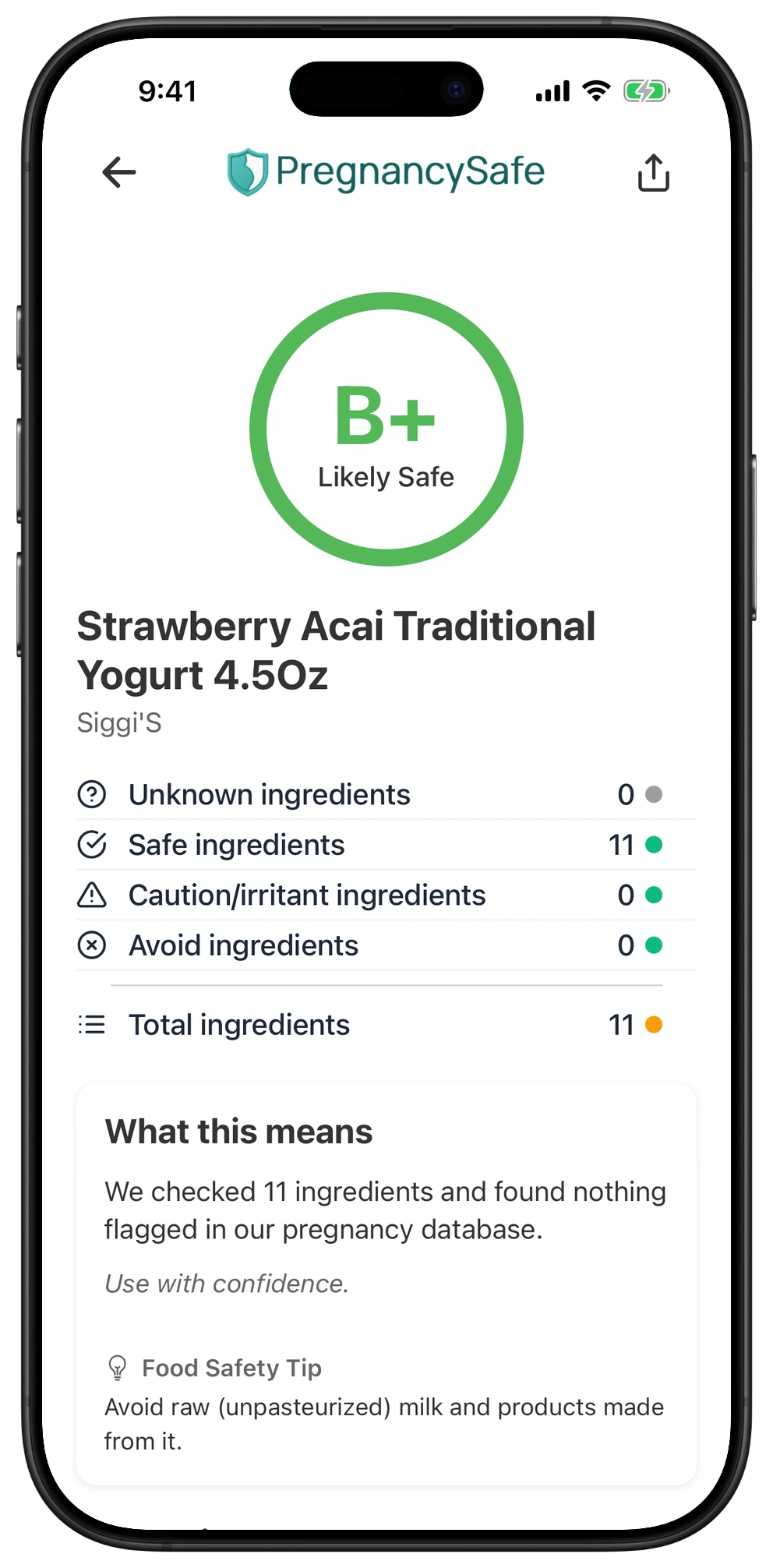
| B+ | Strawberry Acai Traditional Yogurt | Siggi'S |
| A | Coconut Cult Organic Coconut Yogurt Chocolate Flavor Probiotic | Coconut Cult |
| A | Siggis Low Fat Yogurt | Siggi'S |
Your Questions Answered
Can I eat yogurt during pregnancy?
Yes, yogurt made from pasteurized milk is compatible with pregnancy when properly refrigerated and handled. Avoid yogurt made from raw milk. Check the exact package for pasteurization and storage instructions rather than relying on the brand or an ingredient score.
Is Greek yogurt safe during pregnancy?
Greek yogurt follows the same food safety guidance as other dairy yogurt: choose pasteurized milk and keep it refrigerated as directed. The word Greek does not establish pasteurization or guarantee safe handling. A Greek yogurt supplement powder is a different product and should not inherit the safety guidance for ready to eat yogurt.
Are live cultures in yogurt a concern during pregnancy?
Live starter cultures do not make yogurt made from pasteurized milk the same as raw milk yogurt. You do not need to avoid an otherwise suitable yogurt simply because it contains live cultures. However, a probiotic label does not guarantee freedom from contamination or establish pregnancy specific health benefits.
Can I eat flavored or sweetened yogurt while pregnant?
Flavored yogurt can fit into your diet when it is made from pasteurized milk and stored properly. Compare added sugar per serving, especially if you eat it often, and consider plain or lower added sugar options. High fructose corn syrup is an added sugar, not a known cause of birth defects at occasional food amounts. If you have gestational diabetes, follow your care team's individualized carbohydrate guidance.
Should I avoid yogurt with elderberry or spirulina?
An ingredient name alone does not establish that a yogurt serving is harmful. Elderberry concerns involve limited pregnancy evidence for medicinal doses and toxicity from raw or improperly prepared plant material; that is not equivalent to evidence of harm from a processed yogurt ingredient. Spirulina concerns center on limited pregnancy data and contamination in poorly controlled algae products, especially supplements. Do not assume food coloring amounts carry the same exposure as supplement doses, and ask your clinician before adding concentrated extracts or powders.
Are plant based yogurts covered by the same advice?
Plant based yogurt alternatives are distinct from dairy yogurt, so checking for pasteurized milk does not answer their safety question. Read their own ingredients and storage instructions rather than transferring a dairy yogurt assessment to them. Neither a plant based label nor a probiotic claim guarantees freedom from contamination or pregnancy specific benefits.
Does an A grade mean a yogurt is guaranteed safe during pregnancy?
No. Our catalog contains 6,185 products, including 2,605 with an A ingredient score, but those scores are not clinical safety verdicts or independent verification of every product. An A score cannot confirm refrigeration or rule out contamination, and a lower score does not automatically mean a product is unsafe. Use the exact label and food handling guidance first; incomplete product information is not proof of harm.
How Do We Score Products for Pregnancy Safety?
We analyze each product's ingredients and category to flag known risks and provide cautionary notices for general category safety concerns.
Grades reflect the ingredient and category information available to us. They don’t verify a complete, current label or account for dose, preparation, or contamination. Read them alongside the guidance above, not as a guarantee of pregnancy safety or proof that every use is harmful.
A - Safe
Excellent choice! All ingredients are considered safe during pregnancy.
What to do: Use with confidence.
B - Likely Safe
Pretty much safe with very minimal risk. Some ingredients may have limited pregnancy studies, but no significant safety concerns have been identified.
What to do: Use with confidence.
C - Limit
Contains ingredients with some pregnancy considerations. Research shows these ingredients may have limited safety data, potential for minor hormonal effects, or require caution based on animal studies.
What to do: Use sparingly and consider safer alternatives when available.
D - Caution
Similar to C grade but contains multiple cautionary ingredients. The combination increases overall concern.
What to do: Try to avoid if that makes you feel better. If you've already used it, no need to panic.
F - Avoid
Contains an ingredient Pregnancy Safe recommends avoiding during pregnancy. This may reflect an established risk or a precaution based on limited evidence; check the ingredient guidance and exposure context.
What to do: Do not use during pregnancy. If you've already used it, don't worry - contact your OBGYN if concerned.
People Also Checked
References
- https://www.cdc.gov/foodsafety/rawmilk/index.html
- https://www.cdc.gov/listeria/prevention/index.html
- https://www.nhs.uk/pregnancy/keeping-well/foods-to-avoid/
- https://www.hfpappexternal.fda.gov/scripts/fdcc/index.cfm?id=FDCRed40&set=ColorAdditives
- https://www.ecfr.gov/current/title-21/chapter-I/subchapter-A/part-74/subpart-A/section-74.340
- https://www.fda.gov/food/color-additives-information-consumers/tracking-food-industry-pledges-remove-petroleum-based-food-dyes
- https://www.efsa.europa.eu/en/efsajournal/pub/1327
- https://www.efsa.europa.eu/en/efsajournal/pub/4007
- https://apps.who.int/food-additives-contaminants-jecfa-database/Home/Chemical/2361
- https://oehha.ca.gov/risk-assessment/report/health-effects-assessment-potential-neurobehavioral-effects-synthetic-food-dyes-children
- https://pubmed.ncbi.nlm.nih.gov/6636206/
- https://pubmed.ncbi.nlm.nih.gov/2613118/
- https://pubmed.ncbi.nlm.nih.gov/7940558/
- https://www.hfpappexternal.fda.gov/scripts/fdcc/index.cfm?id=FDCBlue1&set=ColorAdditives
- https://www.ecfr.gov/current/title-21/chapter-I/subchapter-A/part-74
- https://efsa.onlinelibrary.wiley.com/doi/10.2903/j.efsa.2010.1853
- https://apps.who.int/food-additives-contaminants-jecfa-database/Home/Chemical/3309
- https://pubmed.ncbi.nlm.nih.gov/23208798/
- https://pubmed.ncbi.nlm.nih.gov/24257113/
- https://cdn.realfood.gov/DGA.pdf
- https://www.dietaryguidelines.gov/sites/default/files/2021-12/DGA_Pregnancy_FactSheet-508c.pdf
- https://www.acog.org/womens-health/faqs/healthy-eating-during-pregnancy
- https://www.cdc.gov/nutrition/php/data-research/added-sugars.html
- https://www.cdc.gov/diabetes/about/gestational-diabetes.html
- https://www.who.int/publications/i/item/9789241549028
- https://nesr.usda.gov/2025-dietary-guidelines-advisory-committee-systematic-reviews/dietary-patterns_gestational-diabetes
- https://www.nccih.nih.gov/health/elderberry
- https://pmc.ncbi.nlm.nih.gov/articles/PMC3941201/
- https://pmc.ncbi.nlm.nih.gov/articles/PMC8026097/
- https://pmc.ncbi.nlm.nih.gov/articles/PMC7961730/
- https://www.cdc.gov/mmwr/preview/mmwrhtml/00000311.htm
- https://www.fda.gov/food/information-consumers-using-dietary-supplements/questions-and-answers-dietary-supplements
- https://pubmed.ncbi.nlm.nih.gov/11518905/
- https://infantrisk.com/content/management-cold-and-flu-during-pregnancy
- https://hfpappexternal.fda.gov/scripts/fdcc/index.cfm?id=FDCYellow5&set=ColorAdditives
- https://www.ecfr.gov/current/title-21/chapter-I/subchapter-A/part-74#74.705
- https://www.fda.gov/food/nutrition-food-labeling-and-critical-foods/food-allergies
- https://apps.who.int/food-additives-contaminants-jecfa-database/Home/Chemical/3885
- https://efsa.onlinelibrary.wiley.com/doi/10.2903/j.efsa.2009.1331
- https://pubmed.ncbi.nlm.nih.gov/1628860/
- https://pmc.ncbi.nlm.nih.gov/articles/PMC7023231/
- https://pmc.ncbi.nlm.nih.gov/articles/PMC6354951/
- https://www.fda.gov/food/natural-toxins-food/blue-green-algae-products-and-microcystins
- https://www.ncbi.nlm.nih.gov/books/NBK548312/
- https://www.ncbi.nlm.nih.gov/books/NBK501849/
- https://pubmed.ncbi.nlm.nih.gov/21793723/
- https://journal.ugm.ac.id/v3/InaJBCS/article/view/23573
- https://doi.org/10.4236/ojog.2017.71016
- https://pubmed.ncbi.nlm.nih.gov/37317149/
- https://pubmed.ncbi.nlm.nih.gov/37368655/
- https://pubmed.ncbi.nlm.nih.gov/23036452/
- https://pubmed.ncbi.nlm.nih.gov/21842336/
- https://hfpappexternal.fda.gov/scripts/fdcc/index.cfm?id=FENNELCOMMON&set=FoodSubstances
- https://www.ema.europa.eu/en/documents/herbal-monograph/final-european-union-herbal-monograph-foeniculum-vulgare-miller-subsp-vulgare-var-dulce-mill-batt-trab-fructus-revision-1_en.pdf
- https://webprod.hc-sc.gc.ca/nhpid-bdipsn/dbImages/mono_fennel-sweet_english.pdf
- https://www.swissmedic.ch/swissmedic/en/home/news/mitteilungen/fencheltee-fuer-schwangere-kinder-unter-4-jahren.html
- https://www.efsa.europa.eu/en/news/have-your-say-estragole-fennel-seed-preparations
- https://www.ncbi.nlm.nih.gov/books/NBK501793/
- https://pubmed.ncbi.nlm.nih.gov/30969204/
- https://pubmed.ncbi.nlm.nih.gov/32733750/
- https://pubmed.ncbi.nlm.nih.gov/23275017/
- https://www.utep.edu/herbal-safety/populations/herbs-to-avoid-during-pregnancy.html