Is Red Wine Safe During Pregnancy? (Updated 2026 Guide)
Updated September 9, 2026
The Answer
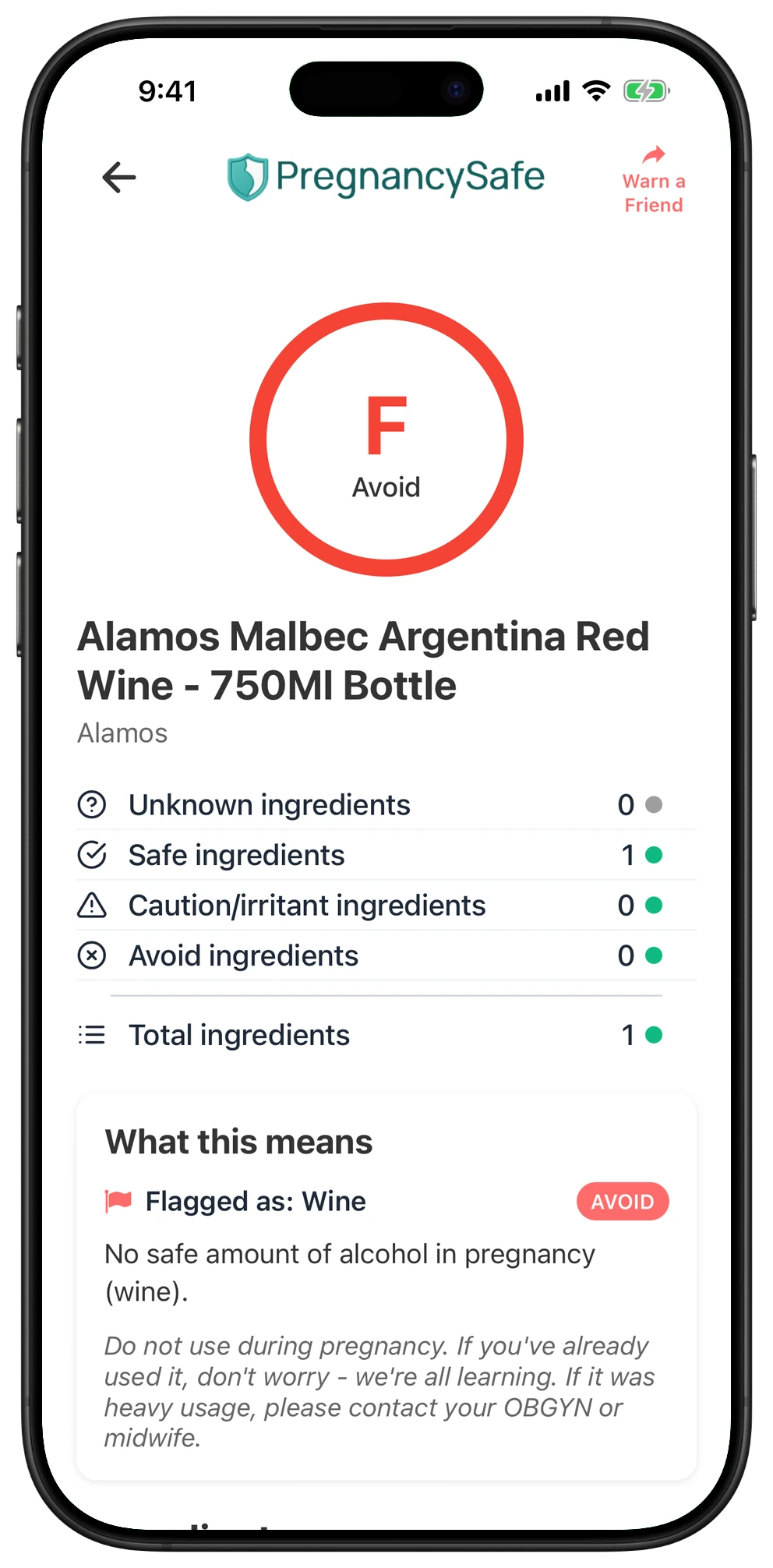
Avoid alcoholic red wine during pregnancy: no amount, timing, or type of beverage alcohol is known to be safe. Choose an ordinary nonfermented drink rather than relying on wine grades or alcohol removed wording.
The main pregnancy concern in alcoholic red wine is ethanol, which is linked to fetal alcohol spectrum disorders and other adverse pregnancy outcomes. No safe drinking threshold has been established, so smaller servings or later trimesters do not create a known safe exception. Alcohol removed drinks, cooked dishes, and vinegar need separate consideration rather than a blanket verdict based on the words red wine.
Pregnancy Safe is 100% independent and research driven. No companies pay to promote or sponsor products.
Stress Less This Pregnancy
Check your exact red wine in the app
✓ What's Safe
- • Choose ordinary nonfermented drinks, such as water or sparkling water, instead of alcoholic red wine.
- • Check the actual alcohol by volume (ABV) on the exact bottle rather than relying on non alcoholic or alcohol removed wording.
- • Ask whether restaurant drinks contain wine or other alcoholic ingredients before ordering.
- • Choose recipes prepared without wine when you want to avoid uncertainty about retained alcohol.
- • Distinguish red wine vinegar used as a condiment from red wine served as an alcoholic drink.
✗ What to Avoid
- • Avoid drinking alcoholic red wine, including occasional glasses or celebratory servings.
- • Do not treat any trimester as a known safe time to drink alcohol.
- • Avoid choosing red wine for claimed resveratrol or other health benefits during pregnancy.
- • Do not assume non alcoholic, alcohol free, and alcohol removed labels mean the same thing or guarantee zero alcohol.
- • Do not assume cooking removes every trace of alcohol from a wine containing dish.
- • Do not use a catalog grade as proof of a product's alcohol content or a safe drinking amount.
Most Common Ingredients in Red Wine Products
We analyzed 25 red wine products. Here are the most common ingredients, ranked by how often they appear:
Ingredients to Watch Out For in Red Wine
These are the most common flagged ingredients across 25 red wine products we analyzed.
red wine
Avoid
Red wine is a rich, fermented beverage made from dark colored grape varieties, often enjoyed for its complex flavors and cultural significance.
Has no established safe amount in pregnancy and is linked to fetal alcohol spectrum disorders and other adverse pregnancy outcomes.
Flagged in 2 of 25 products (8%)
Red Wine Products We've Analyzed
Our catalog contains ratings for 25 red wine products. These are database grades, not independent safety certifications.
Grades do not establish a safe alcohol dose or verify every product’s alcohol content. The wider wine category can include non-alcoholic records; an A grade is not permission to drink alcohol.
Your Questions Answered
Can I have an occasional glass of red wine while pregnant?
Avoid alcoholic red wine throughout pregnancy, including occasional glasses. No safe amount or safe time to drink has been established. A smaller serving is not a known safe exception, and red wine is not a safer type of beverage alcohol.
Is red wine vinegar the same concern as drinking red wine?
Red wine vinegar used as a condiment is a different exposure from drinking alcoholic red wine. The recommendation to avoid beverage alcohol should not automatically become a warning against every food with red wine in its name. Check whether your dressing or sauce contains vinegar, added wine, or both; the name alone does not establish its alcohol content.
Can I drink alcohol removed or non alcoholic red wine?
Do not assume those descriptions guarantee zero alcohol. Non alcoholic and alcohol free wording can differ between markets, so check the actual ABV on the exact version. An ordinary nonfermented drink avoids this uncertainty. A catalog grade does not verify the bottle's alcohol content.
Is food cooked with red wine safe during pregnancy?
Cooking with wine is a separate exposure from drinking a glass, but cooking does not automatically remove every trace of alcohol. Do not assume a dish is alcohol free simply because it was heated. If you want to avoid uncertainty, choose a recipe made without wine or ask how a restaurant dish was prepared.
What if I drank red wine before I knew I was pregnant?
Past drinking does not mean harm definitely occurred. Avoid further beverage alcohol and discuss the amount and timing honestly with your pregnancy clinician. They can address your individual concerns without treating an exposure as a diagnosis.
Does red wine's resveratrol make it beneficial during pregnancy?
Red wine should not be recommended during pregnancy for resveratrol or other claimed health benefits. Those claims do not establish a safe dose of the alcohol in the drink. Red wine extracts and supplements are also different products; their names alone do not establish pregnancy safety.
What should I do if stopping wine is difficult?
Tell your pregnancy clinician that stopping is difficult and ask for help. Be open about how much and how often you drink so they can arrange appropriate support. You deserve practical, nonjudgmental care rather than blame.
How Do We Score Products for Pregnancy Safety?
We analyze each product's ingredients and category to flag known risks and provide cautionary notices for general category safety concerns.
Grades reflect the ingredient and category information available to us. They don’t verify a complete, current label or account for dose, preparation, or contamination. Read them alongside the guidance above, not as a guarantee of pregnancy safety or proof that every use is harmful.
A - Safe
Excellent choice! All ingredients are considered safe during pregnancy.
What to do: Use with confidence.
B - Likely Safe
Pretty much safe with very minimal risk. Some ingredients may have limited pregnancy studies, but no significant safety concerns have been identified.
What to do: Use with confidence.
C - Limit
Contains ingredients with some pregnancy considerations. Research shows these ingredients may have limited safety data, potential for minor hormonal effects, or require caution based on animal studies.
What to do: Use sparingly and consider safer alternatives when available.
D - Caution
Similar to C grade but contains multiple cautionary ingredients. The combination increases overall concern.
What to do: Try to avoid if that makes you feel better. If you've already used it, no need to panic.
F - Avoid
Contains an ingredient Pregnancy Safe recommends avoiding during pregnancy. This may reflect an established risk or a precaution based on limited evidence; check the ingredient guidance and exposure context.
What to do: Do not use during pregnancy. If you've already used it, don't worry - contact your OBGYN if concerned.
People Also Checked
Non Alcoholic Wine
32 products
Cooking Wine
82 products
Wine
352 products
Dark Chocolate
176 products
See our full guide to wine during pregnancy.
References
- https://www.cdc.gov/alcohol-pregnancy/about/index.html
- https://www.cdc.gov/fasd/about/index.html
- https://www.acog.org/womens-health/infographics/alcohol-and-pregnancy
- https://www.niaaa.nih.gov/publications/brochures-and-fact-sheets/alcohol-and-your-pregnancy
- https://mothertobaby.org/fact-sheets/alcohol-pregnancy/
- https://pubmed.ncbi.nlm.nih.gov/26482673/
- https://pmc.ncbi.nlm.nih.gov/articles/PMC9543418/