Is Feta Cheese Safe During Pregnancy? (Updated 2026 Guide)
Updated September 9, 2026
The Answer
Yes you can eat pasteurized feta during pregnancy when it has been kept refrigerated and used within its storage instructions. Check the exact package: ingredient grades cannot confirm pasteurization, handling or freedom from Listeria.
The main concern with feta is Listeria from raw or unpasteurized milk, or contamination after pasteurization not an ingredient grade. Choose the exact pasteurized version, keep it refrigerated and follow both use by and after opening instructions; cooking until steaming hot is another safer preparation option. Feta is not automatically subject to the same guidance as mold ripened soft cheeses.
Pregnancy Safe is 100% independent and research driven. No companies pay to promote or sponsor products.
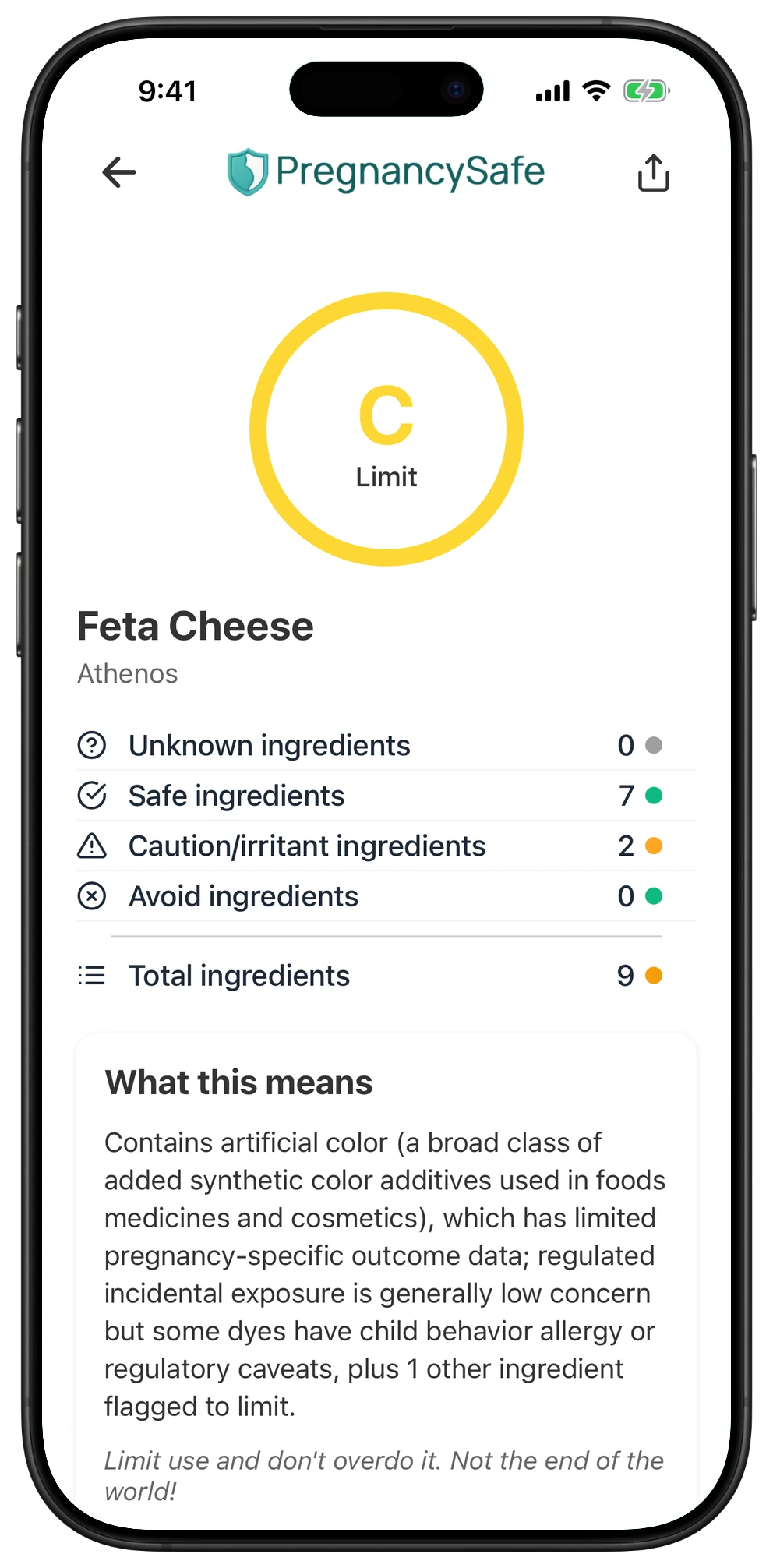
Stress Less This Pregnancy
Check your exact feta cheese in the app

✓ What's Safe
- • Check that the exact package states it is made with pasteurized milk, including any sheep’s, goat’s or cow’s milk used.
- • Choose feta that has been kept refrigerated, and keep it cold at home.
- • Read the use by date and after opening instructions before buying or serving it.
- • For cooked dishes, heat the feta until steaming hot throughout rather than just warming the surface.
- • When ordering feta, ask whether it is pasteurized and how it has been stored.
✗ What to Avoid
- • Avoid feta made with raw or unpasteurized milk.
- • Skip feta with unclear pasteurization information rather than assuming its origin or milk type makes it suitable.
- • Avoid feta that has not been kept refrigerated or whose storage history is uncertain.
- • Do not eat feta past its use by date or beyond the package’s after opening instructions.
- • Do not treat brine, an ingredient grade or a familiar brand as proof that a package is free of Listeria.
Most Common Ingredients in Feta Cheese Products
We analyzed 4 feta cheese products. Here are the most common ingredients, ranked by how often they appear:
Feta Cheese Products We've Analyzed
Our catalog contains ratings for 4 feta cheese products. These are database grades, not independent safety certifications.
Catalog ingredient grades are not pregnancy safety certifications, a check of current labels, or measurements of caffeine, pathogens or handling. Not all candidates were independently reviewed.
Pregnancy Safe Feta Cheese Products
Popular options from our catalog, prioritizing A and B ingredient grades, with C grade options used to fill remaining places. Within each group, products are ordered by searches in Pregnancy Safe, not retail sales. Read the cautions and guidance above; grades do not verify a complete current label or guarantee pregnancy safety.
| Grade | Product | Brand |
|---|---|---|
| A | Dodoni Feta Cheese In Brine Premium Authentic Greek | Dodoni |
| A | South Cape Greek Style Fetta Reduced Fat | South Cape |
| B+ | Krinos Greek Feta | Krinos |
| A | Sheep Milk Feta | Cheesemaker |
Your Questions Answered
Can pregnant women have feta cheese?
Yes, pasteurized feta can be a pregnancy choice when it has been kept refrigerated and used according to the package instructions. The key checks are pasteurization and handling, not simply whether the cheese is soft. Cooking it until steaming hot is another safer way to serve it.
Can I eat cold feta in a salad during pregnancy?
Cold feta can be an option if it is made with pasteurized milk and has been stored correctly. Check its use by date and how long it has been open against the package instructions. At a restaurant or salad counter, ask about pasteurization and refrigeration; choose something else if those details cannot be confirmed.
Is all feta cheese pasteurized?
Do not assume every feta is pasteurized. Check the exact package, because different versions and milk blends can differ. Sheep’s, goat’s or cow’s milk on its own does not tell you whether the milk was pasteurized.
Does cooking feta make it safer during pregnancy?
Cooking feta until steaming hot throughout is a safer preparation option for reducing Listeria risk. Simply softening the cheese or lightly warming its surface is not the same thing. Still choose pasteurized feta and follow storage instructions rather than using cooking to compensate for uncertain handling.
Is feta the same as mold ripened soft cheese?
No feta is a soft brined cheese and is not automatically a mold ripened soft cheese. Pregnancy guidance distinguishes pasteurized feta from mold ripened and blue cheeses. Queso fresco type cheeses also have separate guidance, including heating even when pasteurized, so do not apply one rule to every soft cheese.
Does an A ingredient grade mean feta is guaranteed safe during pregnancy?
No. Our catalog contains four feta entries: three graded A and one graded B+, but these are ingredient grades rather than pregnancy safety certifications. They do not detect Listeria, verify current labels or establish how a package was handled. You still need to check the exact label, refrigeration and use by instructions.
How Do We Score Products for Pregnancy Safety?
We analyze each product's ingredients and category to flag known risks and provide cautionary notices for general category safety concerns.
Grades reflect the ingredient and category information available to us. They don’t verify a complete, current label or account for dose, preparation, or contamination. Read them alongside the guidance above, not as a guarantee of pregnancy safety or proof that every use is harmful.
A - Safe
Excellent choice! All ingredients are considered safe during pregnancy.
What to do: Use with confidence.
B - Likely Safe
Pretty much safe with very minimal risk. Some ingredients may have limited pregnancy studies, but no significant safety concerns have been identified.
What to do: Use with confidence.
C - Limit
Contains ingredients with some pregnancy considerations. Research shows these ingredients may have limited safety data, potential for minor hormonal effects, or require caution based on animal studies.
What to do: Use sparingly and consider safer alternatives when available.
D - Caution
Similar to C grade but contains multiple cautionary ingredients. The combination increases overall concern.
What to do: Try to avoid if that makes you feel better. If you've already used it, no need to panic.
F - Avoid
Contains an ingredient Pregnancy Safe recommends avoiding during pregnancy. This may reflect an established risk or a precaution based on limited evidence; check the ingredient guidance and exposure context.
What to do: Do not use during pregnancy. If you've already used it, don't worry - contact your OBGYN if concerned.
People Also Checked
Goat Cheese
191 products
Mascarpone Cheese
14 products
Ricotta Cheese
194 products
String Cheese
340 products
Mozzarella Cheese
10 products
Cottage Cheese
1,036 products
Cheddar Cheese
184 products
Cheese
13,379 products
See our full guide to cheese during pregnancy.