Is Coffee Safe During Pregnancy? (Updated 2026 Guide)
Updated September 10, 2026
The Answer
Coffee can fit pregnancy guidance when you keep total caffeine from all sources below 200 mg per day. Decaf can help you reduce caffeine, but it is not necessarily caffeine free.
The main consideration is how much caffeine you drink, not whether coffee has a favorable ingredient grade. Caffeine varies with serving size, strength, bean and preparation, so check the amount for your exact drink and count other caffeine sources toward the below-200 mg daily limit. Use pasteurized milk and keep perishable coffee drinks chilled; staying below the caffeine limit is not a guarantee of zero risk.
Pregnancy Safe is 100% independent and research driven. No companies pay to promote or sponsor products.
Stress Less This Pregnancy
Check your exact coffee in the app
✓ What's Safe
- • Check the maker or menu for caffeine in your exact drink and serving size.
- • Choose a serving that keeps your total daily caffeine below 200 mg, including tea, cola, energy drinks, chocolate and caffeine containing medicines.
- • Consider decaf to reduce caffeine, while still counting its caffeine toward your daily total.
- • For cold brew, check whether it is concentrated and follow the dilution and serving instructions.
- • Choose pasteurized milk for coffee drinks and follow refrigeration instructions for perishable preparations.
✗ What to Avoid
- • Avoid using a fixed number of cups as your limit: cup size and caffeine strength vary.
- • Do not assume decaf means caffeine free or that every decaf serving contains the same amount.
- • Avoid drinking cold brew concentrate without checking dilution instructions and caffeine per prepared serving.
- • Do not use ingredient grades or the absence of separately listed caffeine to judge a coffee's caffeine content.
- • Avoid unpasteurized milk and leaving perishable coffee drinks unrefrigerated.
- • Avoid alcoholic coffee drinks, and do not assume ordinary coffee guidance also covers mushroom or herbal blends and supplements.
Ingredients in the Reviewed Sample
Selected ingredients are counted once per product where the reviewed source label declares them. Compound label phrases are normalized. These are occurrence counts, not amounts or a complete ingredient list.
Coffee Products We've Analyzed
This page uses a source-reviewed sample of 3 coffee product records. It is not a comprehensive catalog count or a pregnancy-safety ranking.
This source-reviewed sample contains 3 stored label records. It is not a market-wide count, complete current-label verification, or product recommendation. Ingredient grades do not measure preparation, storage, caffeine, mercury or contamination; use the food-specific guidance above.
Pregnancy Safe Coffee Products
Popular options from our catalog, prioritizing A and B ingredient grades, with C grade options used to fill remaining places. Within each group, products are ordered by searches in Pregnancy Safe, not retail sales. Read the cautions and guidance above; grades do not verify a complete current label or guarantee pregnancy safety.
| Grade | Product | Brand |
|---|---|---|
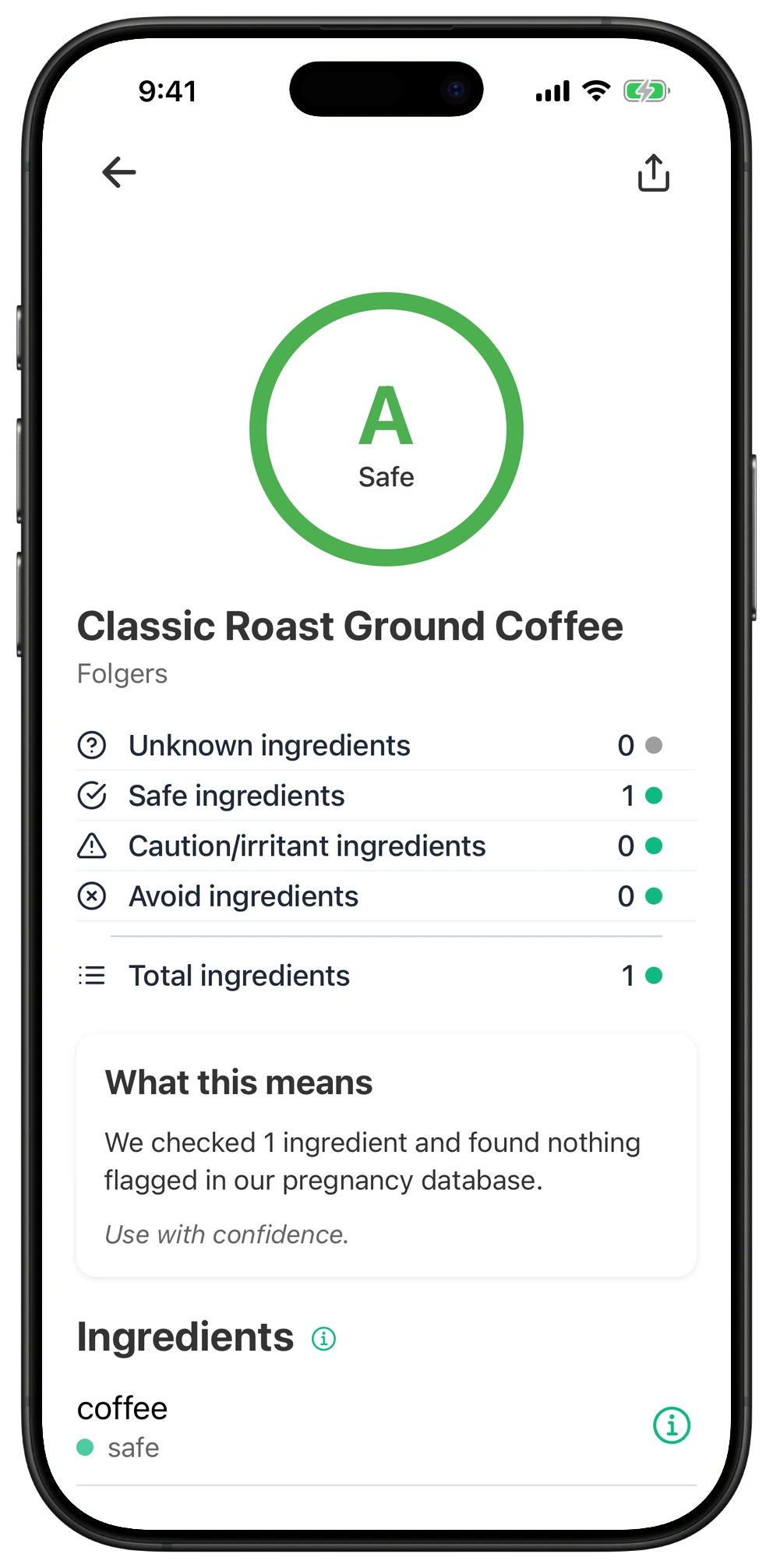
| A | Classic Roast Ground Coffee | Folgers |
| A | Stok Black Unsweetened Cold Brew Coffee | Stok |
| A | Folgers Classic Decaf Instant Coffee | The Folger Coffee Company |
Your Questions Answered
Is decaf coffee safe during pregnancy?
Decaf can fit pregnancy guidance and help you reduce caffeine intake. FDA describes a typical 8-fluid ounce cup of decaf coffee as containing 2–15 mg of caffeine, but that range is not a guarantee for every product or size. Check the amount for your serving when available, and keep your total caffeine from all sources below 200 mg per day.
Is it safe to drink 2 cups of coffee during pregnancy?
Two cups is not a reliable measure because serving sizes and caffeine amounts vary. Check the maker or menu for the caffeine in each exact drink, then add caffeine from everything else you consume that day. Whether two cups fit pregnancy guidance depends on keeping that total below 200 mg, rather than on the cup count alone.
What drinks should I avoid while pregnant?
Avoid alcoholic coffee drinks and coffee made with unpasteurized milk. For caffeinated drinks, choose amounts that keep your combined daily caffeine below 200 mg, counting coffee, tea, energy drinks and cola alongside other sources. Do not assume mushroom or herbal coffee blends and supplements are covered by ordinary coffee guidance; their added ingredients need separate assessment.
Can I drink cold brew coffee during pregnancy?
Cold brew can fit pregnancy guidance if your serving keeps your total daily caffeine below 200 mg. It may be concentrated, so check the caffeine information and follow the maker's dilution instructions. Count the amount you actually drink, and keep perishable cold brew preparations chilled.
Does a favorable ingredient grade mean coffee is low in caffeine?
No. Ingredient grades are not caffeine tests and cannot tell you how many milligrams are in a serving. Plain coffee contains caffeine even when caffeine is not listed as a separate ingredient. Use the maker or menu information for your exact drink rather than its grade to plan your intake.
What else counts toward my daily caffeine limit?
Count caffeine from tea, energy drinks, cola, chocolate and caffeine containing medicines, as well as regular and decaf coffee. Add these sources together to keep your daily total below 200 mg. If a prescribed medicine contains caffeine, ask your clinician or pharmacist how to account for it; do not stop prescribed treatment on your own.
How to Interpret These Ratings
Our ingredient and category rules generate letter grades from the information recorded in the catalog. Missing ingredients and broad category assignments can affect the result. These grades do not measure your dose, confirm a complete current label, or test a product for contamination.
A high grade is not a guarantee of pregnancy safety. A low grade is not, by itself, proof of harm from every use. Follow the product-specific guidance above, check the actual package, and ask your prenatal clinician about supplements, treatment decisions or uncertain exposures.
People Also Checked
References
- https://www.acog.org/womens-health/experts-and-stories/ask-acog/how-much-coffee-can-i-drink-while-pregnant
- https://www.fda.gov/consumers/consumer-updates/spilling-beans-how-much-caffeine-too-much
- https://www.cdc.gov/food-safety/foods/pregnant-women.html
- https://www.nhs.uk/pregnancy/keeping-well/foods-to-avoid/