Is Aloe Vera Juice Safe During Pregnancy? (Updated 2026 Guide)
Updated September 9, 2026
The Answer
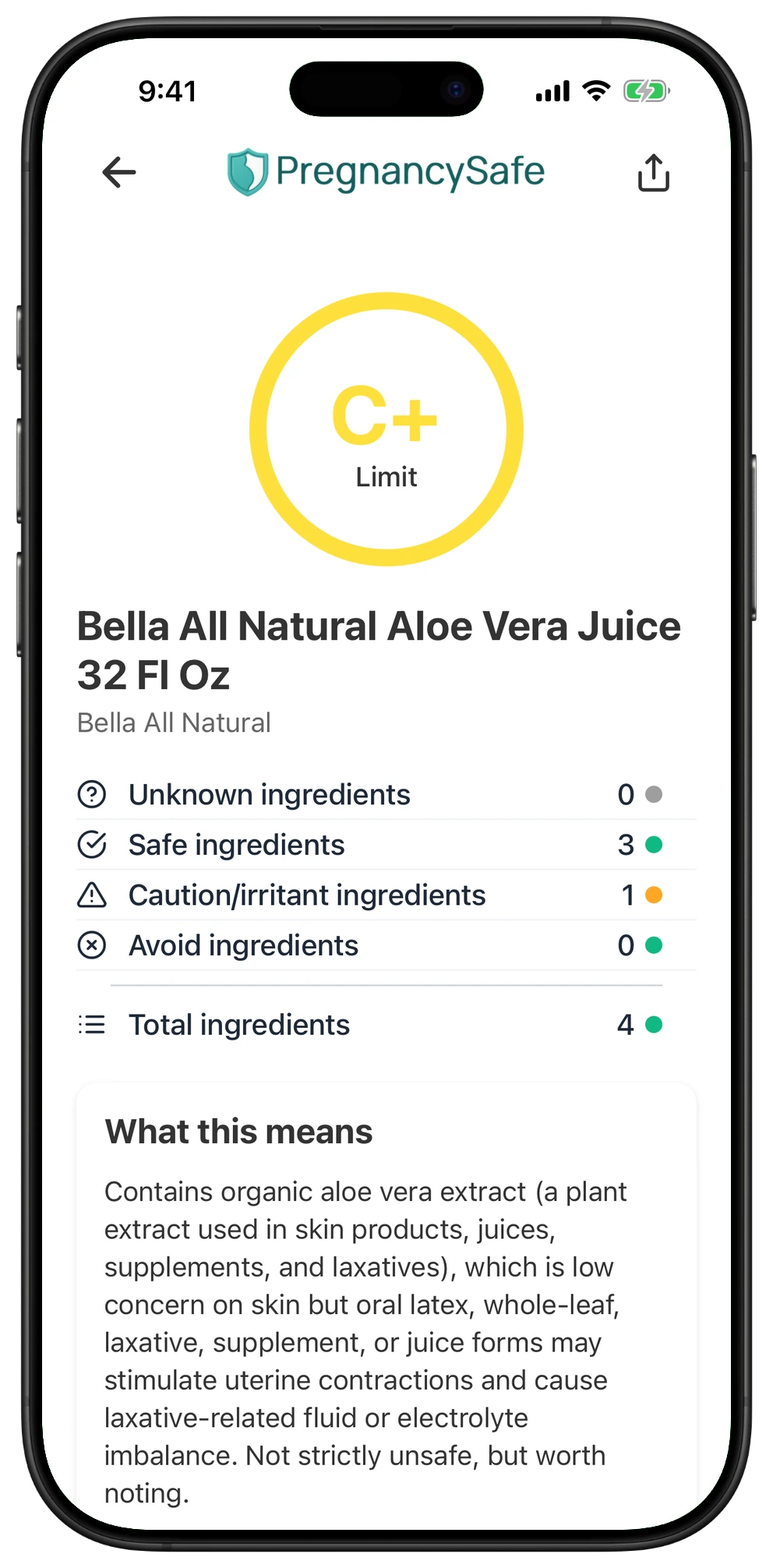
Avoid routinely drinking aloe vera juice during pregnancy unless your clinician advises otherwise; oral aloe may be unsafe, and preparation differences do not establish pregnancy safety. Most drinks in our catalog carry C+ grades, but even an A grade is not clearance to drink aloe while pregnant.
The main consideration is swallowing aloe, particularly latex and non decolorized whole leaf preparations: aloe latex can cause diarrhea and fluid or electrolyte loss. Inner leaf and decolorized drinks differ in anthraquinone exposure, but neither their labels nor catalog grades establish aloin content, manufacturing quality or a safe pregnancy dose. Concerns about whole leaf ingestion should not be read as proof that every filtered drink causes uterine contractions, and evidence about aloe on skin does not establish drinking safety.
Pregnancy Safe is 100% independent and research driven. No companies pay to promote or sponsor products.
Stress Less This Pregnancy
Check your exact aloe vera juice in the app

✓ What's Safe
- • Choose an ordinary suitable beverage, such as drinking water, instead of making aloe juice part of your daily routine.
- • Check beverage blends for aloe ingredients, even when another juice is featured on the front label.
- • Identify whether an aloe preparation uses inner leaf gel, decolorized whole leaf or non decolorized whole leaf before discussing it with your clinician.
- • Bring the exact label, serving amount and intended frequency to your clinician if you are considering oral aloe.
- • Ask about pregnancy appropriate options for constipation rather than choosing an aloe laxative or detox drink.
✗ What to Avoid
- • Avoid oral aloe latex laxatives during pregnancy.
- • Avoid non decolorized whole leaf aloe preparations and aloe detox regimens.
- • Do not assume that filtered, inner leaf or decolorized aloe juice has an established safe pregnancy dose.
- • Do not treat organic or certified organic aloe vera as a pregnancy safety guarantee.
- • Avoid using an A grade or reassuring skin care claims as permission to drink aloe.
- • Do not assume diluting an aloe concentrate establishes a safe pregnancy serving.
Most Common Ingredients in Aloe Vera Juice Products
We analyzed 25 aloe vera juice products. Here are the most common ingredients, ranked by how often they appear:
Ingredients to Watch Out For in Aloe Vera Juice
These are the most common flagged ingredients across 25 aloe vera juice products we analyzed.
aloe vera juice
Caution
Aloe vera juice is a soothing, hydrating beverage made from the gel of the aloe vera plant, known for its potential health and skin benefits.
Is low concern on skin but oral latex, whole leaf, laxative, supplement, or juice forms may stimulate uterine contractions and cause laxative related fluid or electrolyte imbalance.
Flagged in 7 of 25 products (28%)
organic aloe vera
Caution
Organic aloe vera is a natural, soothing plant extract known for its hydrating and healing properties.
Is low concern on skin but oral latex, whole leaf, laxative, supplement, or juice forms may stimulate uterine contractions and cause laxative related fluid or electrolyte imbalance.
Flagged in 4 of 25 products (16%)
certified organic aloe vera
Caution
Is low concern on skin but oral latex, whole leaf, laxative, supplement, or juice forms may stimulate uterine contractions and cause laxative related fluid or electrolyte imbalance.
Flagged in 2 of 25 products (8%)
40x aloe vera concentrate
Caution
Is low concern on skin but oral latex, whole leaf, laxative, supplement, or juice forms may stimulate uterine contractions and cause laxative related fluid or electrolyte imbalance.
Flagged in 1 of 25 products (4%)
Caution
Aloe vera is a soothing, gel like plant extract known for its moisturizing and healing properties.
Is low concern on skin but oral latex, whole leaf, laxative, supplement, or juice forms may stimulate uterine contractions and cause laxative related fluid or electrolyte imbalance.
Flagged in 1 of 25 products (4%)
aloe vera gel
Caution
Aloe vera gel is a soothing, natural extract known for its moisturizing and healing properties for skin and hair.
Is low concern on skin but oral latex, whole leaf, laxative, supplement, or juice forms may stimulate uterine contractions and cause laxative related fluid or electrolyte imbalance.
Flagged in 1 of 25 products (4%)
aloe vera gel crush
Caution
Is low concern on skin but oral latex, whole leaf, laxative, supplement, or juice forms may stimulate uterine contractions and cause laxative related fluid or electrolyte imbalance.
Flagged in 1 of 25 products (4%)
aloe vera juice aloe vera pulp
Caution
Aloe vera juice and pulp are natural extracts known for their soothing, hydrating, and healing properties, often used to promote skin health and digestive wellness.
Is low concern on skin but oral latex, whole leaf, laxative, supplement, or juice forms may stimulate uterine contractions and cause laxative related fluid or electrolyte imbalance.
Flagged in 1 of 25 products (4%)
Aloe Vera Juice Products We've Analyzed
Our catalog contains ratings for 25 aloe vera juice products. These are database grades, not independent safety certifications.
The catalog cannot establish aloin content, manufacturing quality or an appropriate oral pregnancy dose. A grade is not clearance for aloe drinks.
Your Questions Answered
Can I drink aloe vera juice during pregnancy?
Routine drinking is not recommended without individualized advice from your clinician. Oral aloe gel, latex and whole leaf preparations may be unsafe during pregnancy, although the preparations are not interchangeable. Choose an ordinary suitable beverage rather than relying on aloe juice for hydration or digestive benefits.
Is filtered or inner leaf aloe vera juice safe?
Inner leaf and decolorized drinks differ from latex laxatives and non decolorized whole leaf preparations in anthraquinone exposure. That distinction matters, but it does not establish pregnancy safety or a safe serving size. A filtered or inner leaf label alone is not enough to recommend routine drinking.
What if I accidentally drank aloe vera juice while pregnant?
An accidental sip does not establish that harm has occurred. The exact preparation, amount and frequency matter, and concerns about laxative or high exposure preparations cannot simply be applied to a sip of a filtered drink. Pause further use and share the label and amount with your pregnancy care team for individualized advice.
Can aloe vera juice cause miscarriage or induce labor?
Warnings about possible uterine contractions relate particularly to whole leaf ingestion; they do not establish that every filtered aloe drink causes miscarriage or labor. Aloe latex also has stimulant laxative effects that can cause diarrhea and fluid or electrolyte loss. Do not use oral aloe to try to induce labor, and discuss any intended use with your maternity clinician.
Does an A grade mean an aloe drink is safe during pregnancy?
No. Our catalog contains 25 products: 20 graded C+, two A, two C and one B+. These grades do not establish aloin content, manufacturing quality or an appropriate oral pregnancy dose. The two A grades are not a count of independently verified pregnancy safe drinks.
Is using aloe vera gel on my skin different from drinking it?
Yes: applying aloe gel to skin is a different exposure from swallowing aloe juice, supplements or latex. Topical aloe gel is generally low concern when used on skin and not ingested. That does not establish oral pregnancy safety, even when a beverage lists aloe vera gel as its ingredient.
How Do We Score Products for Pregnancy Safety?
We analyze each product's ingredients and category to flag known risks and provide cautionary notices for general category safety concerns.
Grades reflect the ingredient and category information available to us. They don’t verify a complete, current label or account for dose, preparation, or contamination. Read them alongside the guidance above, not as a guarantee of pregnancy safety or proof that every use is harmful.
A - Safe
Excellent choice! All ingredients are considered safe during pregnancy.
What to do: Use with confidence.
B - Likely Safe
Pretty much safe with very minimal risk. Some ingredients may have limited pregnancy studies, but no significant safety concerns have been identified.
What to do: Use with confidence.
C - Limit
Contains ingredients with some pregnancy considerations. Research shows these ingredients may have limited safety data, potential for minor hormonal effects, or require caution based on animal studies.
What to do: Use sparingly and consider safer alternatives when available.
D - Caution
Similar to C grade but contains multiple cautionary ingredients. The combination increases overall concern.
What to do: Try to avoid if that makes you feel better. If you've already used it, no need to panic.
F - Avoid
Contains an ingredient Pregnancy Safe recommends avoiding during pregnancy. This may reflect an established risk or a precaution based on limited evidence; check the ingredient guidance and exposure context.
What to do: Do not use during pregnancy. If you've already used it, don't worry - contact your OBGYN if concerned.
People Also Checked
Orange Juice
926 products
Cold Pressed Juice
30 products
Sparkling Juice
244 products
Juice
7,912 products
Apple Cider Vinegar
112 products
See our full guide to juice during pregnancy.
References
- https://www.nccih.nih.gov/health/aloe-vera
- https://webprod.hc-sc.gc.ca/nhpid-bdipsn/dbImages/mono_aloe--oral_english.pdf
- https://www.ema.europa.eu/en/documents/herbal-monograph/final-european-union-herbal-monograph-aloe-barbadensis-mill-and-aloe-various-species-mainly-aloe-ferox-mill-and-its-hybrids-folii-succus-siccatus_en.pdf
- https://www.utep.edu/herbal-safety/populations/herbs-to-avoid-during-pregnancy.html
- https://www.federalregister.gov/documents/2002/05/09/02-11510/status-of-certain-additional-over-the-counter-drug-category-ii-and-iii-active-ingredients
- https://pubmed.ncbi.nlm.nih.gov/33164294/
- https://pubmed.ncbi.nlm.nih.gov/28139161/
- https://journals.sagepub.com/doi/10.1080/10915810701351186