Heartburn During Pregnancy: Relief & What You Can Take
The Answer
Smaller meals, staying upright after eating and pharmacist guided medicines can help ease pregnancy heartburn.
Seek medical care immediately for chest pain or pressure, trouble breathing or severe, persistent belly pain. Do not assume these are reflux.
Call your maternity team immediately for heartburn unrelieved by medicines, pain below the ribs, a severe persistent headache, vision changes or sudden swelling of your face, hands or feet. Any one needs immediate assessment; you do not need to have them together.
About 17% of women who checked in with Pregnancy Safe between weeks 13 and 27 reported heartburn.[7] If you’ve felt it too, you’re not alone.
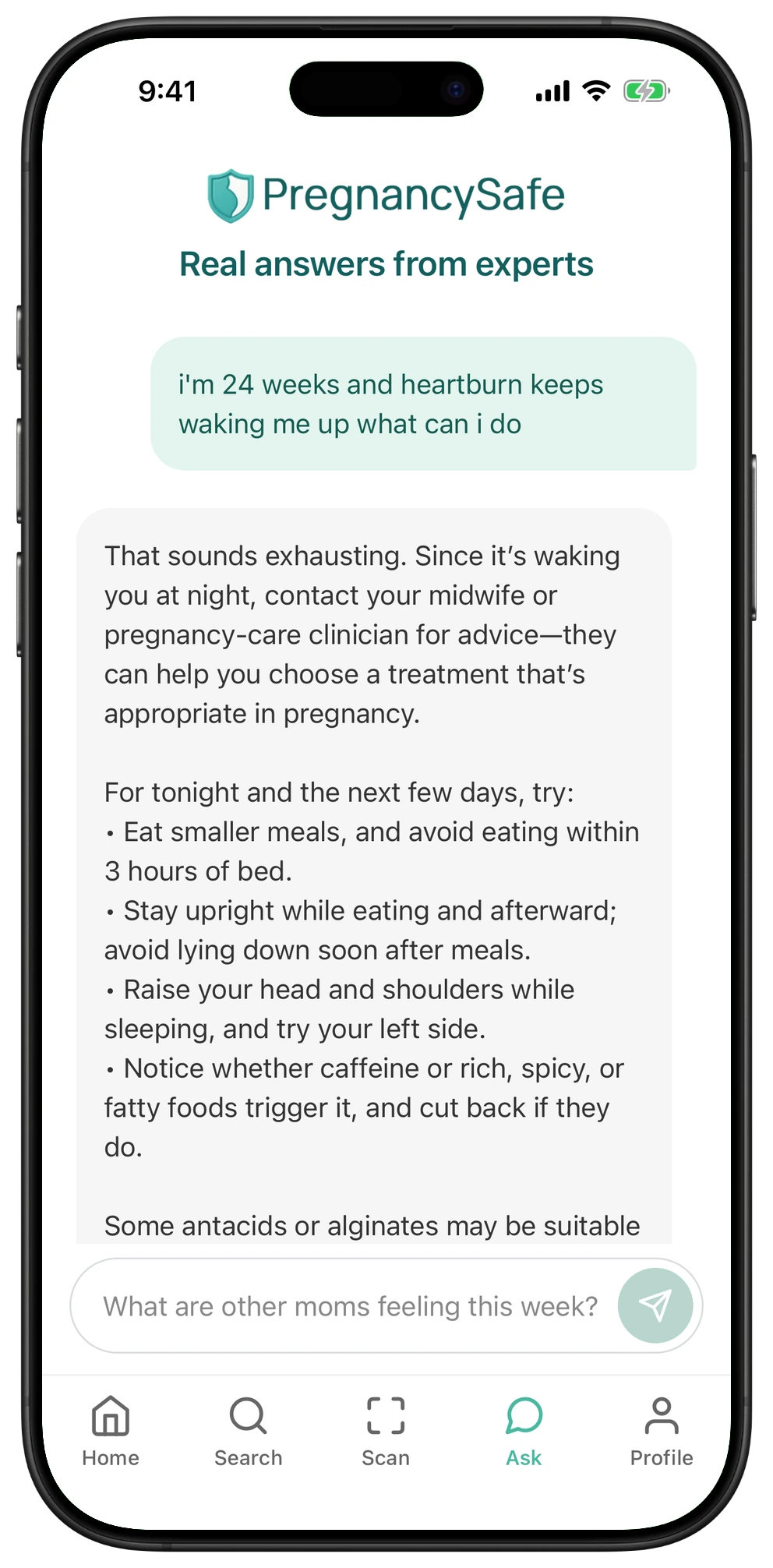
Stress Less This Pregnancy
Get personalized expert answers 24/7

How Common Is Heartburn During Pregnancy?
Between weeks 13 and 27, 133 of the 800 women who checked in with Pregnancy Safe reported heartburn (16.6%). That combines the whole span, rather than showing the chance of heartburn in any one week.
Percent of women checking in each week who reported this symptom. Weeks meeting our reporting cutoff: 4–9. Missing weeks are not zero; this is not an individual symptom timeline.
These self selected check ins are not clinical prevalence or your personal likelihood of heartburn. No logged symptom does not mean no symptom.
What Helps Heartburn During Pregnancy?
For relief now, stay upright rather than lying down. Yogurt or sugar free gum may help, though neither guarantees quick relief. Intermountain Health suggests these options.
- Eat smaller meals more slowly.
- Cut back on rich, fatty or spicy foods if they trigger your symptoms.
- Choose clothing that does not squeeze your stomach.
Does water make heartburn worse? Don't assume water itself is the problem. Try drinking between meals and taking small sips with meals. This is about timing, not reducing your overall hydration.
If changes are not helping, ask your care team rather than trying more home remedies. See nighttime relief and medicine options for next steps.
How Can You Ease Pregnancy Heartburn at Night?
Leave three hours between eating and bedtime. Raise your head and shoulders when you lie down, and try sleeping on your left side. These are NHS suggestions for nighttime reflux.
Tell your care team if heartburn wakes you. Positioning advice does not replace immediate care for breathing difficulty.
What Can You Take for Heartburn While Pregnant?
Antacids neutralize stomach acid; alginates help stop it flowing upward. Tell the pharmacist you are pregnant because some products are unsuitable. The NHS explains these options.
Tums is an antacid; ask your pharmacist or clinician to check the specific formulation and ingredients before using it.
Keep antacids at least two hours apart from iron or folic acid supplements. A clinician may prescribe acid reducing medicine if treatment fails. Do not stop prescribed medicines independently. Check treatment and supplement timing, and follow the urgent assessment advice if heartburn medicines do not help.
What Does Heartburn Feel Like, and Why Does It Happen?
Reflux is stomach acid moving upward; heartburn is the chest or throat burning it causes. Sour taste or regurgitation may accompany it, alongside indigestion. Pregnancy hormones slow digestion and relax the stomach valve; the growing uterus adds pressure. Learn about these changes.
When Does Pregnancy Heartburn Start, and How Long Does It Last?
Heartburn can begin at any stage. In the third trimester, a larger uterus increases stomach pressure; episodes may become more frequent or uncomfortable. It usually improves after birth; ask your provider about persistent symptoms. There isn't a fixed length for each episode or a deadline for improvement after birth.
What to Tell Your Care Team
For your care team conversation, note:
- Your pregnancy week and where you feel the burning.
- When burning happens, how often and whether it interrupts sleep.
- Treatments tried and current medicines or supplements.
- Contact your care team about swallowing difficulty, blood brought up, black stools or weight loss.
Example: “I'm 24 weeks pregnant. Burning after dinner wakes me twice weekly. I've tried smaller meals and yogurt. What next?” For urgent symptoms, seek care instead of waiting for a message reply.
Your Questions Answered
Can heartburn be an early pregnancy sign?
It can happen during or outside pregnancy, so it cannot confirm pregnancy. Test from the first day of a missed period, or at least 21 days after your last unprotected sex if you do not know when your period is due. If negative but pregnancy still seems possible, repeat after a few days. Contact your GP after a second negative if your period has not arrived. See NHS testing guidance.
Does milk help heartburn?
Milk may help some women, but relief is not guaranteed. Persistent symptoms still need care team advice.
References
- NHS: Indigestion and heartburn in pregnancy
- Cleveland Clinic: Heartburn during pregnancy
- Intermountain Health: Pregnancy heartburn — ways to get relief
- CDC: Urgent maternal warning signs
- NHS: Pre-eclampsia
- NHS: Doing a pregnancy test
- Pregnancy Safe app check-ins.
133 of 800 women reported heartburn in weeks 13–27, counted once across that span (16.6%). Production analytics snapshot: Nov 11, 2026 (UTC). Pregnancy week is estimated from the recorded due date. Each check-in profile is counted once per week or once across a combined span. Rates require at least 30 reporting and 30 not reporting. Combined spans are not directly comparable to weekly rates. Not logging a symptom does not mean it was absent. These are self-selected app reports, not prevalence in all pregnancies, individual progression, or a clinical safety assessment. Related-symptom percentages use women who reported the main symptom on at least one eligible check-in across pregnancy weeks 1–42, through the same snapshot. Each pair counts a woman once only when both symptoms appeared on the same check-in. The displayed digestive symptoms are selected examples, not the most common symptoms overall. Rows overlap and must not be added together. More frequent check-ins give more opportunities to report a pair. These figures do not establish causation or greater risk compared with women without the main symptom. The same 30 reporting / 30 not reporting thresholds apply.