Is Sambucus Safe During Pregnancy?
Updated September 12, 2026
The Answer
Use caution with oral Sambucus products containing elderflower: medicinal teas, tinctures, supplements, and extracts are not recommended during pregnancy because safety data are insufficient. Small amounts in pasteurized cordial or food flavoring are a different, lower exposure context, not proof of safety for medicinal use.
The key distinction is medicinal elderflower use versus small amounts used as flavoring in pasteurized cordial or food.
The European Medicines Agency reports that pregnancy safety for medicinal elderflower has not been established and reproductive toxicity testing is lacking, underpinning its recommendation against medicinal use during pregnancy.
Pregnancy Safe is 100% independent and research driven. No companies pay to promote or sponsor products.
Stressless Pregnancy
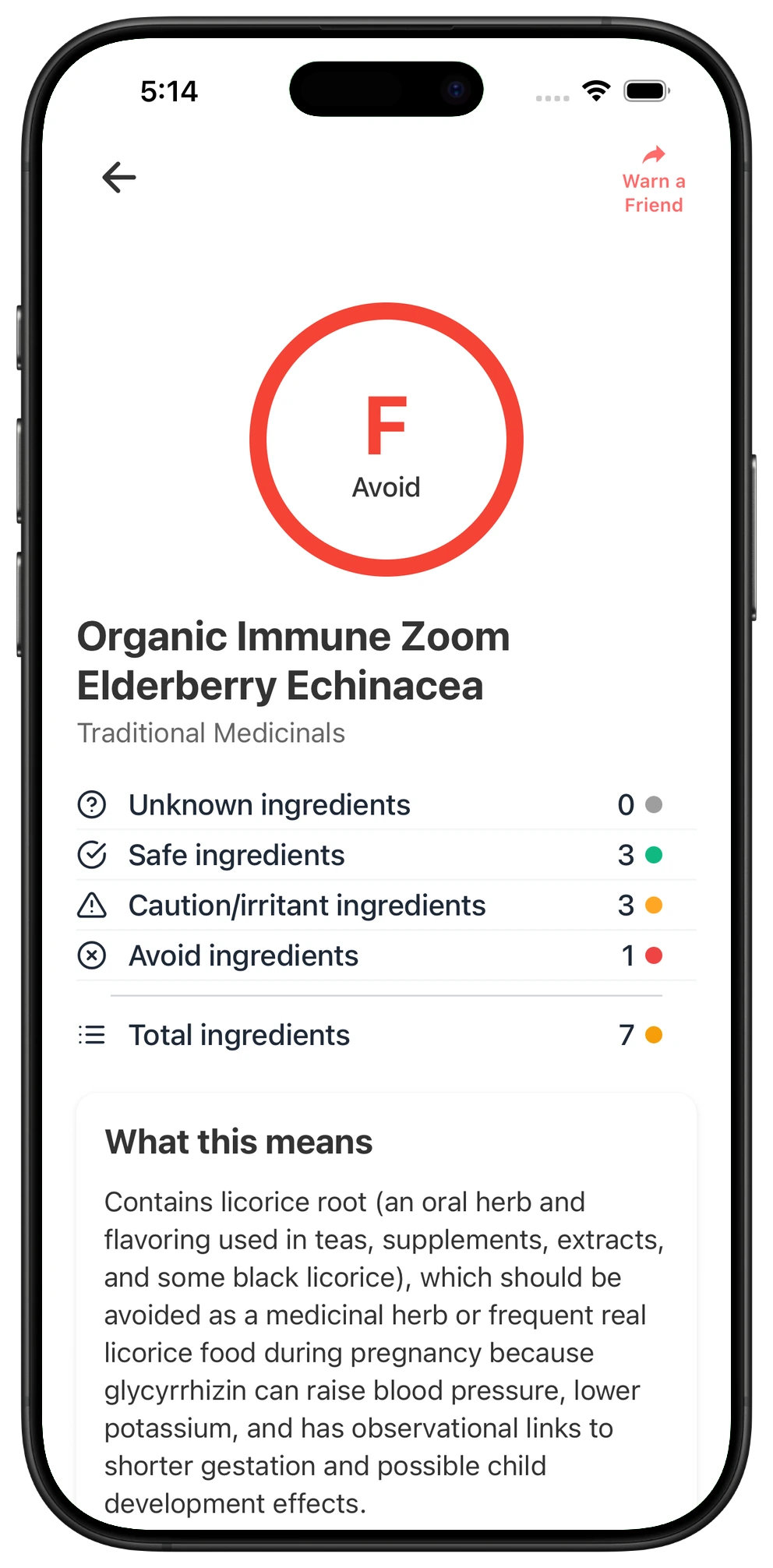
Check your exact product with sambucus in the app
What Is Sambucus?
Sambucus is a botanical name that does not, by itself, identify the plant part. The evidence discussed here concerns elderflower, the dried flower of Sambucus nigra. It adds floral flavor to foods and cordials and is also used in oral teas, tinctures, extracts, and herbal cold remedies. The two featured catalog products are dietary supplements.
What Other Ingredients Should You Look Out for in Products With Sambucus?
A product's full ingredient list determines whether it's pregnancy-safe or not. These ingredients also appear in some of the sambucus products we analyzed and may deserve a closer look.
Elderberry
CautionLook for “elderberry,” which identifies the berry rather than the flower and appears in one of the two featured supplements. Pregnancy safety information for health purpose use is limited; check whether it is a concentrated syrup or extract and how the berries were processed, since raw or unripe berries carry a separate poisoning concern.
Flagged in 1 product (50%) in this analysis.
Does the Form or Amount of Sambucus Matter During Pregnancy?
Check the plant part and preparation rather than relying on “Sambucus” alone. Elderflower medicinal preparations should not be treated like small food flavor amounts, and the available evidence does not establish a pregnancy safe medicinal dose. Homemade or unprocessed elder products introduce a separate concern: raw or unripe berries, leaves, and stems can contain cyanogenic glycosides that can cause poisoning.
What Products Contain Sambucus?
Pregnancy Safe has looked at 2 products that have sambucus as an ingredient. The category and grade breakdowns below use 2 products whose names mention Sambucus or another name for it.
What Types of Products Contain Sambucus?
Products You May Have That Contain Sambucus
| Grade | Product | Brand | Type |
|---|---|---|---|
| C | Elderberry Plus With Sambucus Umckaloabo | L.A. Naturals | Dietary Supplement |
| C+ | Elderflower Sambucus 400 Mg | Puritan'S Pride | Dietary Supplement |
How Do Products Containing Sambucus Score?
It can be helpful to see how products containing sambucus generally score during pregnancy. This does not tell you whether your exact product is safe, but it gives you a general idea of what we found. In this breakdown of 2 products, 100% receive a C grade. A C grade means the complete formula has some pregnancy considerations, so use it sparingly and consider a higher scoring alternative when one is available.
Frequently Asked Questions About Sambucus During Pregnancy
Does Sambucus always mean elderflower?
No. Check the label for the plant part: elderflower refers to the flower, while elderberry refers to the berry. The medicinal use guidance on this page concerns Sambucus nigra flower and should not be applied automatically to every Sambucus preparation.
Is elderflower cordial different from an elderflower supplement?
Yes. Small amounts in pasteurized cordial represent a lower exposure food context. That distinction does not establish the safety of supplements, tinctures, or medicinal extracts.
Can I use elderflower tea for cold symptoms during pregnancy?
Elderflower tea used medicinally for cold symptoms falls within the use that EMA does not recommend during pregnancy because of insufficient safety data. Its use as a traditional remedy does not establish pregnancy safety.
Are homemade elder products a safer option?
Homemade preparation does not establish safety. Raw or unripe elderberries and plant parts such as leaves and stems can contain cyanogenic glycosides, creating a separate poisoning concern in homemade or unprocessed products.
Is there a pregnancy safe dose of medicinal elderflower?
The available evidence does not establish one. A strength printed on a supplement label is not a pregnancy safe dose, and limited pregnancy data do not support a trimester specific recommendation.
How Do We Score Products for Pregnancy Safety?
We analyze each product's ingredients and category to flag known risks and provide cautionary notices for general category safety concerns.
A - Safe
Excellent choice! All ingredients are considered safe during pregnancy.
What to do: Use with confidence.
B - Likely Safe
Pretty much safe with very minimal risk. Some ingredients may have limited pregnancy studies, but no significant safety concerns have been identified.
What to do: Use with confidence.
C - Limit
Contains ingredients with some pregnancy considerations. Research shows these ingredients may have limited safety data, potential for minor hormonal effects, or require caution based on animal studies.
What to do: Use sparingly and consider safer alternatives when available.
D - Caution
Similar to C grade but contains multiple cautionary ingredients. The combination increases overall concern.
What to do: Try to avoid if that makes you feel better. If you've already used it, no need to panic.
F - Avoid
Contains an ingredient Pregnancy Safe recommends avoiding during pregnancy. This may reflect an established risk or a precaution based on limited evidence; check the ingredient guidance and exposure context.
What to do: Do not use during pregnancy. If you've already used it, don't worry - contact your OBGYN if concerned.
Sources
- https://pmc.ncbi.nlm.nih.gov/articles/PMC3941201/
- https://pubmed.ncbi.nlm.nih.gov/33806603/
- https://webprod.hc-sc.gc.ca/nhpid-bdipsn/atReq?atid=elder.sureau&lang=eng
- https://www.ema.europa.eu/en/documents/herbal-monograph/final-european-union-herbal-monograph-sambucus-nigra-l-flos-revision-1_en.pdf
- https://www.ema.europa.eu/en/documents/herbal-report/addendum-assessment-report-sambucus-nigra-l-flos_en.pdf
- https://www.ema.europa.eu/en/documents/herbal-report/final-assessment-report-sambucus-nigra-l-flos-revision-1_en.pdf
- https://www.nccih.nih.gov/health/elderberry
- https://pmc.ncbi.nlm.nih.gov/articles/PMC8026097/
- https://pmc.ncbi.nlm.nih.gov/articles/PMC7961730/
- https://www.cdc.gov/mmwr/preview/mmwrhtml/00000311.htm
- https://www.fda.gov/food/information-consumers-using-dietary-supplements/questions-and-answers-dietary-supplements
- https://pubmed.ncbi.nlm.nih.gov/11518905/
- https://infantrisk.com/content/management-cold-and-flu-during-pregnancy