Is Cod Safe During Pregnancy? (Updated 2026 Guide)
Updated September 10, 2026
The Answer
Yes cod can fit your pregnancy diet when fully cooked and handled hygienically. FDA/EPA classify cod as a Best Choice; include it within a variety of lower mercury seafood totaling 2–3 adult 4-ounce servings (8–12 ounces) per week, not a separate allowance for each species.
The main considerations are thorough cooking, hygienic handling and storage, and your total weekly seafood intake. Cook cod to 145°F or until opaque and separating easily with a fork; freezing or salt curing does not replace cooking. Ingredient grades do not measure mercury or pathogens, and our review of three plain cod records is a limited sample, not a recommendation for every cod product.
Pregnancy Safe is 100% independent and research driven. No companies pay to promote or sponsor products.
Stress Less This Pregnancy
Check your exact cod in the app

✓ What's Safe
- • Check that the label identifies cod fish, rather than black cod/sablefish or cod liver oil.
- • Choose cod you can cook to 145°F or until opaque and separating easily with a fork.
- • Plan cod portions within the shared weekly allowance of 2–3 adult 4-ounce servings (8–12 ounces) of varied lower mercury seafood.
- • Follow the package's handling, storage, and cooking instructions, including for frozen cod.
- • For salted cod, follow the package's soaking/desalting instructions and then cook thoroughly.
✗ What to Avoid
- • Avoid raw or undercooked cod during pregnancy.
- • Do not eat raw frozen cod without cooking it; freezing does not make raw fish ready to eat.
- • Do not treat salt curing or soaking as a substitute for cooking, or assume soaking removes mercury.
- • Do not add a separate cod allowance on top of your other weekly seafood servings.
- • Avoid treating an ingredient grade as proof of safe storage, preparation, mercury levels, or freedom from contamination.
Ingredients in the Reviewed Sample
Selected ingredients are counted once per product where the reviewed source label declares them. Compound label phrases are normalized. These are occurrence counts, not amounts or a complete ingredient list.
Cod Products We've Analyzed
This page uses a source-reviewed sample of 3 cod product records. It is not a comprehensive catalog count or a pregnancy-safety ranking.
This source-reviewed sample contains 3 stored label records. It is not a market-wide count, complete current-label verification, or product recommendation. Ingredient grades do not measure preparation, storage, caffeine, mercury or contamination; use the food-specific guidance above.
Pregnancy Safe Cod Products
Popular options from our catalog, prioritizing A and B ingredient grades, with C grade options used to fill remaining places. Within each group, products are ordered by searches in Pregnancy Safe, not retail sales. Read the cautions and guidance above; grades do not verify a complete current label or guarantee pregnancy safety.
| Grade | Product | Brand |
|---|---|---|
| A | Atlantic Cod Loins | Sea Best |
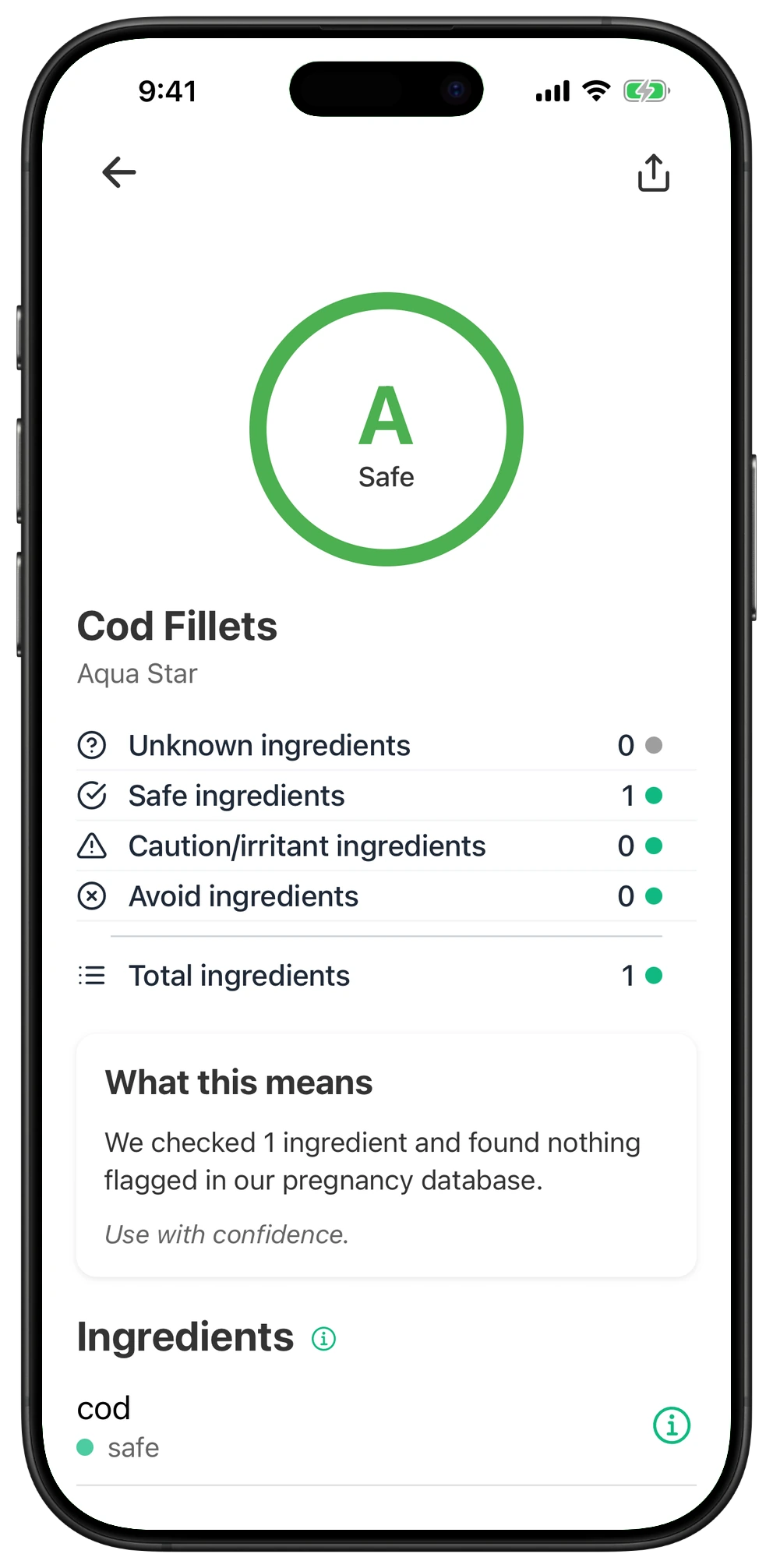
| A | Cod Fillets | Aqua Star |
| A | Wild-Caught Atlantic Cod | Blue Circle |
Your Questions Answered
How much cod can I eat during pregnancy?
FDA/EPA list cod as a Best Choice. Aim for a variety of lower mercury seafood totaling 2–3 adult 4-ounce servings (8–12 ounces) per week. Your cod servings count toward that shared total, alongside other seafood not as an additional allowance. FDA serving weights are measured before cooking.
How should I cook cod during pregnancy?
Cook cod to 145°F or until the flesh is opaque and separates easily with a fork. Avoid serving it raw or undercooked. Follow hygienic handling and storage practices as well, because cooking guidance does not replace proper food handling.
Is frozen cod safe during pregnancy?
Frozen cod can fit pregnancy guidance when properly handled and fully cooked. Freezing does not make cod safe to eat raw. Follow the package's storage and preparation instructions, and cook to 145°F or until opaque and separating easily with a fork.
Can I eat salted cod while pregnant?
Salted cod can fit pregnancy guidance when you follow its package's soaking/desalting and cooking directions. Salt curing does not make it safe to eat raw, and soaking should not be treated as a way to remove mercury. Count the cod toward your shared weekly seafood allowance.
Is cod a lower mercury fish?
Yes FDA/EPA place cod in the Best Choice tier for mercury. That classification supports including it in a variety of lower mercury seafood during pregnancy, rather than eating unlimited amounts. Keep your combined weekly intake within 2–3 adult 4-ounce servings (8–12 ounces).
Are black cod and cod liver oil covered by the same advice?
No black cod, also called sablefish, is a different fish in the FDA Good Choice tier. Cod liver oil is a supplement with different considerations, not a serving of cod fish. Check the exact label rather than applying this cod guidance to either one.
How Do We Score Products for Pregnancy Safety?
We analyze each product's ingredients and category to flag known risks and provide cautionary notices for general category safety concerns.
Grades reflect the ingredient and category information available to us. They don’t verify a complete, current label or account for dose, preparation, or contamination. Read them alongside the guidance above, not as a guarantee of pregnancy safety or proof that every use is harmful.
A - Safe
Excellent choice! All ingredients are considered safe during pregnancy.
What to do: Use with confidence.
B - Likely Safe
Pretty much safe with very minimal risk. Some ingredients may have limited pregnancy studies, but no significant safety concerns have been identified.
What to do: Use with confidence.
C - Limit
Contains ingredients with some pregnancy considerations. Research shows these ingredients may have limited safety data, potential for minor hormonal effects, or require caution based on animal studies.
What to do: Use sparingly and consider safer alternatives when available.
D - Caution
Similar to C grade but contains multiple cautionary ingredients. The combination increases overall concern.
What to do: Try to avoid if that makes you feel better. If you've already used it, no need to panic.
F - Avoid
Contains an ingredient Pregnancy Safe recommends avoiding during pregnancy. This may reflect an established risk or a precaution based on limited evidence; check the ingredient guidance and exposure context.
What to do: Do not use during pregnancy. If you've already used it, don't worry - contact your OBGYN if concerned.
People Also Checked
References
- https://www.fda.gov/food/consumers/advice-about-eating-fish
- https://www.cdc.gov/food-safety/foods/pregnant-women.html
- https://www.fsis.usda.gov/food-safety/safe-food-handling-and-preparation/food-safety-basics/leftovers-and-food-safety
- https://www.fda.gov/food/consumers/questions-answers-fdaepa-advice-about-eating-fish-those-who-might-become-or-are-pregnant-or