Is Canned Chicken Safe During Pregnancy? (Updated 2026 Guide)
Updated September 9, 2026
The Answer
Yes commercially canned, cooked chicken in water can be eaten during pregnancy when the can is intact and you follow package preparation and storage instructions. Our catalog contains 37 A grade and 130 B+-grade records, but these ingredient grades are not pregnancy safety guarantees.
The main consideration is safe handling: choose intact cans, avoid damaged or bulging cans, and refrigerate leftovers promptly after opening. Commercially canned cooked chicken is different from raw poultry and chilled deli chicken salad. Routine food amounts of salt, starches, phosphates, and flavorings do not by themselves establish fetal harm; allergies and any individualized sodium advice still matter.
Pregnancy Safe is 100% independent and research driven. No companies pay to promote or sponsor products.
Stress Less This Pregnancy
Check your exact canned chicken in the app

✓ What's Safe
- • Choose commercially canned, cooked chicken in water rather than treating chilled deli chicken salad as the same food.
- • Check that the can is intact before buying or opening it.
- • Read the exact package's preparation and storage instructions.
- • Choose a can size you can finish or refrigerate promptly after opening.
- • Check the full ingredient label for your allergens, and compare sodium per serving if you have individualized sodium guidance.
✗ What to Avoid
- • Do not use damaged or bulging cans.
- • Avoid leaving opened chicken or prepared chicken salad unrefrigerated; refrigerate leftovers promptly.
- • Do not assume the contents remain shelf stable after you open the can.
- • Avoid applying canned chicken guidance to raw poultry, which requires cooking to 165°F.
- • Do not use an A grade, an organic claim, or a short ingredient list as a substitute for checking the package and handling the food safely.
Most Common Ingredients in Canned Chicken Products
We analyzed 167 canned chicken products. Here are the most common ingredients, ranked by how often they appear:
Canned Chicken Products We've Analyzed
Our catalog contains ratings for 167 canned chicken products. These are database grades, not independent safety certifications.
Catalog ingredient grades do not measure current-label completeness, pathogens, preparation, caffeine or clinical pregnancy suitability. These counts include unreviewed records and are not a percentage of independently verified safe products.
Pregnancy Safe Canned Chicken Products
Popular options from our catalog, prioritizing A and B ingredient grades, with C grade options used to fill remaining places. Within each group, products are ordered by searches in Pregnancy Safe, not retail sales. Read the cautions and guidance above; grades do not verify a complete current label or guarantee pregnancy safety.
| Grade | Product | Brand |
|---|---|---|
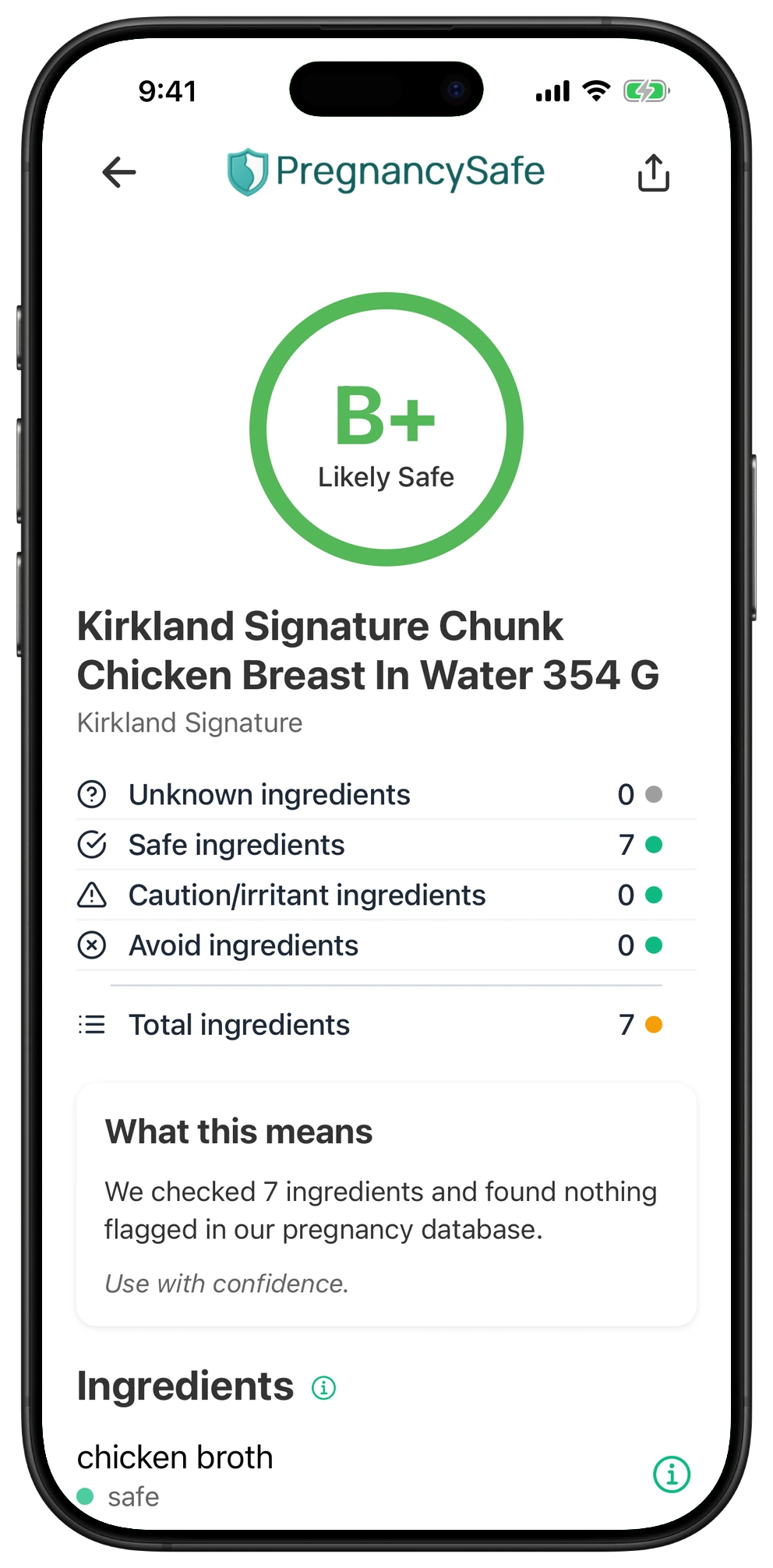
| B+ | Kirkland Signature Chunk Chicken Breast In Water | Kirkland Signature |
| B+ | Crider White Chicken In Water | Crider |
| B+ | Swanson White Premium Chunk Chicken Breast In Water | Swanson |
| B+ | Premium White Chunk Chicken In Water | Good & Gather |
| A | Premium Chunk White Chicken In Broth | Trader Joe'S |
Your Questions Answered
Is it safe to eat canned food while pregnant?
Commercially canned, cooked chicken can be part of your pregnancy diet when the can is intact and you follow its preparation and storage instructions. That does not make every canned food interchangeable: the contents and any food specific precautions still matter. Avoid damaged or bulging cans, and refrigerate chicken leftovers promptly after opening.
Do I need to cook canned chicken before eating it?
Commercially canned cooked chicken is already cooked, unlike raw poultry. Follow the exact package instructions rather than automatically applying raw chicken cooking requirements. Raw poultry requires cooking to 165°F; that is a separate situation from opening a can of cooked chicken.
Can I use canned chicken to make chicken salad while pregnant?
You can use commercially canned cooked chicken as an ingredient, following its package instructions and checking the other ingredients for suitability. Refrigerate the prepared salad promptly. Homemade salad made from canned chicken should not be confused with chilled deli chicken salad, which is outside this guidance.
Why can you only eat 4 cans of tuna a week while pregnant?
Tuna advice concerns fish specific exposure to pollutants, including mercury, rather than canning itself. A four can limit should not be treated as a universal rule for canned foods or transferred to canned chicken. Follow the pregnancy guidance applicable to the particular fish when choosing tuna.
Are salt, starches, and phosphates in canned chicken a pregnancy concern?
These are common ingredients in canned chicken, and their presence in ordinary food amounts does not by itself establish fetal harm. Salt and sodium containing ingredients may matter if you have individualized sodium advice, so check sodium per serving on the actual label. Read the full label for your allergens rather than assuming that a simpler formula is automatically safer.
Does an A grade mean canned chicken is guaranteed safe during pregnancy?
No. Our catalog contains 167 records: 37 graded A and 130 graded B+. These are ingredient grades, not checks for pathogens, proper storage, or current label completeness, and the counts include unreviewed records. Always check your actual package and follow its handling instructions regardless of grade.
How Do We Score Products for Pregnancy Safety?
We analyze each product's ingredients and category to flag known risks and provide cautionary notices for general category safety concerns.
Grades reflect the ingredient and category information available to us. They don’t verify a complete, current label or account for dose, preparation, or contamination. Read them alongside the guidance above, not as a guarantee of pregnancy safety or proof that every use is harmful.
A - Safe
Excellent choice! All ingredients are considered safe during pregnancy.
What to do: Use with confidence.
B - Likely Safe
Pretty much safe with very minimal risk. Some ingredients may have limited pregnancy studies, but no significant safety concerns have been identified.
What to do: Use with confidence.
C - Limit
Contains ingredients with some pregnancy considerations. Research shows these ingredients may have limited safety data, potential for minor hormonal effects, or require caution based on animal studies.
What to do: Use sparingly and consider safer alternatives when available.
D - Caution
Similar to C grade but contains multiple cautionary ingredients. The combination increases overall concern.
What to do: Try to avoid if that makes you feel better. If you've already used it, no need to panic.
F - Avoid
Contains an ingredient Pregnancy Safe recommends avoiding during pregnancy. This may reflect an established risk or a precaution based on limited evidence; check the ingredient guidance and exposure context.
What to do: Do not use during pregnancy. If you've already used it, don't worry - contact your OBGYN if concerned.