Is Almonds Safe During Pregnancy? (Updated 2026 Guide)
Updated September 9, 2026
The Answer
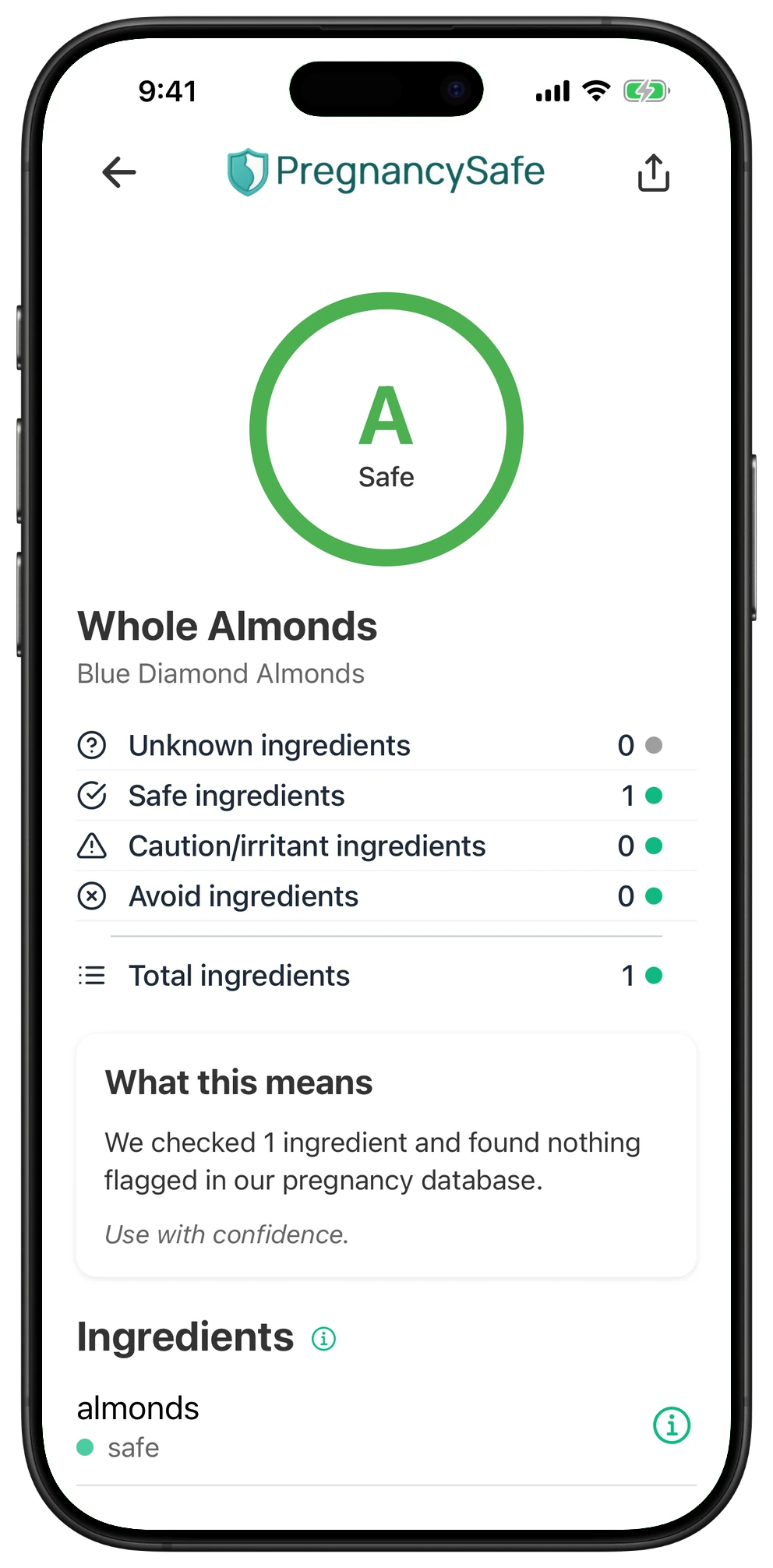
Yes ordinary almonds can be part of your diet during pregnancy unless you’re allergic. You do not need to soak them or avoid them to prevent your baby from developing an allergy.
For ordinary almonds eaten as food, your own almond allergy is the main pregnancy consideration highlighted here. Almond milk, chocolate covered almonds and almond chocolate bars are different products and need their own label checks. Ingredient grades do not establish food handling safety, appropriate portions or the contents of your current package.
Pregnancy Safe is 100% independent and research driven. No companies pay to promote or sponsor products.
Stress Less This Pregnancy
Check your exact almonds in the app
✓ What's Safe
- • Choose plain almonds when you want almonds as a snack rather than an almond beverage or confection.
- • Read the current package’s ingredient list, especially for flavored or chocolate coated versions.
- • Check allergen information against any diagnosed food allergies you have.
- • Choose portions that fit your overall meals and snacks rather than aiming for a pregnancy specific almond count.
- • Follow the package’s storage and handling instructions.
✗ What to Avoid
- • Avoid almonds if you have an almond allergy; pregnancy does not change that restriction.
- • Do not treat almond milk, chocolate covered almonds or almond bars as nutritionally interchangeable with plain almonds.
- • Do not rely on soaking as a required pregnancy safety treatment.
- • Avoid cutting out almonds solely to prevent your baby from developing an allergy.
- • Do not use an ingredient grade as a guarantee of safe handling or current package contents.
Ingredients in the Reviewed Sample
Selected ingredients are counted once per product where the reviewed source label declares them. Compound label phrases are normalized. These are occurrence counts, not amounts or a complete ingredient list.
Almonds Products We've Analyzed
This page uses a source-reviewed sample of 1 almonds product record. It is not a comprehensive catalog count or a pregnancy-safety ranking.
These counts use one source-reviewed plain-almond record, not an estimate of all almond products or proof of pregnancy safety. Almond beverages and confections are excluded. Check your current package and any personal allergy restrictions.
Your Questions Answered
How many almonds can a pregnant woman eat a day?
There is no specific pregnancy almond count established by the guidance here. Treat almonds as one part of your overall diet rather than a daily target you must meet. Use the package serving information to help plan a portion, and ask your maternity team for individualized advice if you have dietary restrictions.
What nuts should I avoid in pregnancy?
Avoid nuts that you are allergic to, and follow any individual restrictions from your clinician. Ordinary almonds do not need to be excluded simply because you are pregnant. You also do not need to avoid them to prevent your baby from developing an allergy.
Are almonds ok in early pregnancy?
Yes ordinary almonds can be part of your diet in early pregnancy unless you are allergic. The guidance does not identify a separate first trimester restriction for almonds eaten as food. This does not automatically establish the suitability of every almond drink, confection or supplement.
Do I need to soak almonds during pregnancy?
No, soaking is not a required pregnancy safety step. You can choose whether to soak them based on your preference rather than a belief that pregnancy requires it. Continue to follow appropriate storage and handling instructions, and do not rely on soaking to make almonds suitable if you have an almond allergy.
Are almond milk and chocolate covered almonds the same as plain almonds?
No these are different foods with different formulations. Check the actual ingredient list and nutrition information rather than judging a product by the word almond in its name. Guidance about ordinary almonds should not be treated as a blanket assessment of almond beverages or chocolate treats.
Do A grades prove that almond products are pregnancy safe?
No. Grades are ingredient scores, not clinical verdicts or checks of pathogens, preparation or portion size. The counts on this page are based on one source reviewed plain almond record rather than the beverage and confections previously grouped under almonds. That limited sample is not a comprehensive ranking or a substitute for checking your current package.
How Do We Score Products for Pregnancy Safety?
We analyze each product's ingredients and category to flag known risks and provide cautionary notices for general category safety concerns.
Grades reflect the ingredient and category information available to us. They don’t verify a complete, current label or account for dose, preparation, or contamination. Read them alongside the guidance above, not as a guarantee of pregnancy safety or proof that every use is harmful.
A - Safe
Excellent choice! All ingredients are considered safe during pregnancy.
What to do: Use with confidence.
B - Likely Safe
Pretty much safe with very minimal risk. Some ingredients may have limited pregnancy studies, but no significant safety concerns have been identified.
What to do: Use with confidence.
C - Limit
Contains ingredients with some pregnancy considerations. Research shows these ingredients may have limited safety data, potential for minor hormonal effects, or require caution based on animal studies.
What to do: Use sparingly and consider safer alternatives when available.
D - Caution
Similar to C grade but contains multiple cautionary ingredients. The combination increases overall concern.
What to do: Try to avoid if that makes you feel better. If you've already used it, no need to panic.
F - Avoid
Contains an ingredient Pregnancy Safe recommends avoiding during pregnancy. This may reflect an established risk or a precaution based on limited evidence; check the ingredient guidance and exposure context.
What to do: Do not use during pregnancy. If you've already used it, don't worry - contact your OBGYN if concerned.