Is Seafood Boil Safe During Pregnancy? (Updated 2026 Guide)
Updated September 9, 2026
The Answer
Yes, you can eat seafood boil while pregnant when it uses lower mercury seafood, every component is thoroughly cooked, and the meal is handled safely. A seasoning packet’s ingredient grade cannot tell you whether the finished dish is safe.
The main pregnancy considerations are mercury in the seafood and foodborne illness from undercooking, cross contamination, or improper storage. Cook each seafood component thoroughly, heat sausage or deli additions appropriately, and refrigerate leftovers promptly before reheating to 165°F. Spiciness is mainly a reflux or tolerance concern, rather than the deciding factor in pregnancy safety.
Pregnancy Safe is 100% independent and research driven. No companies pay to promote or sponsor products.
Stress Less This Pregnancy
Check your exact seafood boil in the app

✓ What's Safe
- • Choose seafood identified by species so you can check that it is a lower mercury choice under FDA pregnancy guidance.
- • Make sure each seafood component is thoroughly cooked; different pieces may need different cooking times.
- • Ask how sausage or deli meat additions are heated rather than assuming the hot broth heats them sufficiently.
- • Choose preparation that keeps raw seafood, utensils, and juices separate from cooked food.
- • Plan to refrigerate leftovers promptly and reheat them to 165°F.
- • Choose a milder seasoning or request sauce separately if spicy meals trigger reflux.
✗ What to Avoid
- • Raw or undercooked seafood, including underdone pieces within an otherwise cooked boil.
- • Higher mercury seafood that FDA pregnancy guidance advises avoiding.
- • Mixed seafood of unidentified species when you cannot check its mercury guidance.
- • Sausage or deli additions that have not been heated appropriately.
- • Cooked seafood exposed to raw seafood juices, shared unwashed utensils, or improper storage.
- • Treating an A grade on a seasoning packet as proof that the complete meal is pregnancy safe.
Ingredients in the Reviewed Sample
Selected ingredients are counted once per product where the reviewed source label declares them. Compound label phrases are normalized. These are occurrence counts, not amounts or a complete ingredient list.
Seafood Boil Products We've Analyzed
This page uses a source-reviewed sample of 5 seafood boil product records. It is not a comprehensive catalog count or a pregnancy-safety ranking.
This sample contains five seafood-containing foods, including meal kits and cooked crawfish; seasoning-only records are excluded. Grades do not measure mercury, pathogens, cooking or storage, and no meal here is independently endorsed.
Pregnancy Safe Seafood Boil Products
Popular options from our catalog, prioritizing A and B ingredient grades, with C grade options used to fill remaining places. Within each group, products are ordered by searches in Pregnancy Safe, not retail sales. Read the cautions and guidance above; grades do not verify a complete current label or guarantee pregnancy safety.
| Grade | Product | Brand |
|---|---|---|
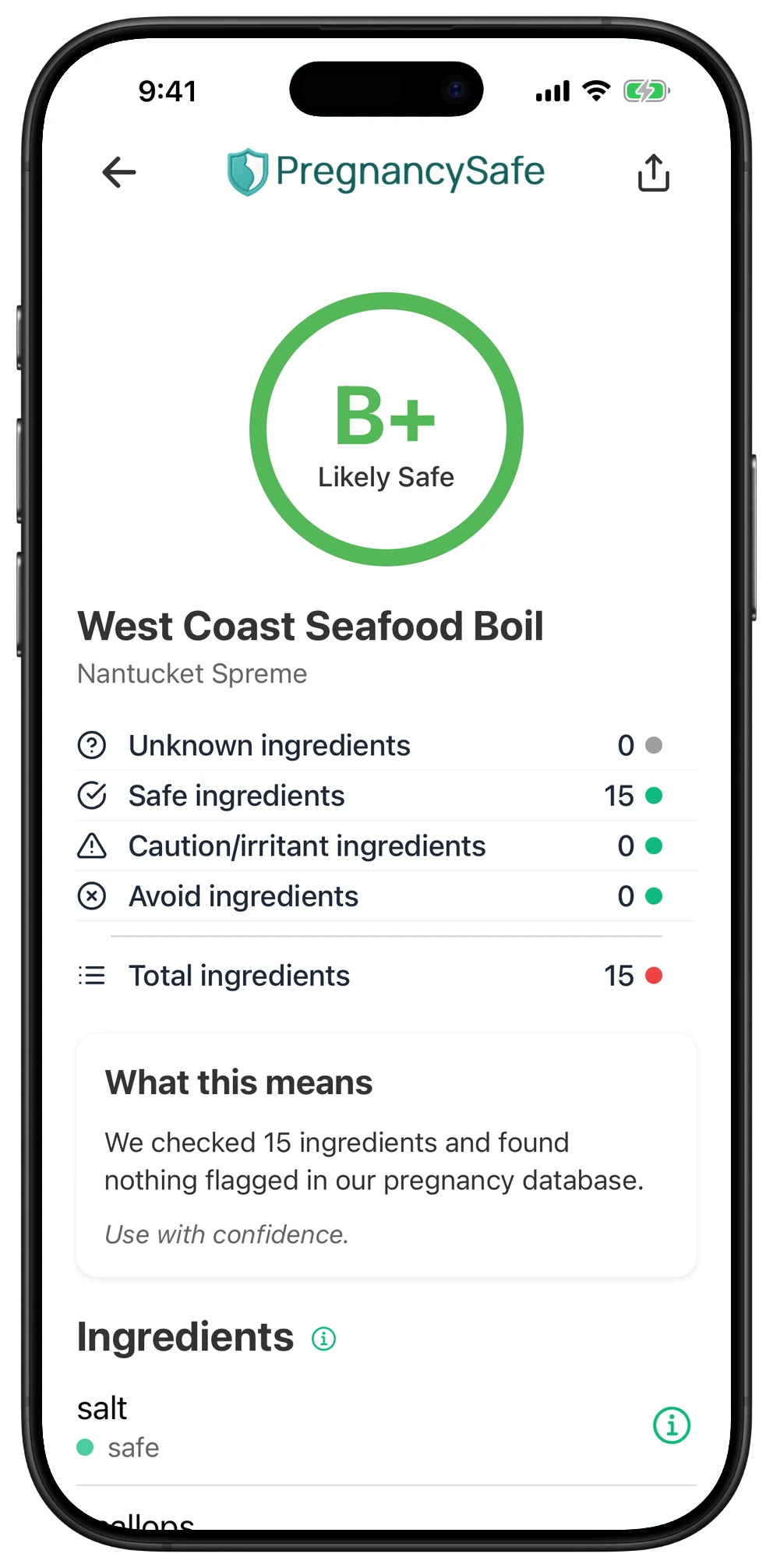
| B+ | West Coast Seafood Boil | Nantucket Spreme |
| A | Louisiana Style Crawfish Boil | Boudreaux'S |
| B+ | New England Seafood Boil | Marlees Nantucket Supreme |
| B+ | Seafood Boil | — |
| A | Seafood Boil | Fremont [Fish Market] |
Your Questions Answered
Can you eat seafood cooked when pregnant?
Yes, cooked seafood can be part of your pregnancy diet when you choose lower mercury species and handle it safely. Thorough cooking addresses foodborne illness risks, but it does not replace checking mercury guidance. In a seafood boil, check every seafood component rather than assuming everything is done because the liquid is boiling.
Can I eat seafood boil while pregnant?
Yes, provided the seafood is lower in mercury, fully cooked, and safely handled. Ask what species are included and whether any sausage or deli additions are heated appropriately. The finished meal matters more than the name or ingredient grade of its seasoning.
How much seafood boil can I eat during pregnancy?
Follow FDA pregnancy seafood advice for the species and amounts you eat across the week. Count the seafood in your boil toward that total, alongside seafood from other meals. A mixed platter or restaurant portion is not automatically a single serving, and potatoes, corn, and sauce do not determine the seafood amount.
Is spicy seafood boil safe during pregnancy?
Spiciness is mainly a matter of reflux and your personal tolerance. Choose less heat or ask for sauce separately if spicy food makes you uncomfortable. A mild boil still needs lower mercury seafood, thorough cooking, and safe handling; seasoning strength does not determine those risks.
Can I eat leftover seafood boil while pregnant?
Leftovers need prompt refrigeration and reheating to 165°F. Keep them separate from raw seafood and use clean containers and utensils. If you cannot confirm that the meal was stored safely, do not rely on reheating to make it suitable to eat.
Does a seafood boil seasoning’s grade tell me whether the meal is safe?
No. A seasoning packet and a complete seafood boil are different things, and ingredient grades do not measure mercury, pathogens, cooking, or storage. Check the actual seafood species, preparation, and handling rather than using a seasoning score as a pregnancy safety guarantee.
How Do We Score Products for Pregnancy Safety?
We analyze each product's ingredients and category to flag known risks and provide cautionary notices for general category safety concerns.
Grades reflect the ingredient and category information available to us. They don’t verify a complete, current label or account for dose, preparation, or contamination. Read them alongside the guidance above, not as a guarantee of pregnancy safety or proof that every use is harmful.
A - Safe
Excellent choice! All ingredients are considered safe during pregnancy.
What to do: Use with confidence.
B - Likely Safe
Pretty much safe with very minimal risk. Some ingredients may have limited pregnancy studies, but no significant safety concerns have been identified.
What to do: Use with confidence.
C - Limit
Contains ingredients with some pregnancy considerations. Research shows these ingredients may have limited safety data, potential for minor hormonal effects, or require caution based on animal studies.
What to do: Use sparingly and consider safer alternatives when available.
D - Caution
Similar to C grade but contains multiple cautionary ingredients. The combination increases overall concern.
What to do: Try to avoid if that makes you feel better. If you've already used it, no need to panic.
F - Avoid
Contains an ingredient Pregnancy Safe recommends avoiding during pregnancy. This may reflect an established risk or a precaution based on limited evidence; check the ingredient guidance and exposure context.
What to do: Do not use during pregnancy. If you've already used it, don't worry - contact your OBGYN if concerned.