Is Bean Sprouts Safe During Pregnancy? (Updated 2026 Guide)
Updated October 1, 2026
The Answer
You can eat thoroughly cooked bean sprouts during pregnancy, but avoid raw or lightly cooked sprouts. Cook fresh sprouts until steaming hot; commercially canned sprouts are processed differently, so follow their package directions and storage instructions.
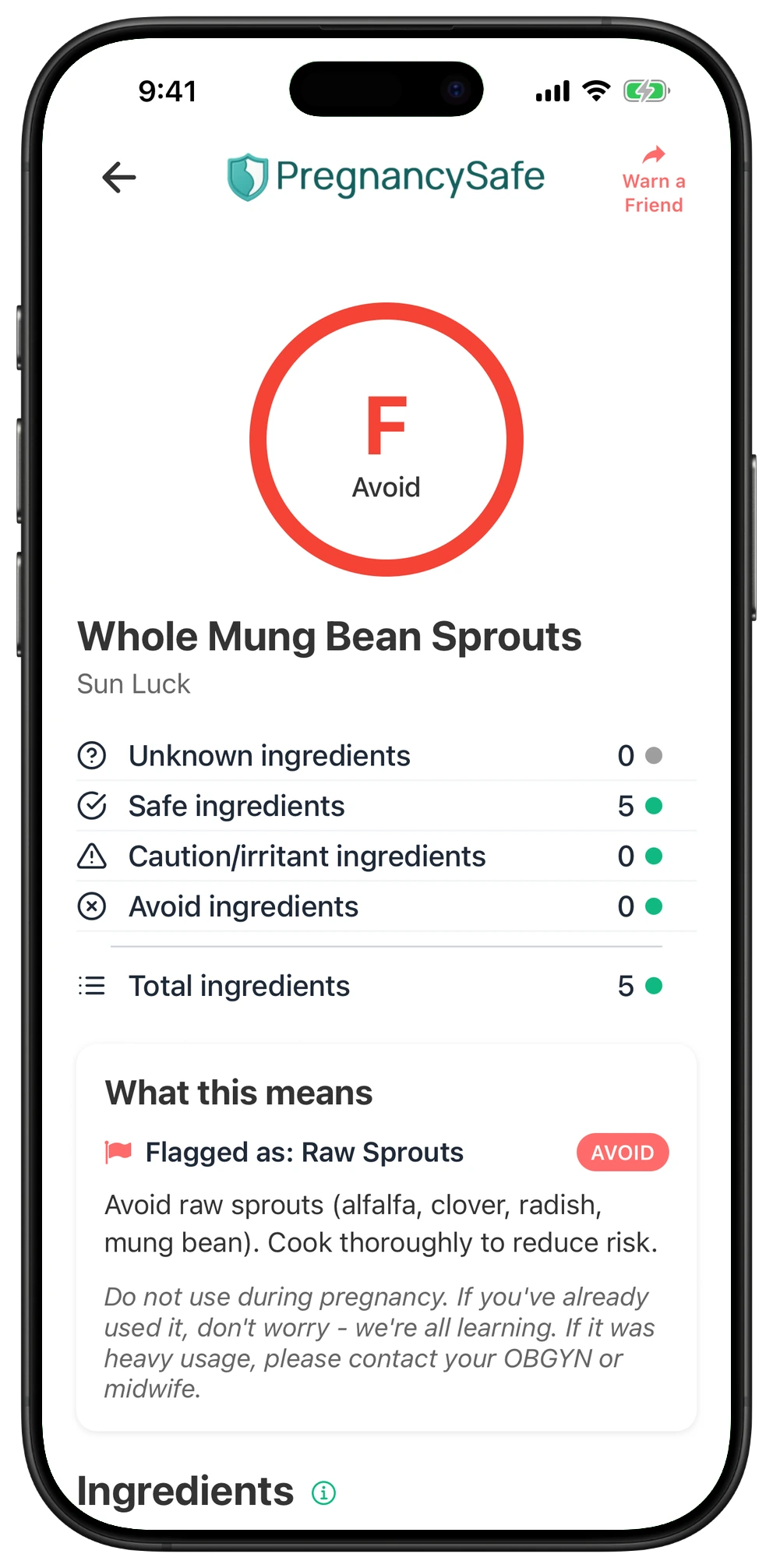
The main pregnancy concern is foodborne illness from eating raw or lightly cooked sprouts, not an inherent danger in every food containing bean sprouts. Washing does not reliably remove organisms inside sprouts, so thorough cooking matters. Commercially canned sprouts differ from fresh raw sprouts, and an F ingredient grade does not prove that properly processed or cooked sprouts are unsafe.
Pregnancy Safe is 100% independent and research driven. No companies pay to promote or sponsor products.
Stress Less This Pregnancy
Check your exact bean sprouts in the app

Bean sprouts in pho, stir-fry and soup
The preparation matters more than the dish name. Bean sprouts should be thoroughly cooked until steaming hot, not simply tossed into a finished meal. For soup, do not assume that adding raw sprouts to hot broth cooks them sufficiently. When ordering, ask for thoroughly cooked sprouts or have them left out.
Why washing does not replace cooking
Washing does not reliably remove organisms inside sprouts. Rinsing is not a substitute for thorough cooking during pregnancy. Cook fresh sprouts until steaming hot rather than eating them raw after washing.
Fresh versus canned bean sprouts
Commercially canned sprouts have undergone processing and should not be treated as identical to fresh raw sprouts. Follow the exact package instructions for preparation and storage, including after opening. The word sprouts on an ingredient list does not by itself establish the product's processing or readiness to eat.
✓ What's Safe
- • Cook fresh bean sprouts thoroughly until steaming hot throughout before eating.
- • Choose dishes where the sprouts are cooked with the meal rather than added raw before serving.
- • Ask restaurant staff whether the bean sprouts will be thoroughly cooked; request no sprouts if they cannot confirm.
- • Check whether packaged sprouts are fresh or commercially canned rather than judging preparation by the ingredient name alone.
- • Follow the actual package directions for preparation and storage, including instructions after opening.
✗ What to Avoid
- • Raw bean sprouts in salads, sandwiches, wraps or garnishes.
- • Lightly cooked sprouts that have only been briefly warmed.
- • Raw sprouts added to a finished soup or noodle dish without further thorough cooking.
- • Relying on rinsing or washing to make raw sprouts suitable for pregnancy.
- • Assuming a small portion of raw sprouts removes the need for thorough cooking.
Most Common Ingredients in Bean Sprouts Products
We analyzed 20 bean sprouts products. Here are the most common ingredients, ranked by how often they appear:
Bean Sprouts Products We've Analyzed
Our catalog contains ratings for 20 bean sprouts products. These are database grades, not independent safety certifications.
Grades are ingredient scores, not clinical verdicts or measurements of pathogens, dose, preparation or current package contents. Cohorts include unreviewed catalog records and counts are not independently verified safe-product totals.
Your Questions Answered
Can you eat bean sprouts during pregnancy?
Yes, if they are thoroughly cooked until steaming hot. Avoid raw or lightly cooked bean sprouts during pregnancy because of the risk of foodborne illness. Commercially canned sprouts have already undergone processing, so distinguish them from fresh raw sprouts and follow the package directions.
Why do bean sprouts have F grades if cooked sprouts can be eaten?
Our catalog contains 20 bean sprout products, all with F ingredient grades. These grades are not clinical verdicts and do not measure pathogens, cooking, processing or current package contents. They do not establish that properly processed or thoroughly cooked sprouts remain unsafe. Use preparation and package instructions rather than the grade alone to guide your choice.
Is a small amount of raw bean sprouts okay during pregnancy?
The guidance is to avoid raw or lightly cooked sprouts, not to stay below a particular serving size. A small portion does not replace thorough cooking as a food safety precaution. Choose sprouts cooked until steaming hot rather than relying on the amount eaten.
How Do We Score Products for Pregnancy Safety?
We analyze each product's ingredients and category to flag known risks and provide cautionary notices for general category safety concerns.
Grades reflect the ingredient and category information available to us. They don’t verify a complete, current label or account for dose, preparation, or contamination. Read them alongside the guidance above, not as a guarantee of pregnancy safety or proof that every use is harmful.
A - Safe
Excellent choice! All ingredients are considered safe during pregnancy.
What to do: Use with confidence.
B - Likely Safe
Pretty much safe with very minimal risk. Some ingredients may have limited pregnancy studies, but no significant safety concerns have been identified.
What to do: Use with confidence.
C - Limit
Contains ingredients with some pregnancy considerations. Research shows these ingredients may have limited safety data, potential for minor hormonal effects, or require caution based on animal studies.
What to do: Use sparingly and consider safer alternatives when available.
D - Caution
Similar to C grade but contains multiple cautionary ingredients. The combination increases overall concern.
What to do: Try to avoid if that makes you feel better. If you've already used it, no need to panic.
F - Avoid
Contains an ingredient Pregnancy Safe recommends avoiding during pregnancy. This may reflect an established risk or a precaution based on limited evidence; check the ingredient guidance and exposure context.
What to do: Do not use during pregnancy. If you've already used it, don't worry - contact your OBGYN if concerned.